
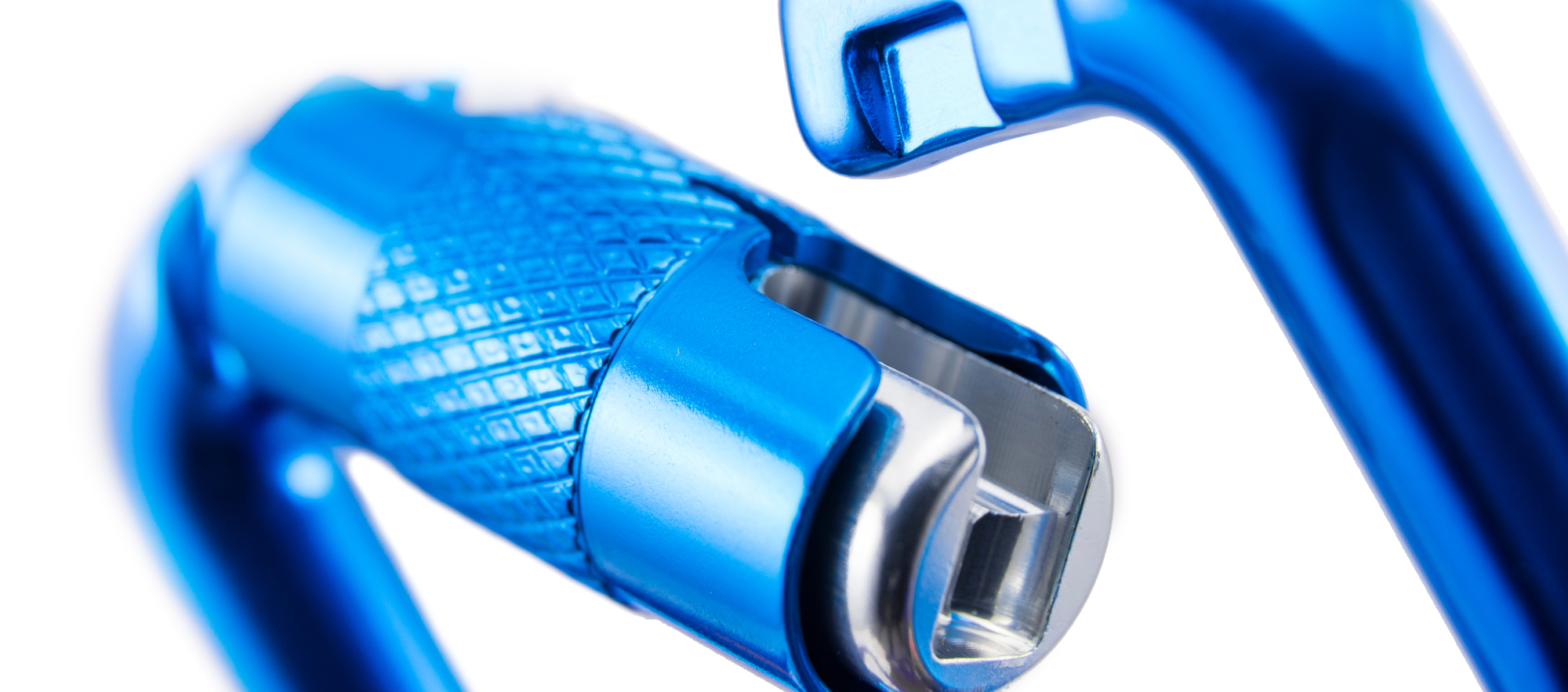
This update follows the main lines of the previous version, providing a supplement and update on the current state of knowledge on connectors, regarding their design, stresses, areas of work, different assemblies, etc.
The Technical Reflection dealing with the "Resistance of connectors" provides additional information on the nominal strength required of them.
First of all, it is important to know that there is currently no standard governing the resistance, shape, or operating principle of our connectors, as is the case for climbing and mountaineering carabiners. It is therefore up to each individual to take ownership of their equipment and to choose their connectors in full knowledge of the facts to ensure maximum safety in their practice.
The available connectors can be of different types: shapes, materials, closing systems, etc. Each solution may have its advantages and constraints, and their use will depend on each use case.
DESIGN OF AUTOMATIC CARABINERS
To date, the vast majority of harnesses are equipped with automatic aluminium carabiners. They are lightweight, easy to handle and seem to be the ideal solution for connecting our wings.
Let's go back to the design of these automatic locking carabiners.
Their design is directly related to that of climbing and mountaineering carabiners, and generally incorporates all of their functions.
To simplify, it is a metal ring equipped with an articulated part that allows opening and closing in order to insert all kinds of connection loops. This articulated part, called the "gate", can be equipped with a locking system to prevent accidental opening.
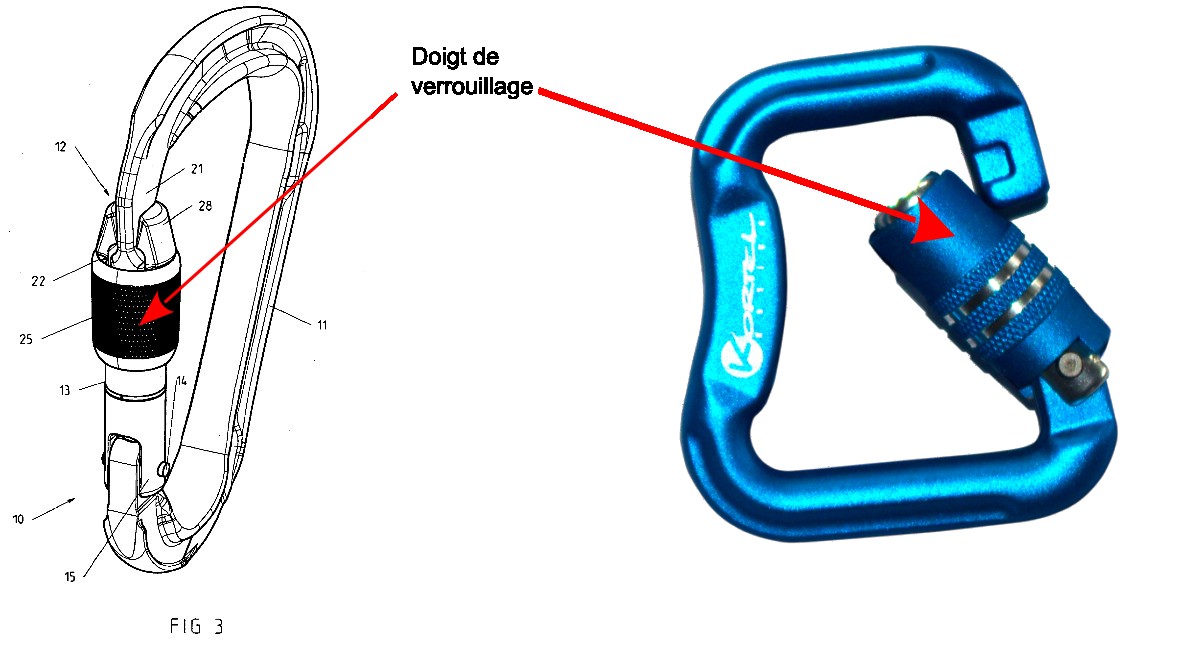
But whatever the locking system used or not, the design of these carabiners is exactly the same as for climbing and mountaineering carabiners. The manufacturers of one and the other are often the same.
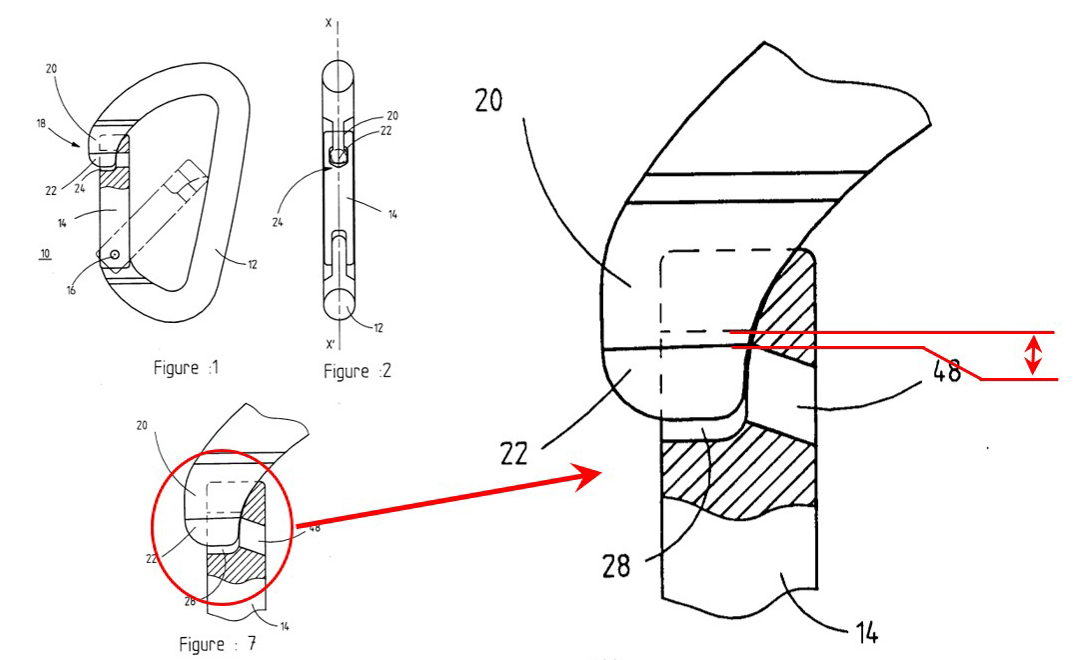
One of these main characteristics is the functional play located at the finger closure. In climbing/mountaineering, and for safety reasons, a karabiner must be able to continue to open under a load of 80kg (the weight of a man). Therefore, in their design, there is a functional play that always allows the finger to open even when it is loaded in this way and which allows a slight movement of one part in relation to the other.
FATIGUE PHENOMENON
In paragliding, we are permanently suspended from our connectors, but this load is far from constant. Indeed, in flight we are subjected to a multitude of lightenings and accelerations which reduce or increase the load applied to the connectors respectively. This variation in load causes a slight alternating movement at the functional play, and this deformation generates internal mechanical stresses.
This induces a phenomenon called "fatigue" corresponding to the fact that the connectors are alternately stressed under load / discharge.
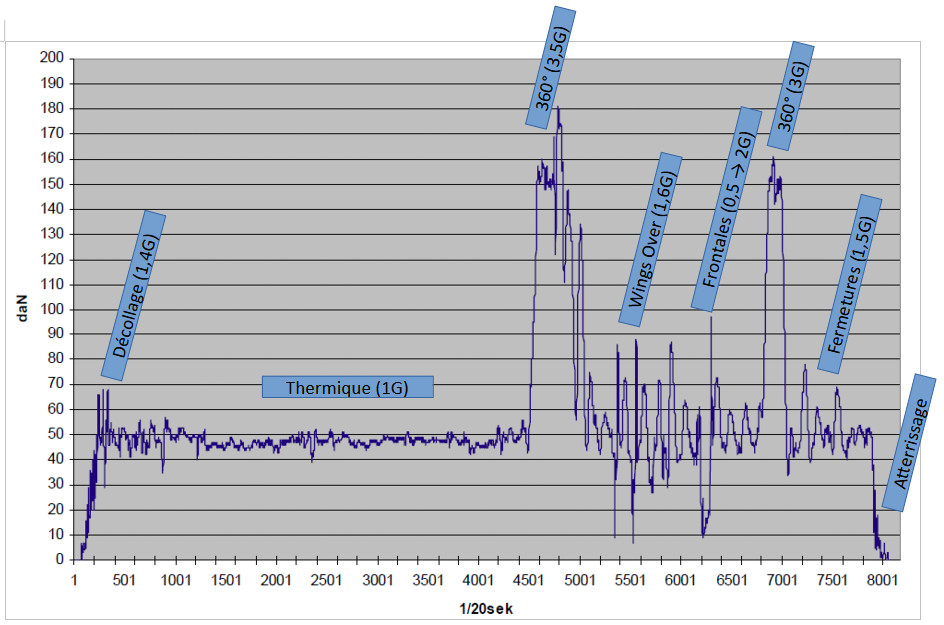
Measurements in stable straight flight, stabilised spiral, frontal collapse, collapse and wing-over (Source: DHV).
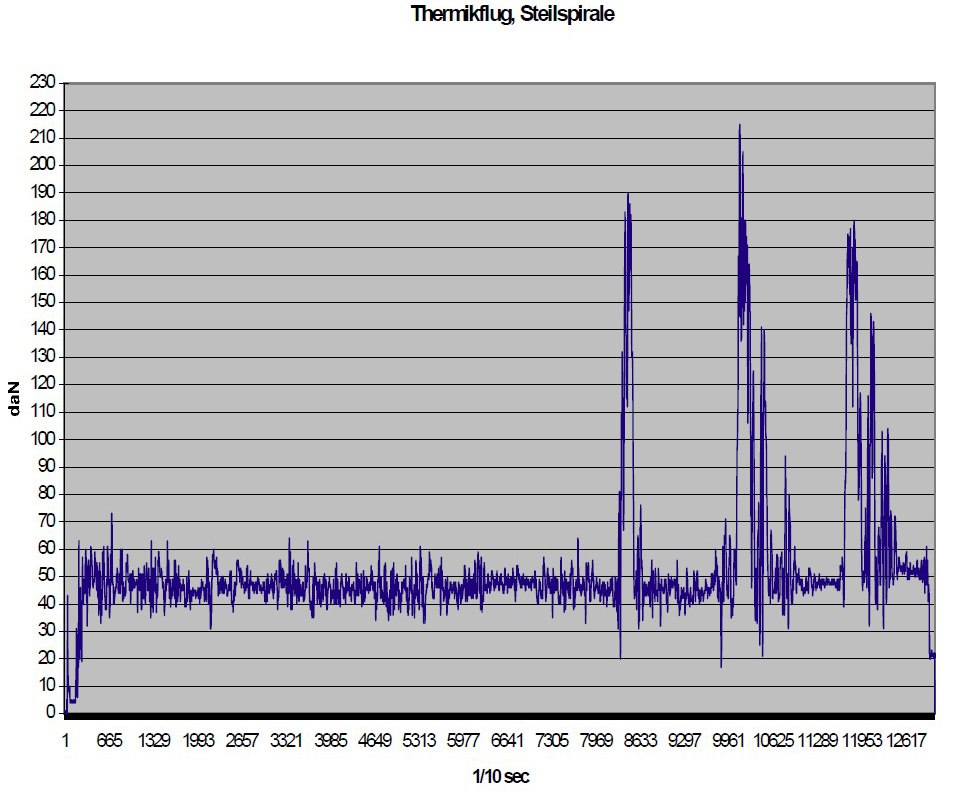
Measurements in thermals, then in stabilised spiral (Source: DHV)
This fatigue phenomenon should be taken seriously, as it can cause the karabiner to break even if it has never been subjected to a high load during its use. In addition, the crack initiation is internal and cannot be easily detected. This is why it is important to know the history of the connectors, and to change them before it is too late... Aluminium is much more sensitive to this than steel because of its internal crystalline structure. On the other hand, other connectors such as quick links or soft connectors (Soft-links and others) do not seem "a priori" to be affected by this fatigue phenomenon.
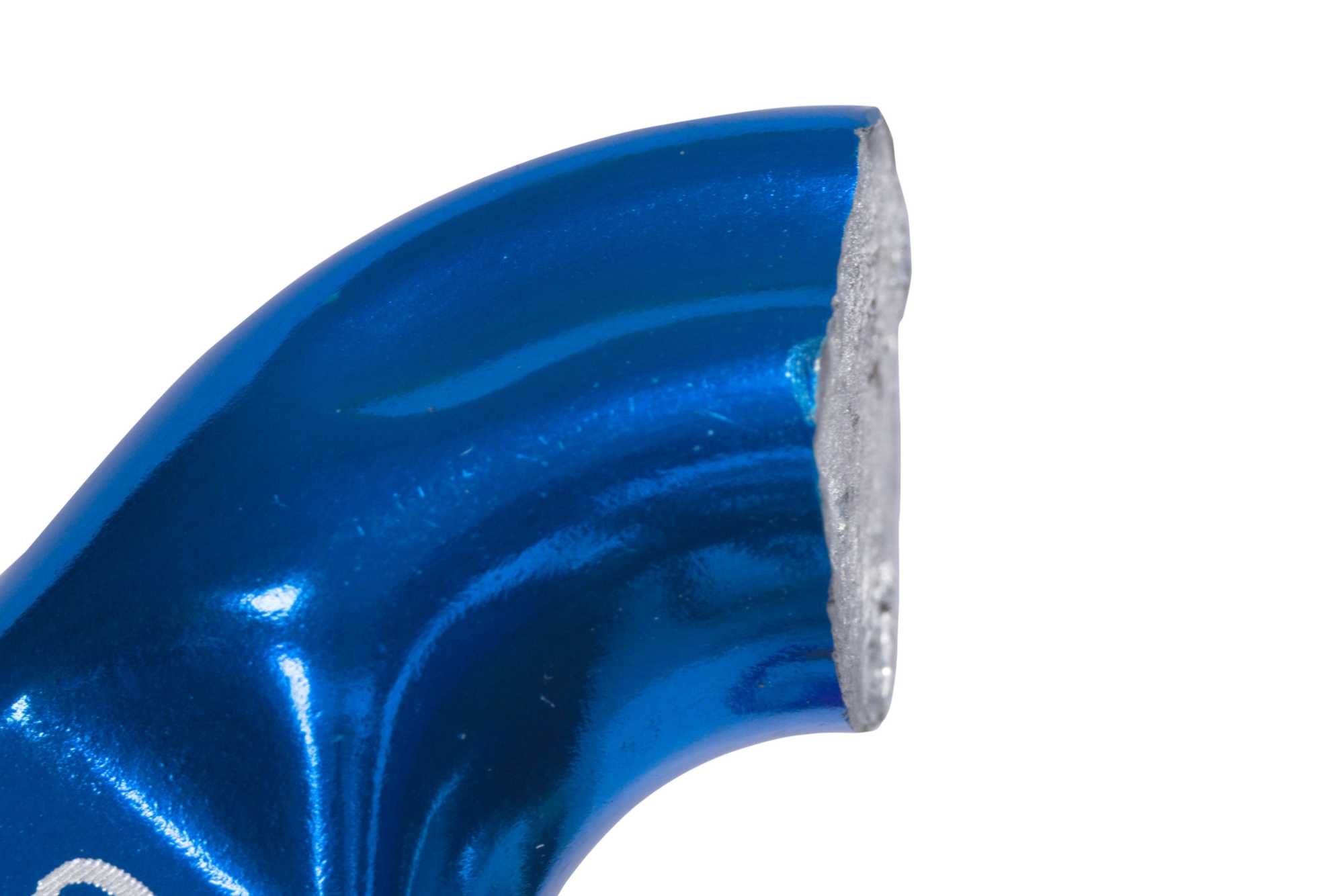
Fatigue failure
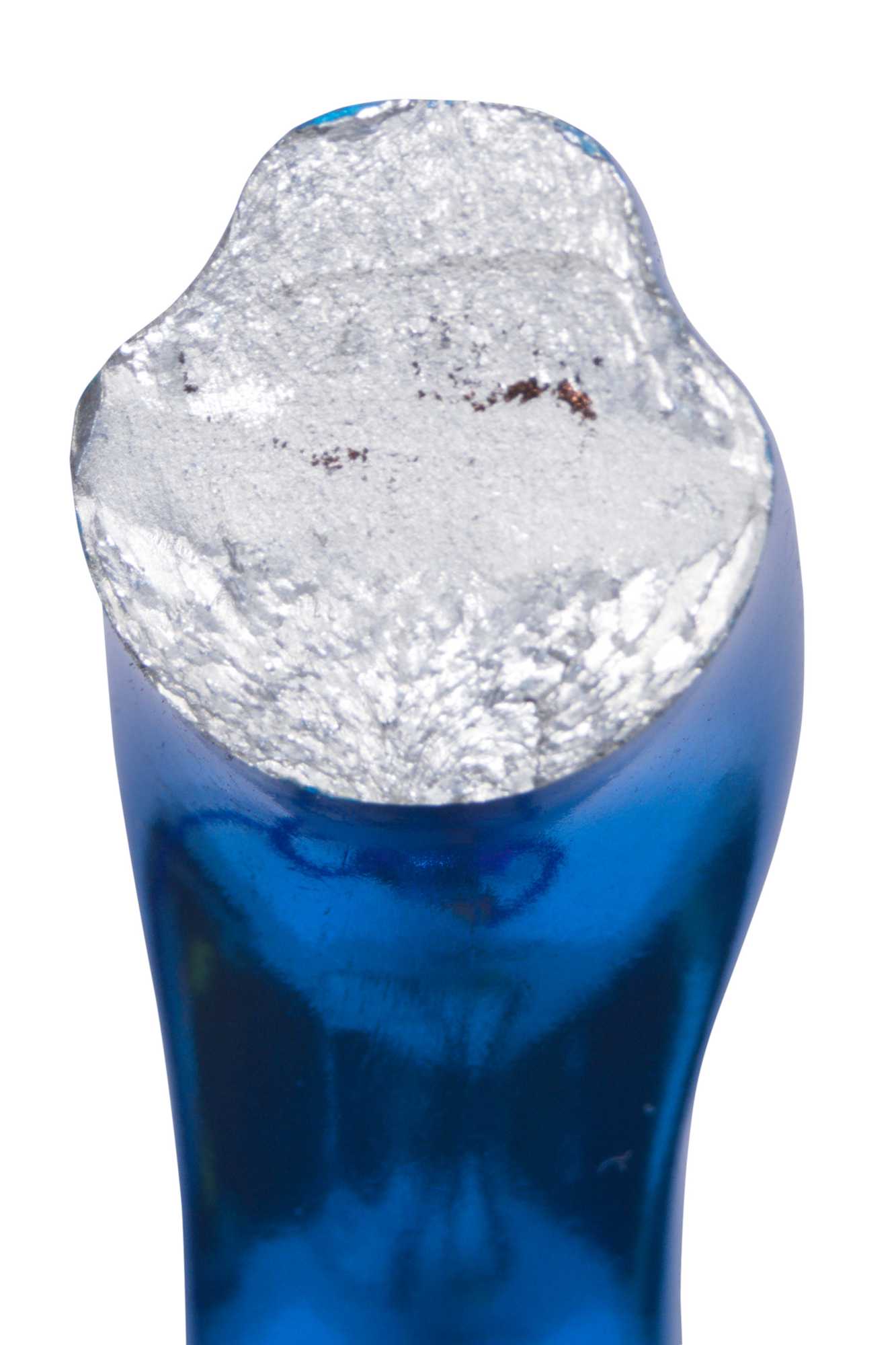
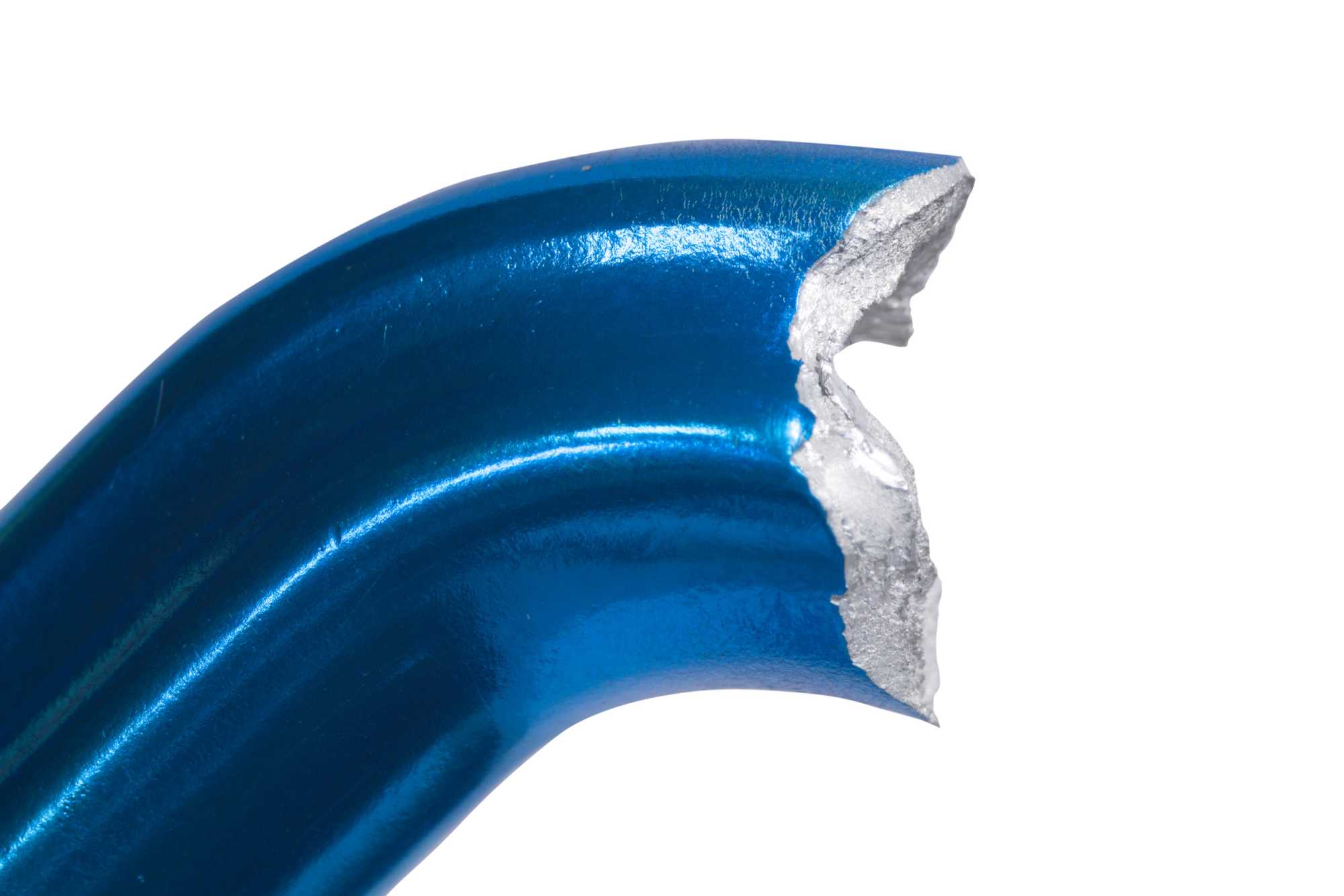
Static failure
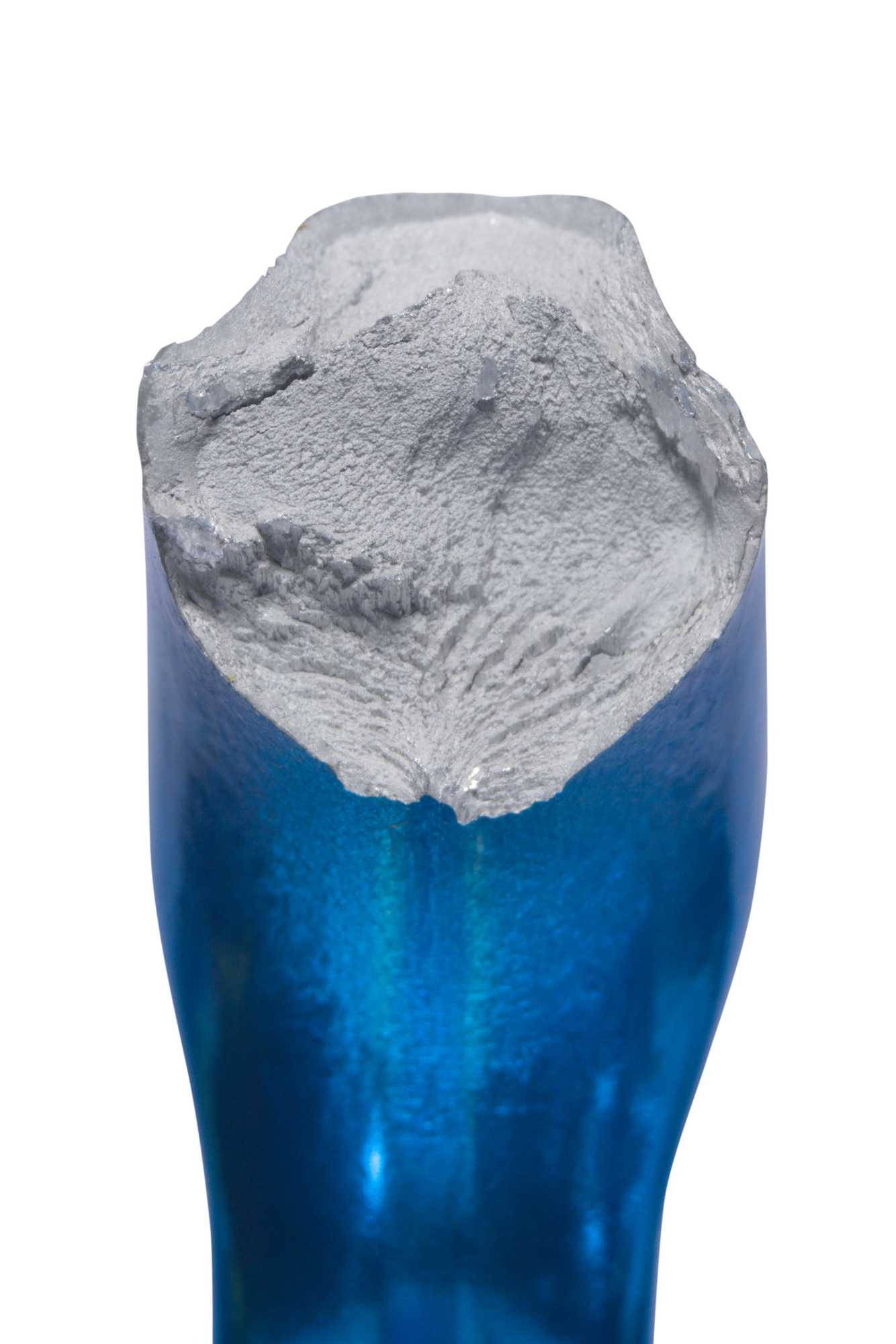
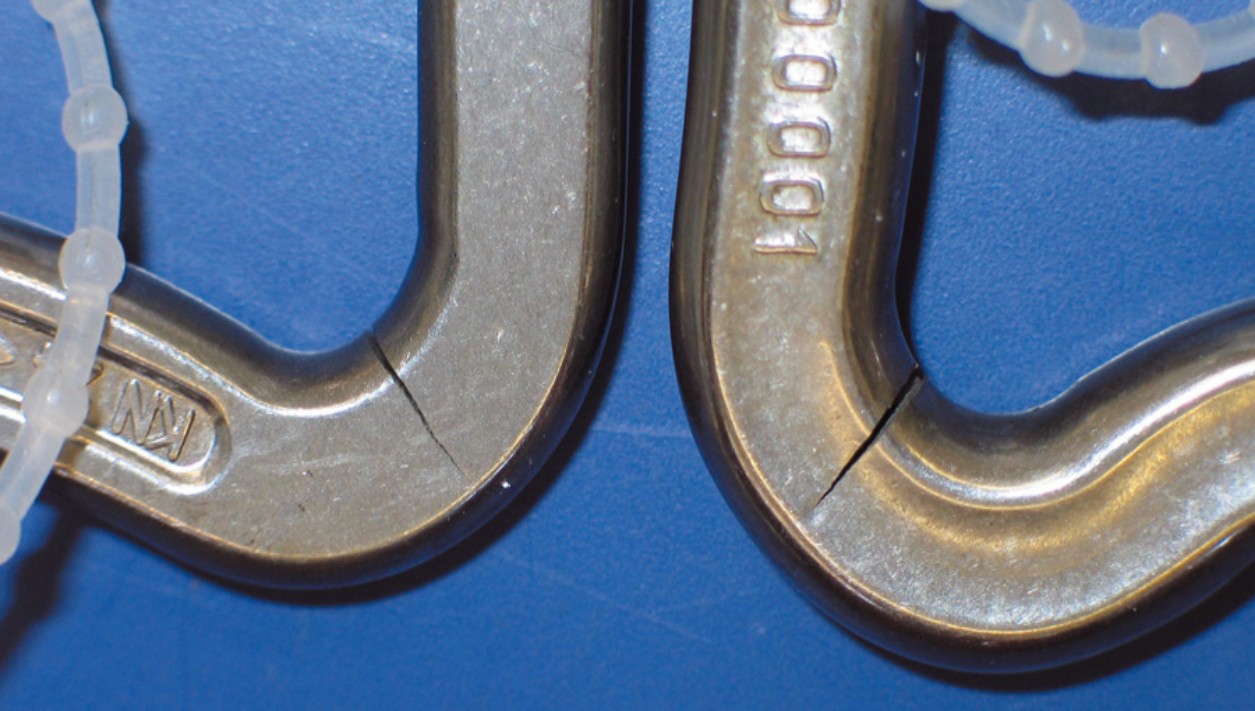
Fatigue failure initiation
Current recommendations advise changing automatic karabiners every 5 years or every 500 hours of use, whether they are made of aluminium or steel. These recommendations are based on various tests and incident analyses that have been carried out to date on automatic karabiners (see Bibliography).
In September 2023, the PMA (Paraglider Manufacturers Association) drew up a "standard" on the subject (Connecting elements for paragliding) with the aim of increasing pilot safety by proposing a validation of the fatigue resistance of connectors before they are placed on the market. It proposes simulating 5 years or 1000 hours of use (i.e. 2 million load/unload cycles) on all types of connectors that we may use for free flight: quick links, soft connectors, automatic karabiners, etc. The Fmin and Fmax values are calculated and adapted to the type of practice (solo or tandem). A higher load (Fmax extrem) is even inserted every 500 cycles to simulate a few "extreme manoeuvres" such as committed 360s.
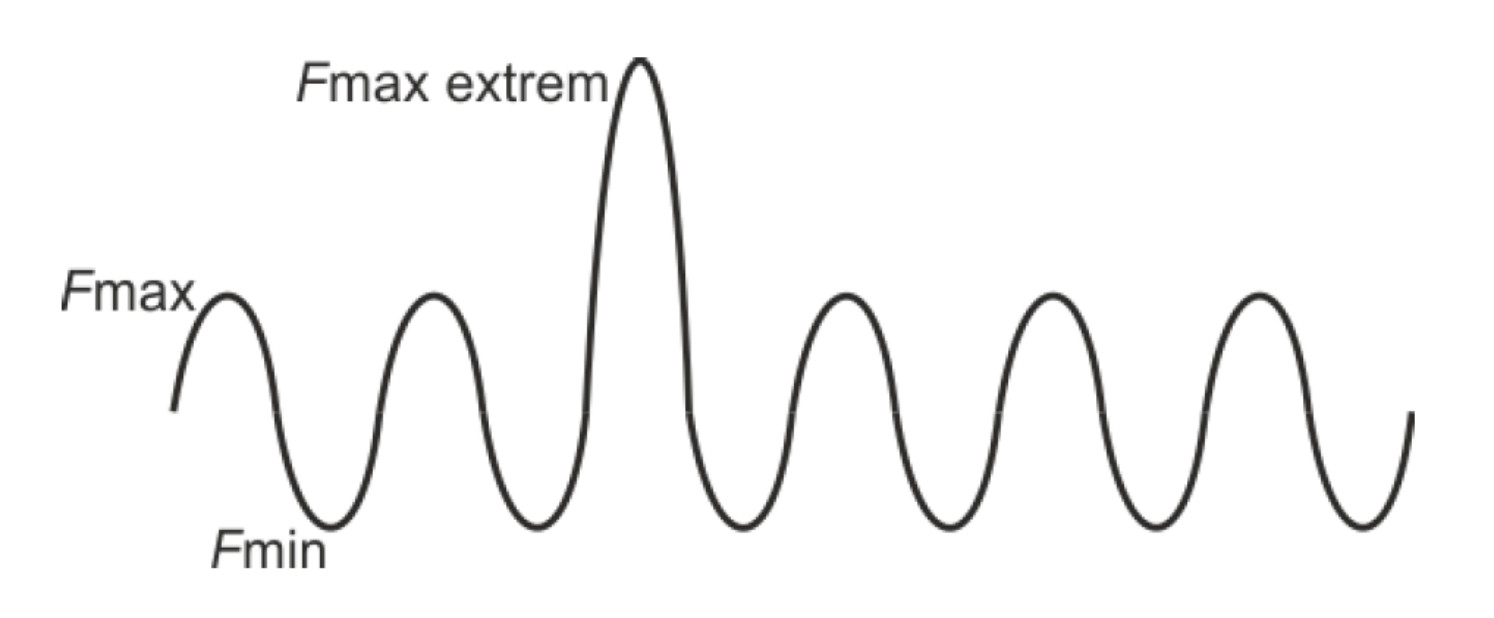
Following this test, if the connector retains its integrity and correct operation, it must still withstand a pre-determined static load before being considered approved.
This "standard" is in no way a norm and does not impose any strict obligations on manufacturers, but will certainly become the reference concerning the reliability of connectors available on the market.
RESISTANCE – WORK AXIS
The connectors we use are all extremely strong (More details in: Reflection on the resistance of connectors).
This breaking strength is obviously linked to the material used, but also to other design elements (dimensions, shape). It is also not necessarily homogeneous within each connector.
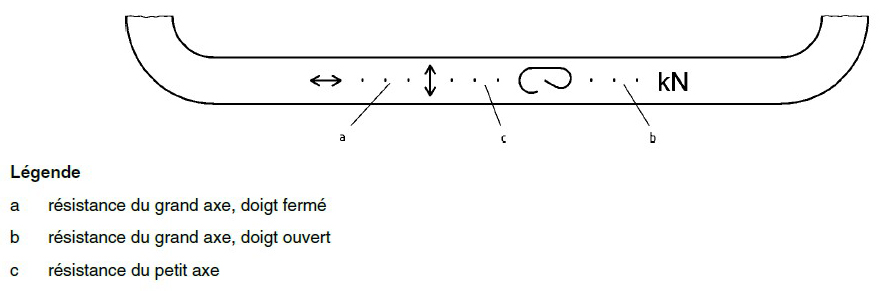
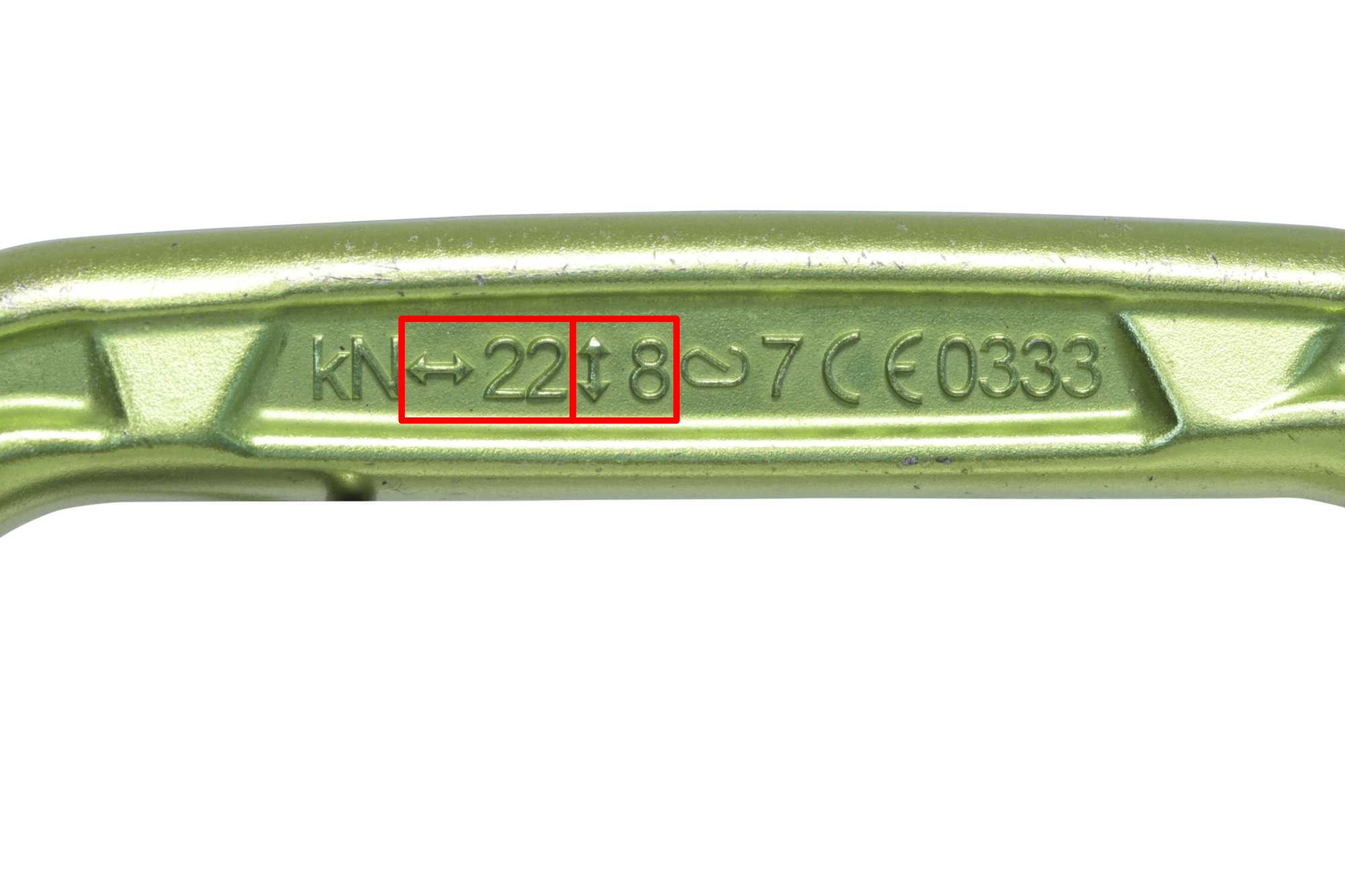
If you look carefully at automatic carabiners (for paragliding or climbing/mountaineering), you will normally find a marking that indicates the different maximum resistance values of the connector concerned, according to different axes of traction.
These values can be very different, and demonstrate that each connector is not necessarily as strong regardless of how it is used. The static resistance "across" (along the small axis) is here 8kN against 22kN along the main axis (long axis), i.e. 63% lower.
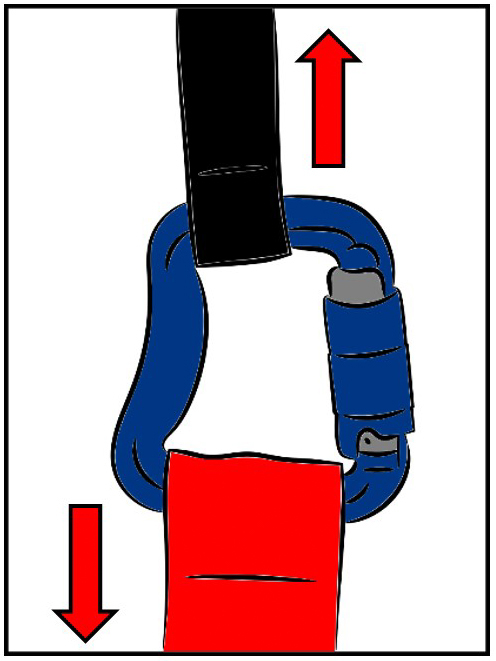
22KN
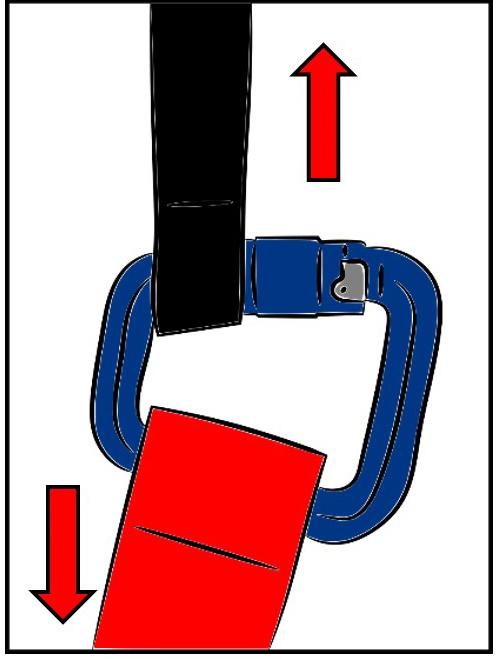
8KN
The latest fatigue tests carried out internally in accordance with the PMA standard (see above) have produced very interesting results on this aspect of respecting the working axis.
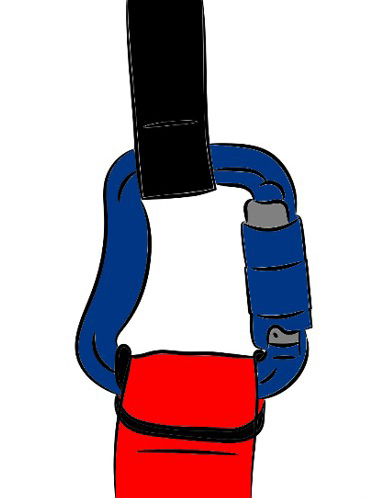
On the automatic carabiners tested, it appeared that the "offset" position could generate very different results depending on the placement of the connector on the straps.
When the auto carabiner is placed as in Figure 1, it manages to pass the fatigue tests, i.e. 2,000,000 load/unload cycles between 30kg and 100kg, but it yields at 13KN in static.
On the other hand, when it is placed as in Figure 2, it yields after 158,000 cycles. This represents only 8% of the fatigue resistance required by the PMA standard. If we reduce this figure to a theoretical duration (for 200 hours of flight/year), the carabiner would last less than 5 months or 80 hours.
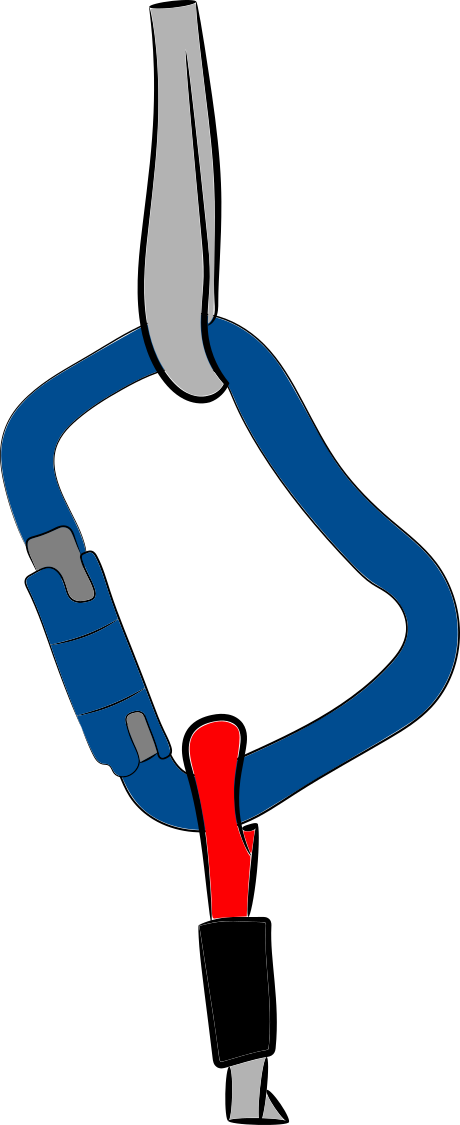
Figure 1
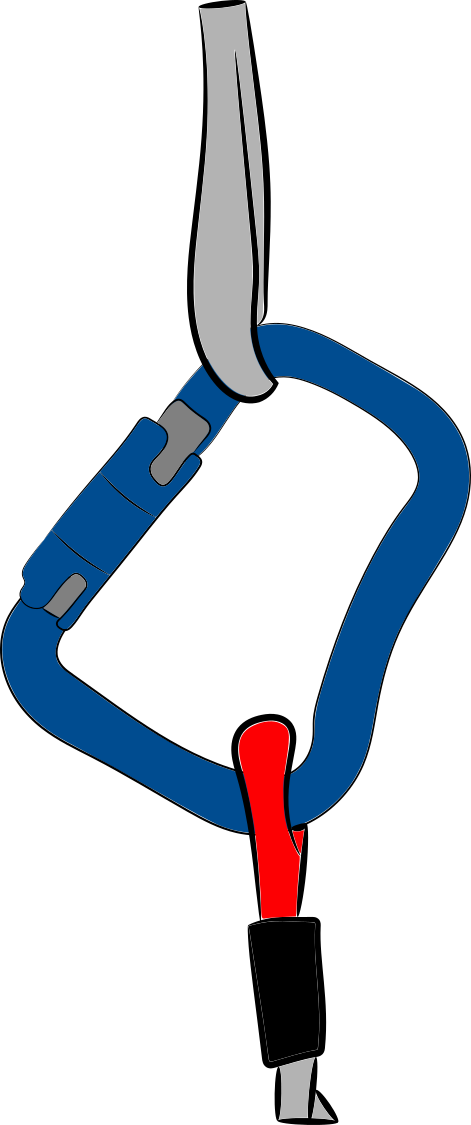
Figure 2
You understand that it is essential to make this type of connector (automatic carabiners) work along their main axis, to maintain the best possible breaking strength, whether static or fatigue. Any workload applied outside this theoretical axis can dramatically weaken the connector.
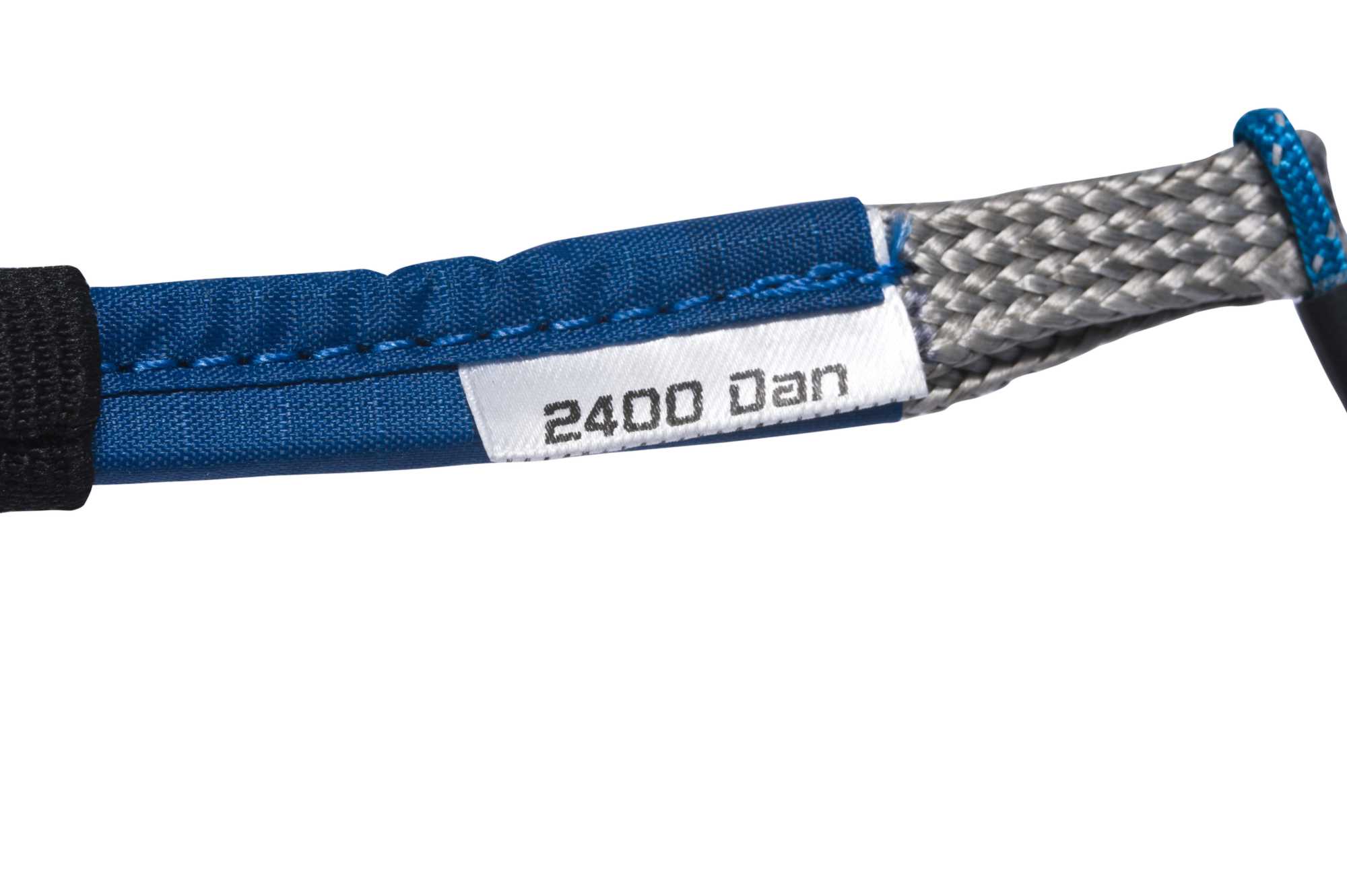
Not all types of connectors are necessarily concerned by this constraint. This is the case for most flexible connectors, which can withstand the same load regardless of their position in the assembly.
You will therefore normally simply find the maximum permissible resistance value on the label that accompanies them. Fatigue tests also do not show any weakness on this type of connector.
How to guarantee respect for this main working axis?
There are several solutions for this:
– The first aims to hold the connector in place using O-rings to keep the straps in place on the connector. This prevents unwanted rotation of the carabiner when the load is low, but in the event of a heavy load the O-ring can still slip and allow the strap to move. This is especially true when the strap is much narrower than the carabiner.
– The second solution is to select a connector (auto carabiner or other) that is perfectly dimensionally matched to the straps it connects. In this way, the straps will naturally be placed in the right place on the connector and allow it to always work correctly. Using a narrow connector for a wide strap may seem like a good idea to "wedge" the strap, but in this case it is the latter that will not work correctly and may also see its resistance capabilities reduced.
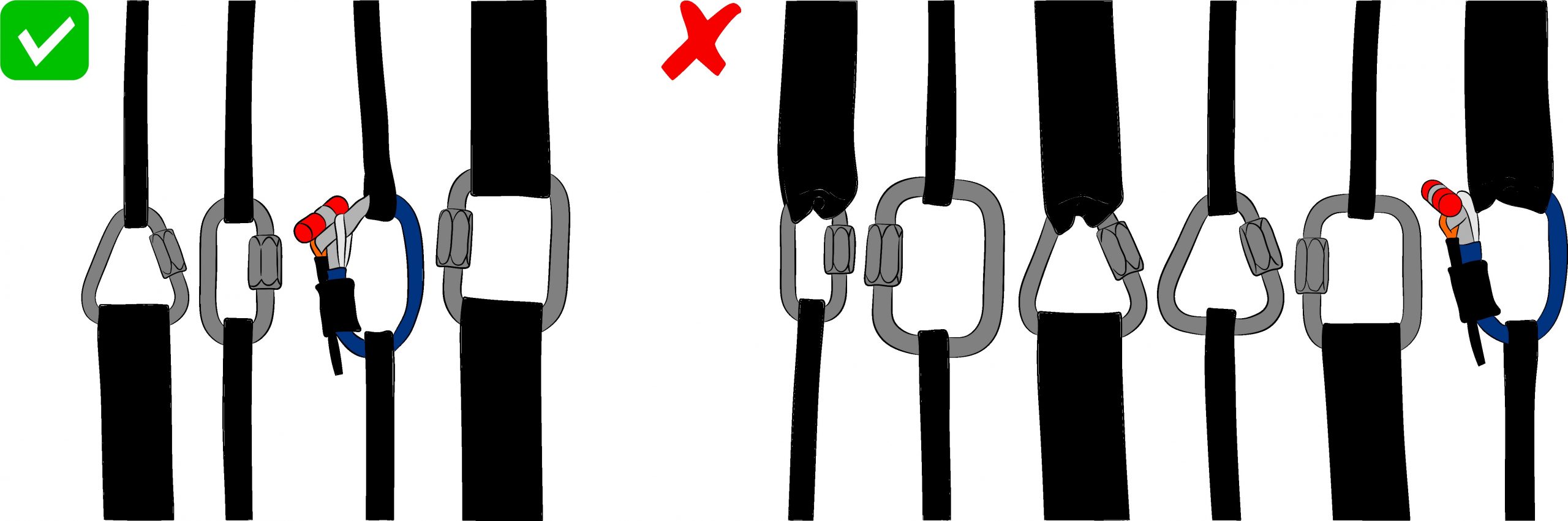
The very wide choice available on the market today makes it possible to find connectors of all kinds to adapt to most configurations. Their design can even solve several problems simultaneously, such as the Pin-Lock (Finsterwalder) which integrates an anti-rotation system and whose lyre shape also allows it not to work in fatigue. They are given by Finsterwalder for a lifespan of 8 years in solo use, without limitation of hours of use!
Flexible connectors are also interesting because they have the ability to adapt dimensionally to the straps, and are not impacted by the phenomenon of fatigue.
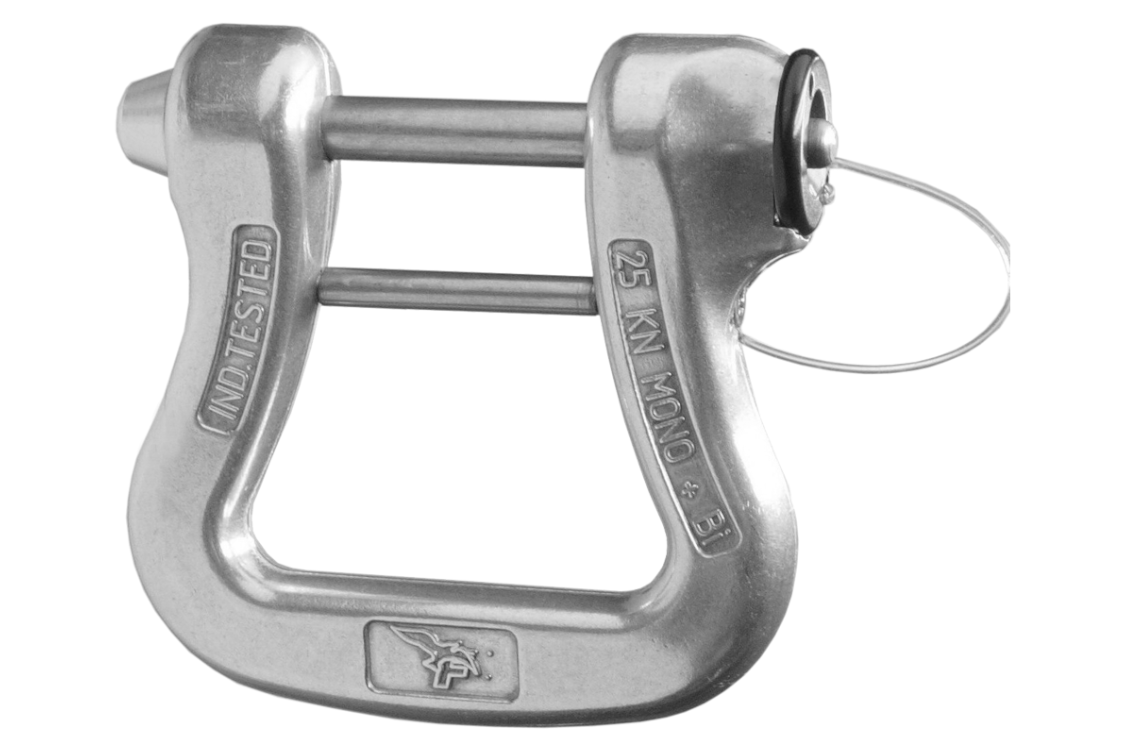
Pin-Locks (Finsterwalder)
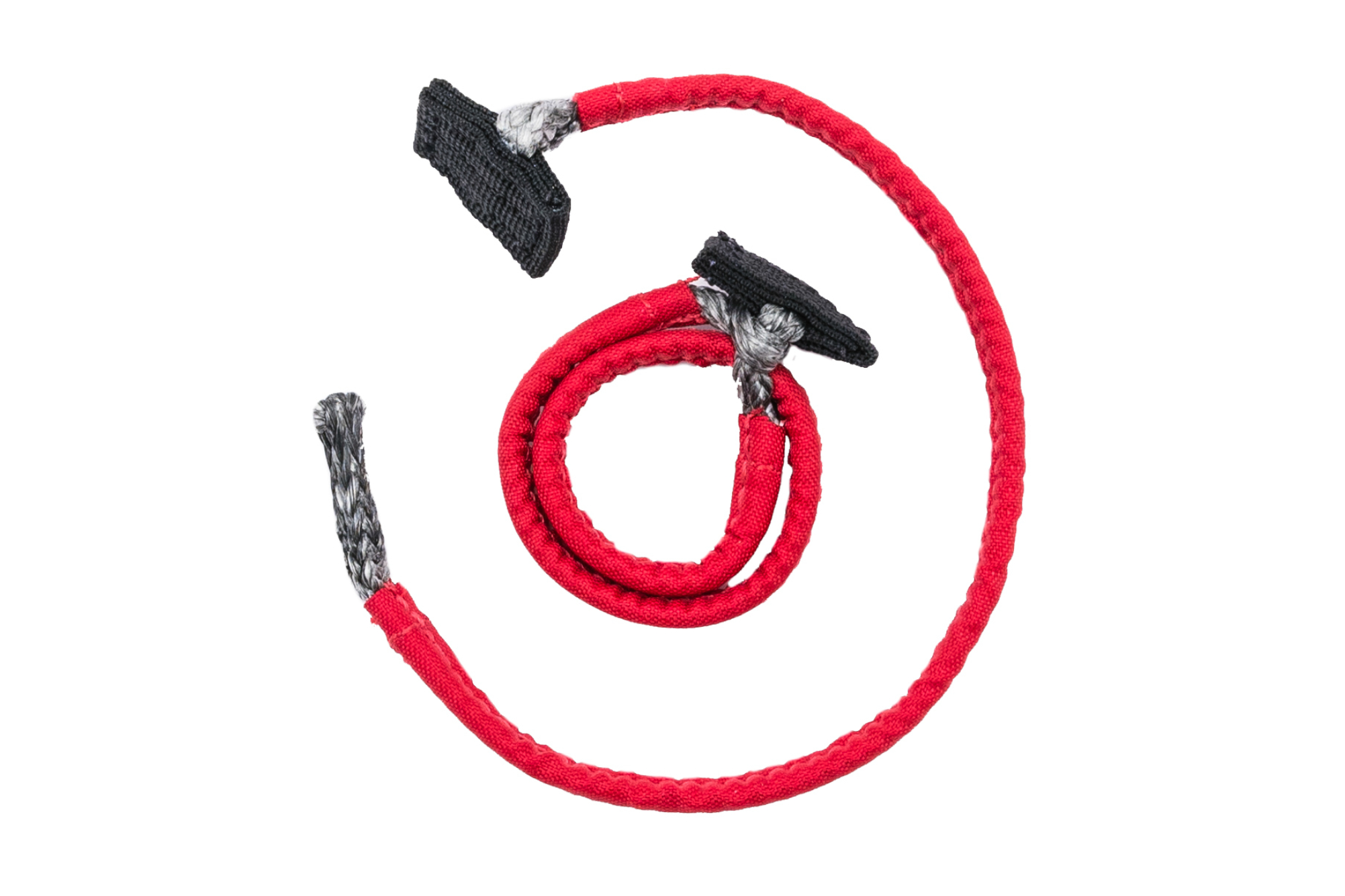
Soft connectors
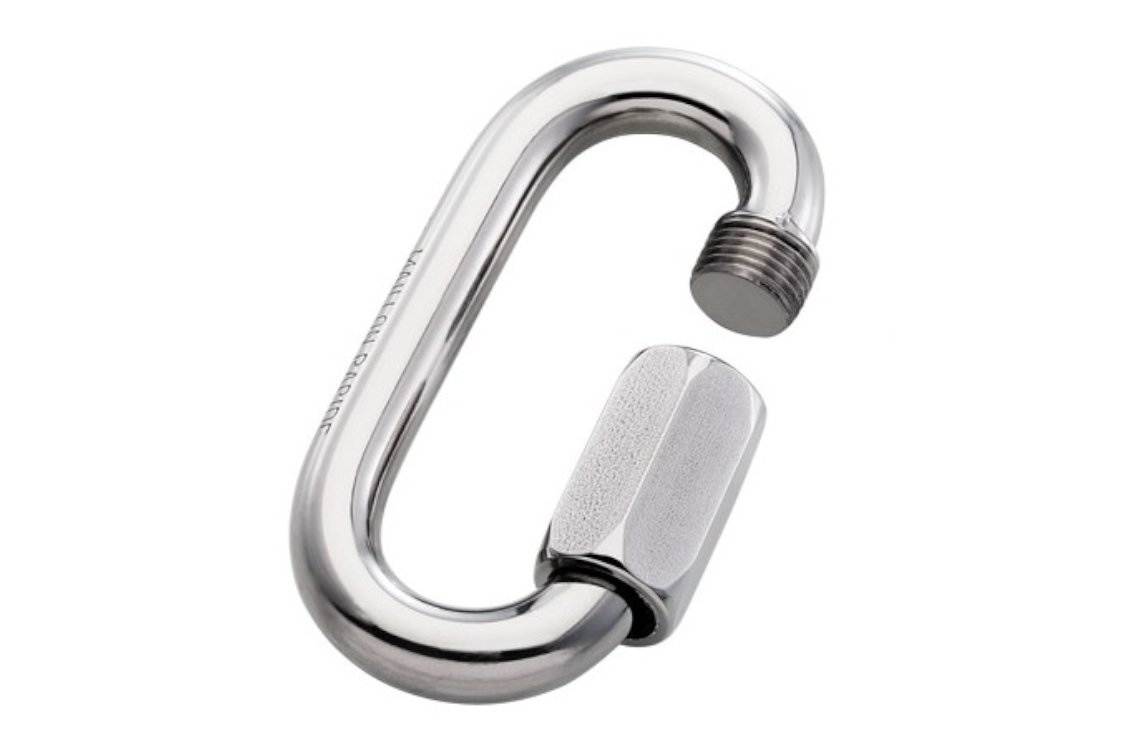
Screw links (Péguet)
The maximum strength of the karabiners is therefore obtained when the working load is applied to the main axis. But the karabiner gate must also be properly closed. Otherwise, the resistance is greatly reduced as shown by the 3rd engraved value.
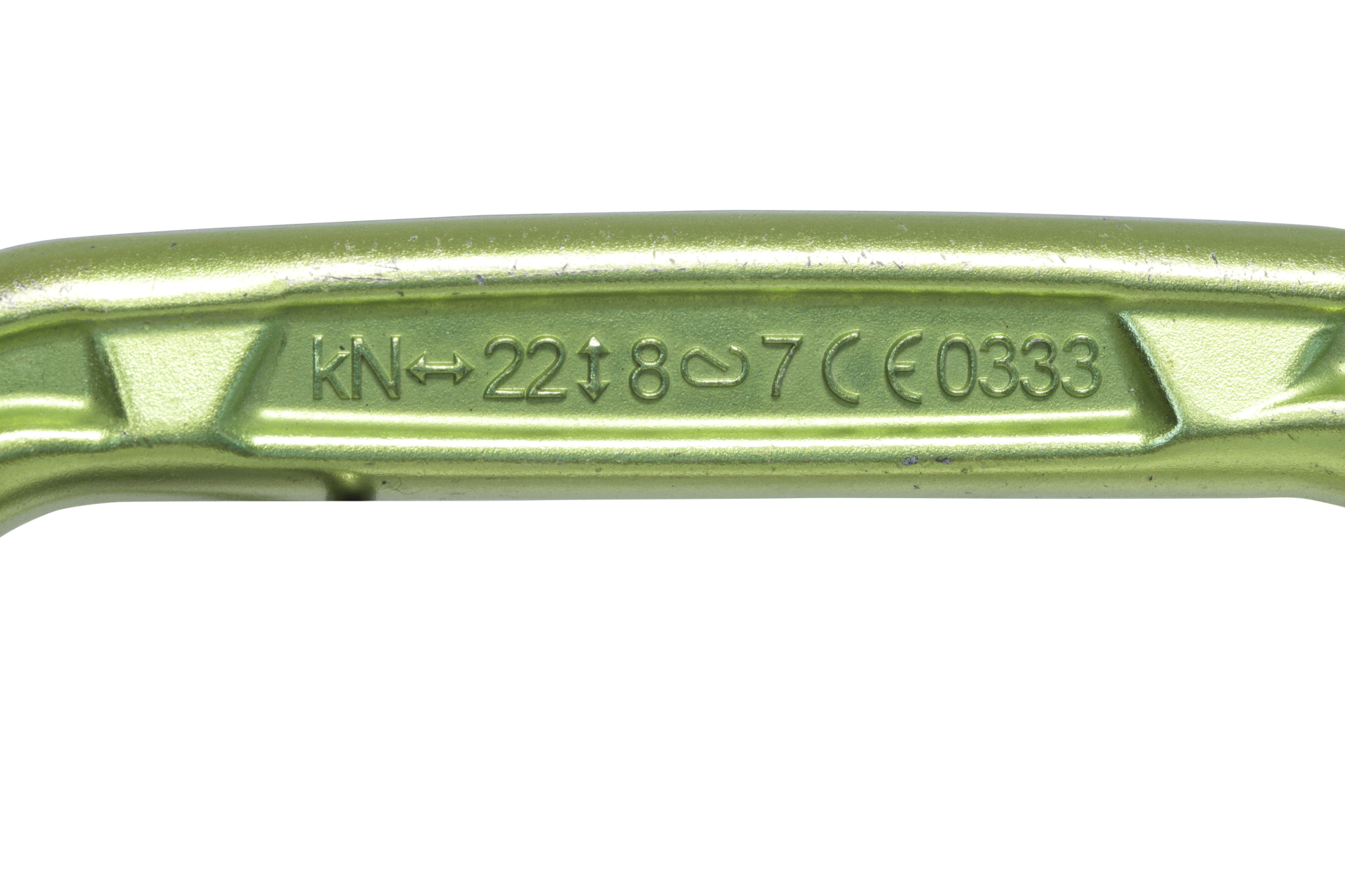
To avoid this kind of inconvenience, the karabiners are called "automatic" because they are equipped with a locking system that engages automatically when the opening gate is released, without any action on the part of the user.
On the other hand, to avoid any accidental opening that would reduce the resistance, the user must perform one or more specific actions in order to release the gate. This may involve a quarter turn on the gate before pushing it (2 steps), or require a small movement of the ring before applying the quarter turn to it (3 steps). These systems may sometimes seem a little "complicated" and require both hands to successfully open the karabiner, but considerably limit the risk of finding yourself in flight with an open gate karabiner which will then have lost more than half of its resistance.
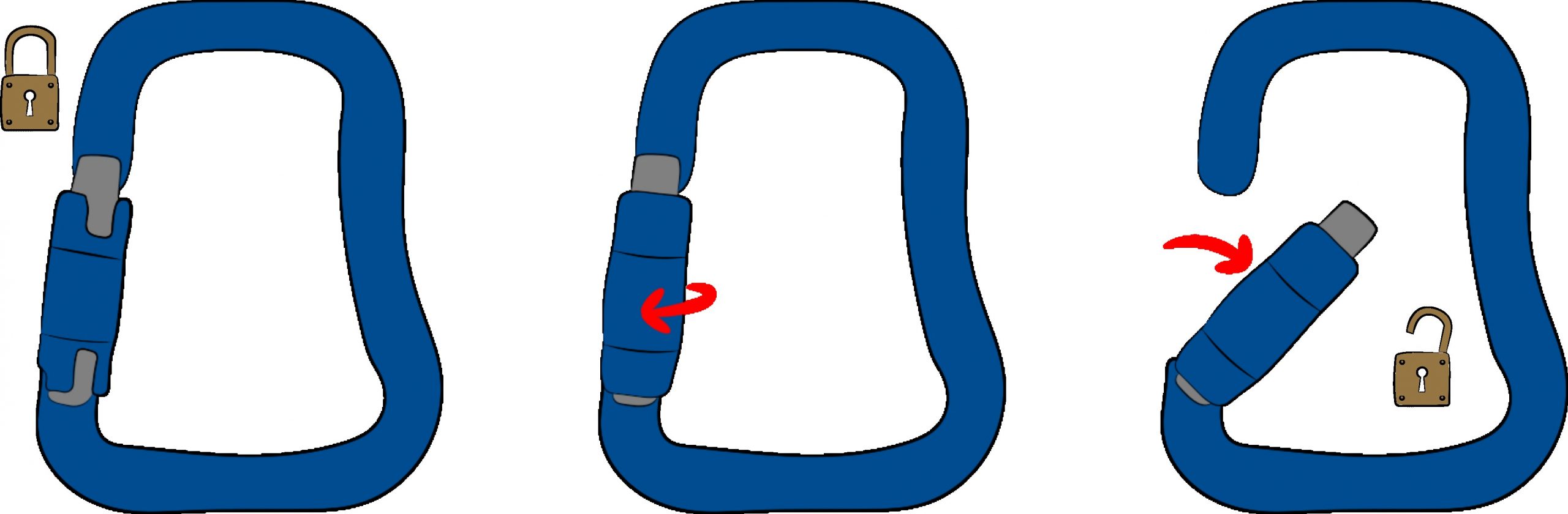
"2-step opening"
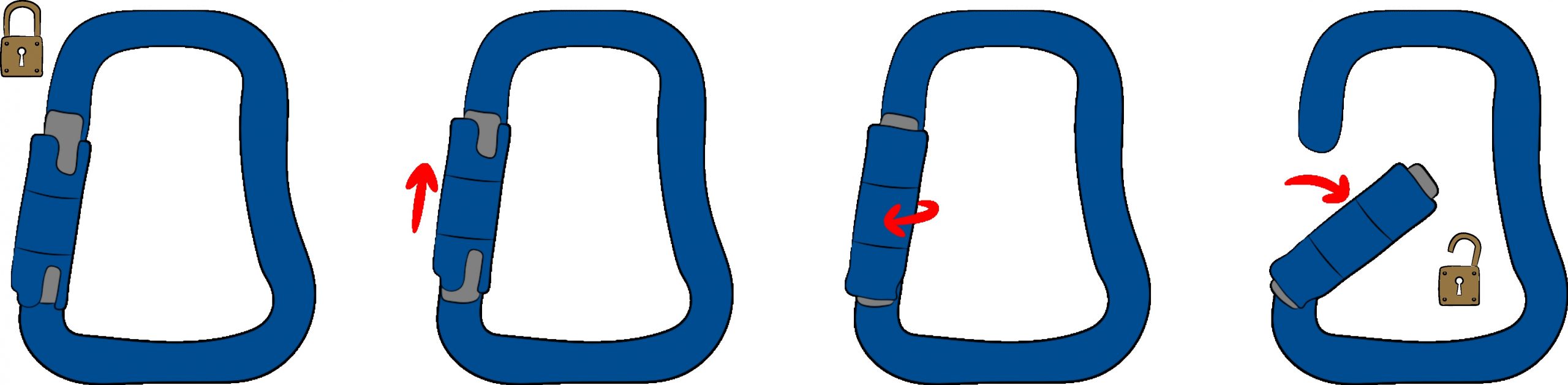
"3-step opening"
This locking system can also be manual, with a ferrule for example that the user must screw to lock the carabiner. If the user does not perform the action of screwing the ferrule, the carabiner is not fully locked and the gate could open unexpectedly, by catching it for example.
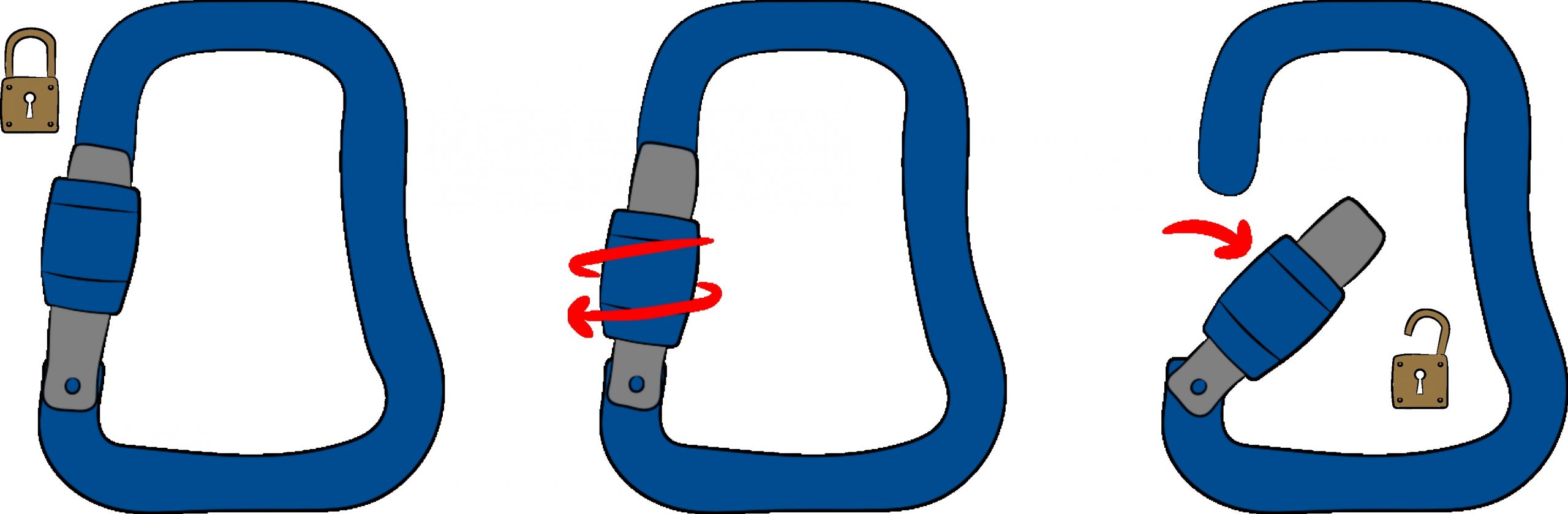
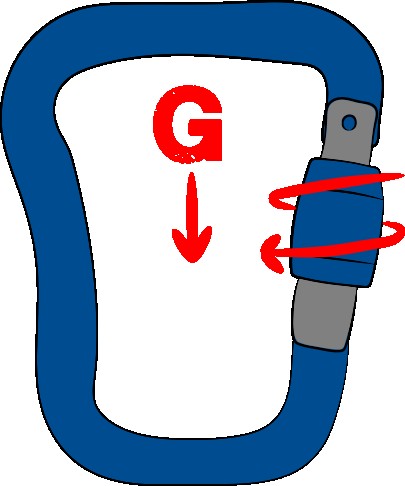
Its opening also requires a manual action by the user, by unscrewing the ferrule and opening the gate. This type of locking is not completely safe, because the various vibrations it may undergo (in flight, in the trunk of the car, etc.) can end up unscrewing the ferrule and allow the gate to open. If you use this type of carabiner (in mountain flying for example), we recommend placing the carabiner in such a way that the ferrule lock is facing downwards. In case of vibration, gravity will help to always bring the ferrule back to its locked position. In the other direction, gravity can facilitate unscrewing in combination with vibrations.
Other systems may exist, but these are the main ones that we will find on the carabiners available in the paragliding environment.
SPECIFICITIES RELATED TO THE EMERGENCY PARACHUTE
As we have just seen, a connector is designed to connect 2 elements (straps or other loops). Normally the applied load will be along the axis formed by the 2 connected elements.
The connectors seen previously can therefore be perfectly suitable (subject to sufficient nominal resistance) for connecting the emergency risers to the harness, or the parachute to the risers.
Most of the time, the entire deployment chain of the emergency parachute is hidden (with the exception of the handle!) to protect these different elements from various external aggressions (friction, UVs, etc.) or possible mishandling, in order to guarantee stable and reliable operation over time. It is therefore difficult to automatically check if everything is in order.
Regarding the rescue parachute, it is therefore recommended to use connectors:
– adapted in terms of shape to respect the working axis of the straps
– if necessary, locked using O-rings
– whose closing and locking system is not sensitive to vibration or other phenomena that could release them in the long run
– are not too sensitive to the direction of the applied load (multidirectional resistance)
It is also possible to consider connecting the straps directly to each other using a "lark's head" knot, and thus avoid a connector and the constraints it can entail. Despite the bad image that this knot may still have, it is very effective when executed correctly (like all knots!). Care must be taken to ensure that the connected straps are kept as flat as possible, and that the knot cannot loosen or allow for relative movement between the straps. Indeed, there is a significant risk of breakage if tension is applied following a long slide that will induce friction and therefore heating.
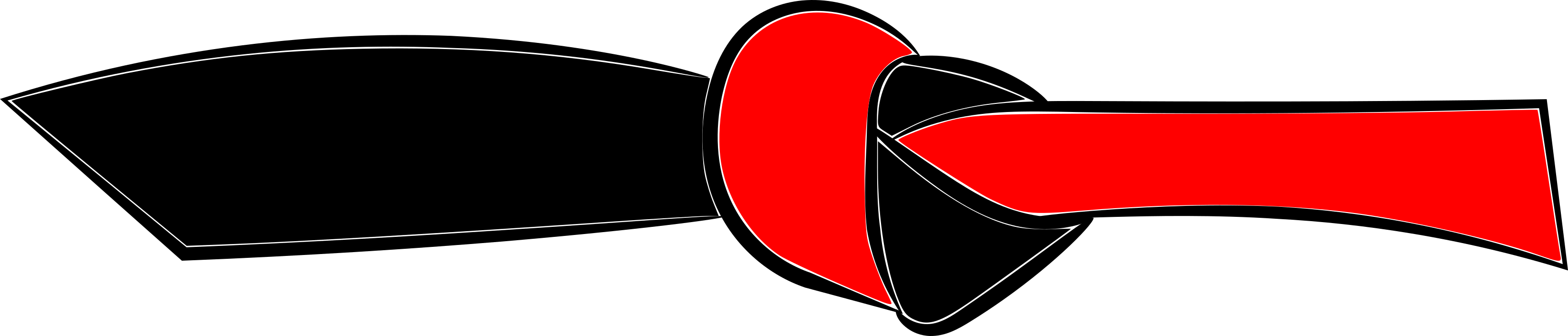
If there is no significant movement, no risk of overheating... Moreover, all the connections of your glider's lines are made in this way, as well as all the connections between the upper, middle, lower lines, etc... So it's good that it works and that it's reliable!
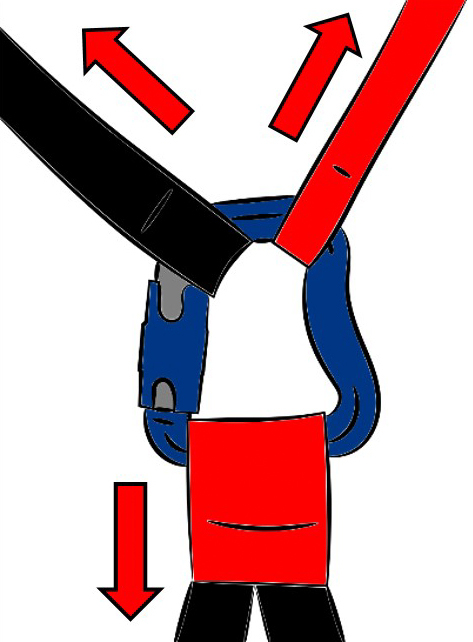
If the harness does not have shoulder straps, or if these are not equipped with anchor points for the rescue, the only solution is to connect the rescue risers to the main anchor points of the harness where the connectors connecting the glider risers are already located. Two options for making the connection:
– Add the rescue riser in the same connector that already connects the main glider.
It is possible to consider this solution if there is enough space in the connector. When the rescue is pulled, the load normally passes from the glider riser to the rescue riser when the latter begins to take over. The glider, meanwhile, should normally be neutralised and no longer have any influence on the connector.
However, depending on the connector and the straps (shapes, dimensions), the placement of the rescue riser may be crooked and modify the working axis: in case of a mirror effect or if it were to get stuck in the locking ferrule for example.
It is therefore preferable to use connectors with multi-axial resistance capabilities (Péguet, flexible connectors) in this case, or to carry a riser cutting system to be able to cut a riser of the glider if it were to start flying again after deployment of the reserve. With a hemispherical reserve in mirror effect, the angle between the risers is of the order of 90°. With a Rogallo (which has its own speed), it is possible to reach 180° and therefore induce these forces in the small axis of the connector, the weakest.
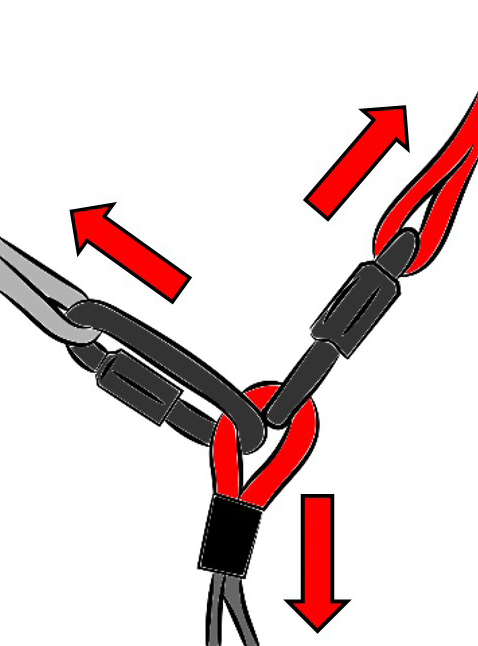
– Add another connector to separate the attachment of the main glider and the reserve.
If the 2 risers are connected to the same anchor point with 2 separate connectors, a mirror effect may also generate opposing forces on the anchor point. In this situation, the very construction of the anchor point will determine the strength of the assembly.
Same remark as before, carrying a line cutter is recommended to be able to cut a riser of the glider in the event that it flies again and increases the forces generated.