
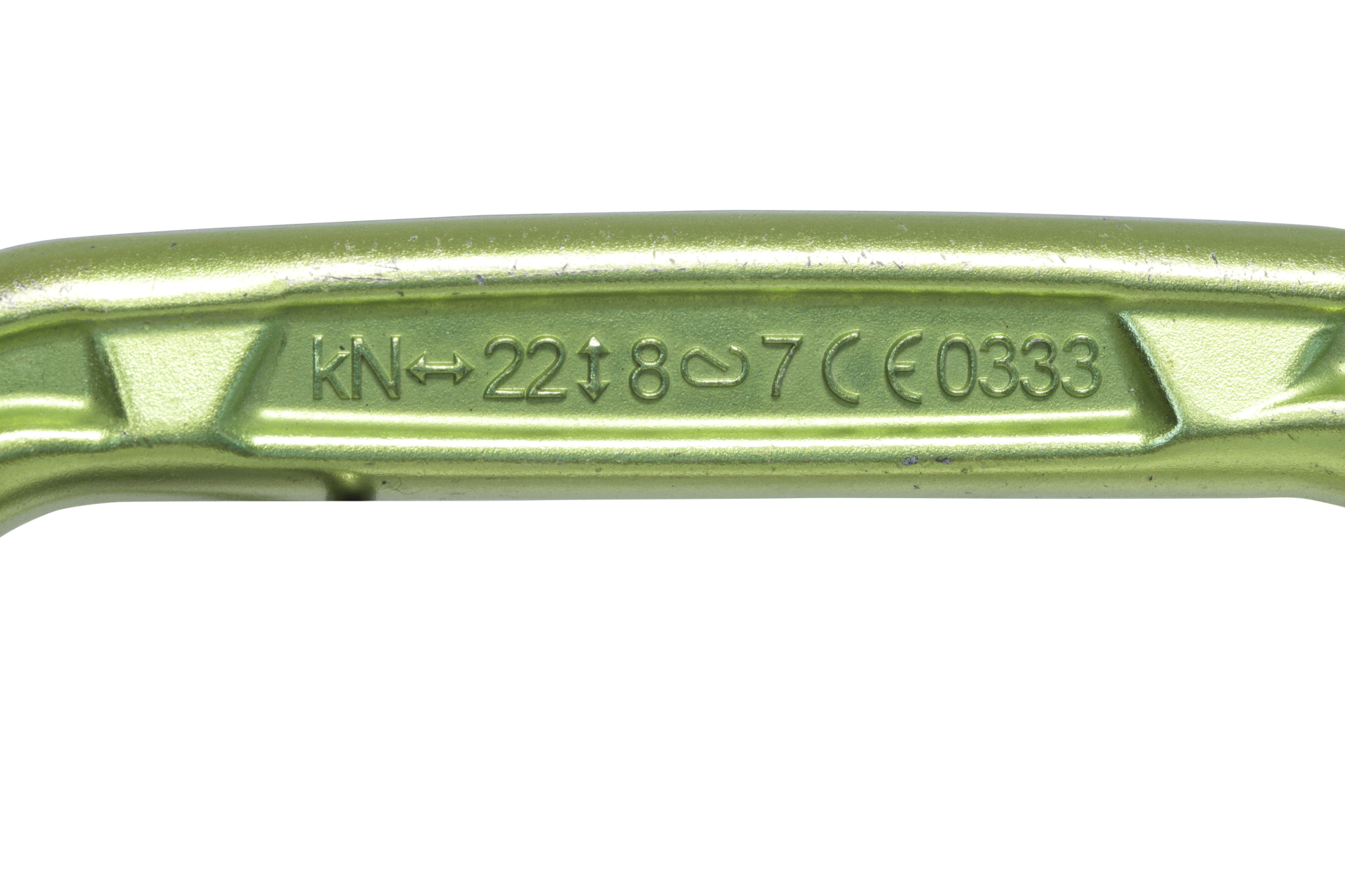
Reflection on … connector resistance
In the world of paragliding, we regularly use connectors to connect our different supports: wing, harness, rescue risers, rescue, spreaders.
They come in different shapes: square, trapezoid, oval, triangular, … of different materials: metal, textile (Dyneema), … and with different types of operation: automatic locking, anti-rotation, …
Each has its advantages/disadvantages, which will offer a more or less optimal use depending on the area where they will be used. But if there is one aspect that we all have in mind when we talk about connectors, and which "worries" some, it is their breaking strength. Basically, is this connector that I use here strong enough?
How can we be sure that the model we have chosen is resistant enough to the different loads it will have to withstand? There are the standards, of course!
There are standards for wings, harnesses, spreaders, rescue parachutes, but in free flight there are currently no standards for connectors, which are the link between all these elements.
Let's look at each of the existing standards, to see what we can find as a recommended resistance value on the different points where connectors could be found.
PARAGLIDING: Standard EN 926-1&2
Part 1 concerns structural resistance, and part 2 concerns flight behaviour. We will therefore only be interested in EN 926-1.
As part of this approval, the wing undergoes 2 tests: one will subject the wing to a violent impact (1000 DaN to 1200DaN), which must come out unscathed (it is the calibrated fuse that must give way and not the wing or its components), and a structural resistance test which consists of a load increase, wing inflated at the rear of a vehicle, up to a maximum of 8G, i.e. 8 times the maximum MTOW of the wing concerned. Once this value is reached, the wing is released to be analysed. No structural damage should be observed. This load is distributed over the entire wing, the fabric, the seams, the lines, but also on the risers. And it is they who will receive the connectors allowing to connect the wing to the harness.
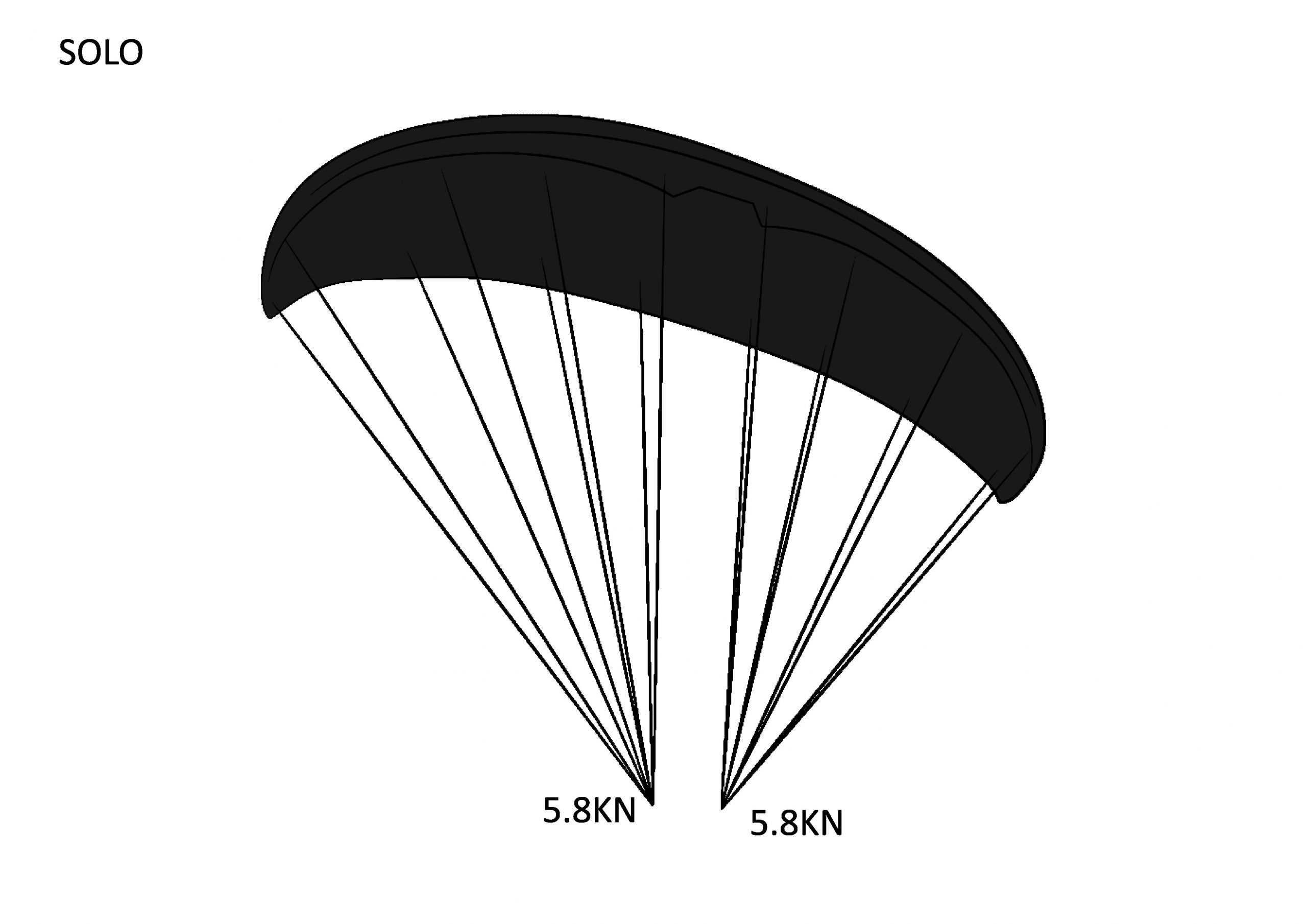
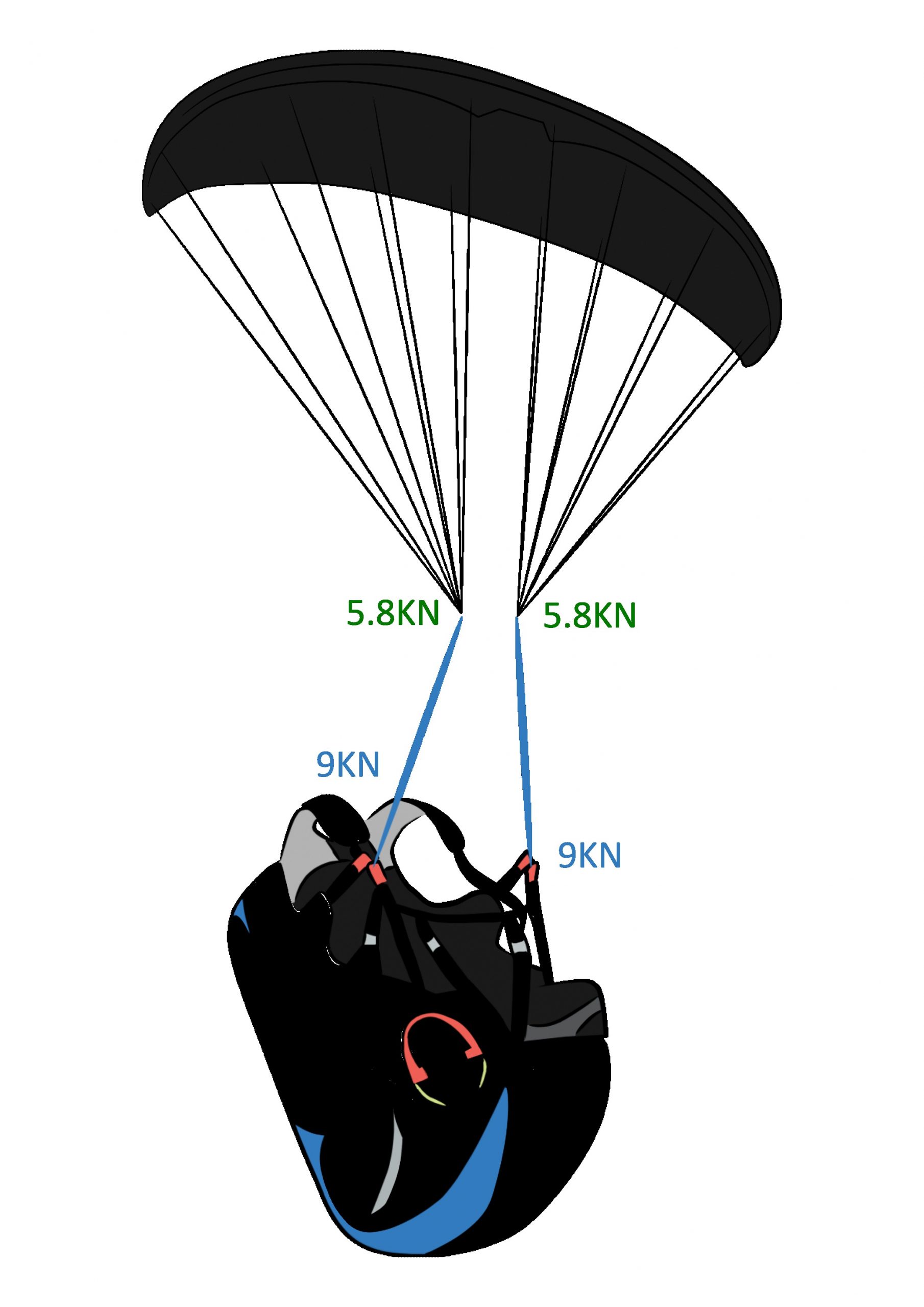
With this test, we can therefore deduce that the minimum required strength on each riser (and therefore on the associated connector) must be 8 times the MTOW of the wing, divided by 2 (for each connector). For a wing with a maximum MTOW of 145kg, we arrive at a minimum resistance of 5.8KN on each connector. (8x G x 145)/2 = 5.8KN (with G rounded to 10m/s²)
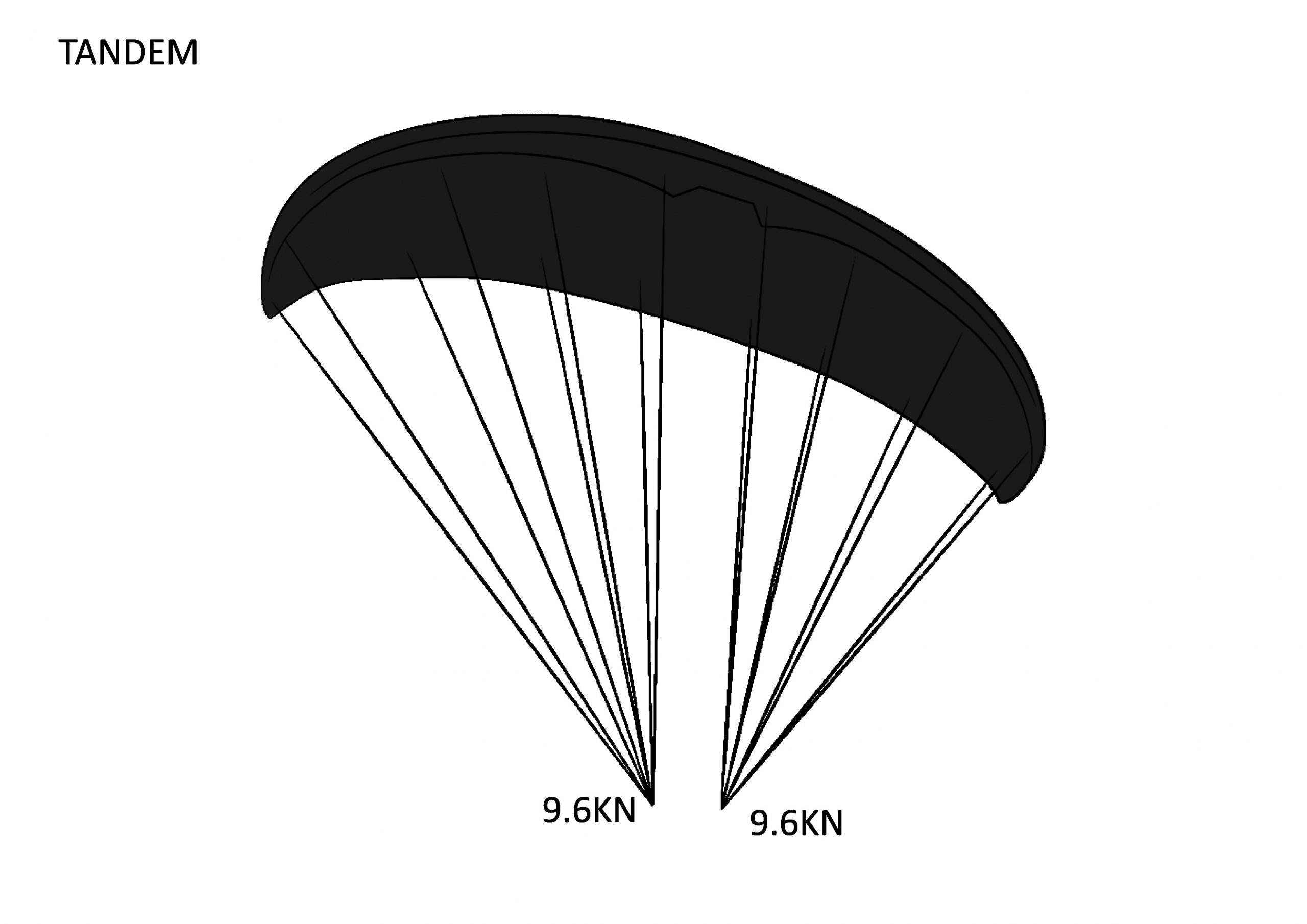
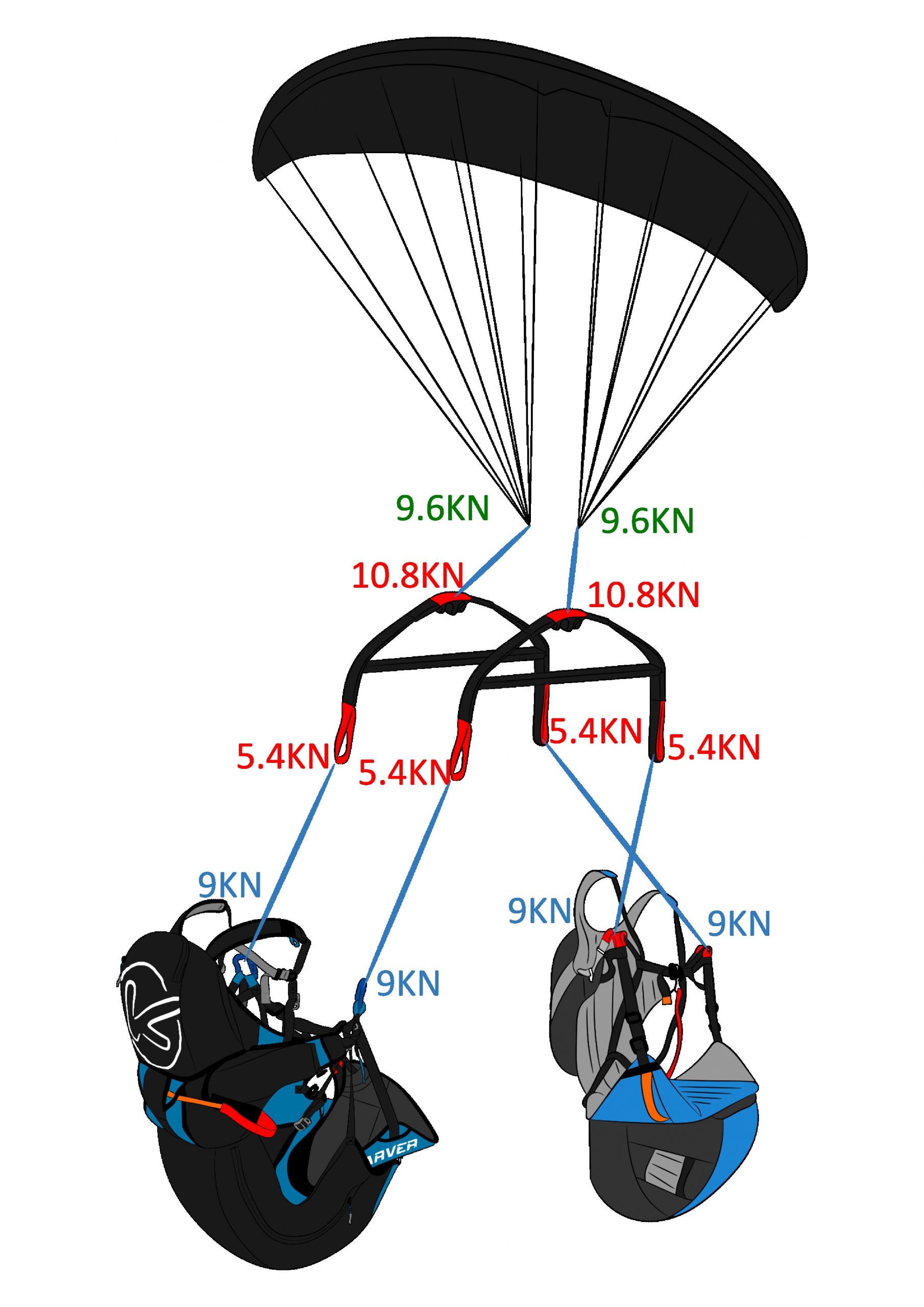
In the case of a wing designed for tandem flight, each connector connecting the spreaders to the wing must have a minimum resistance of 9.6KN. With a MTOW of 240kg loaded at 8G.
SPREADERS: LTF NfL II 91/09 Standard
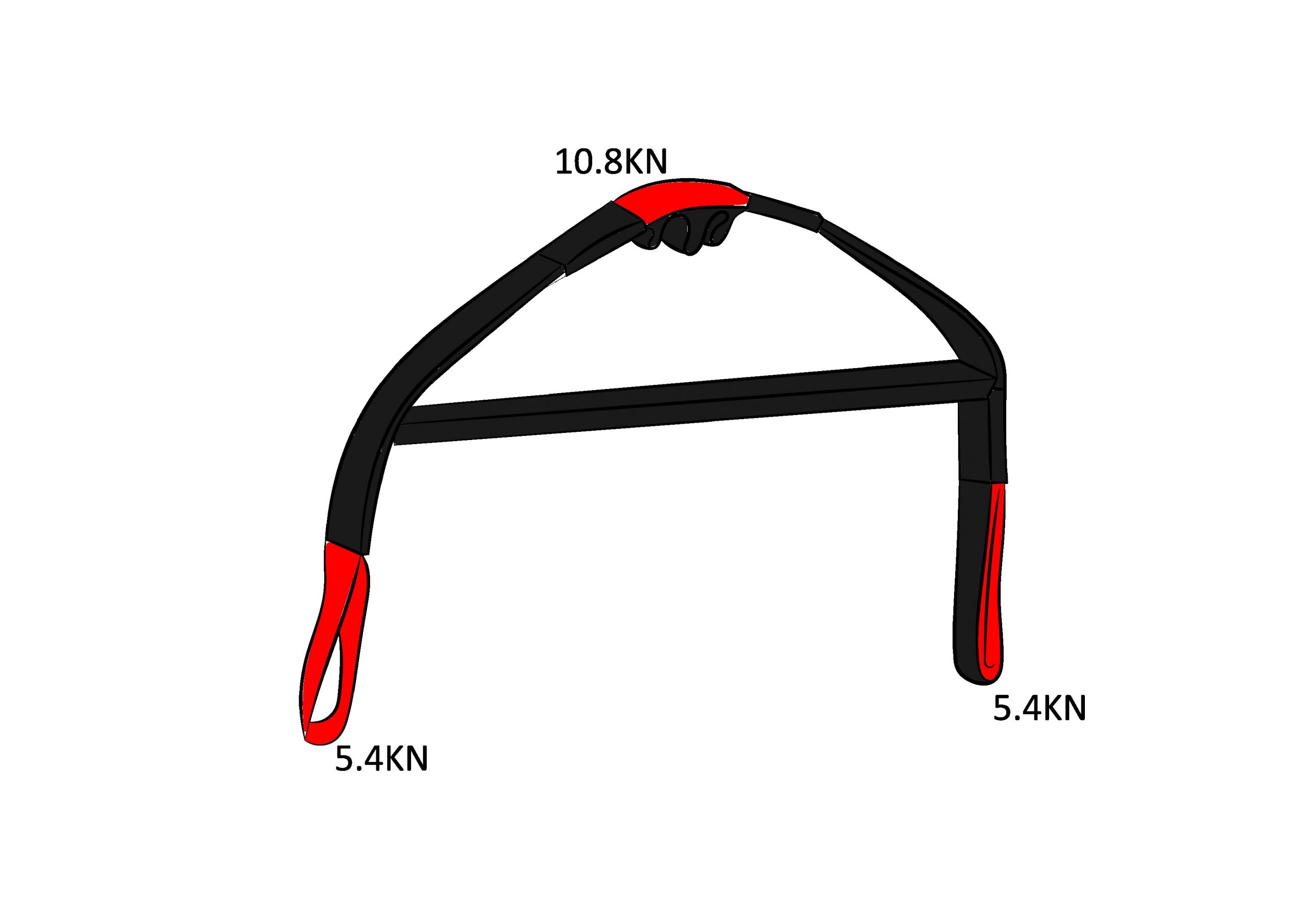
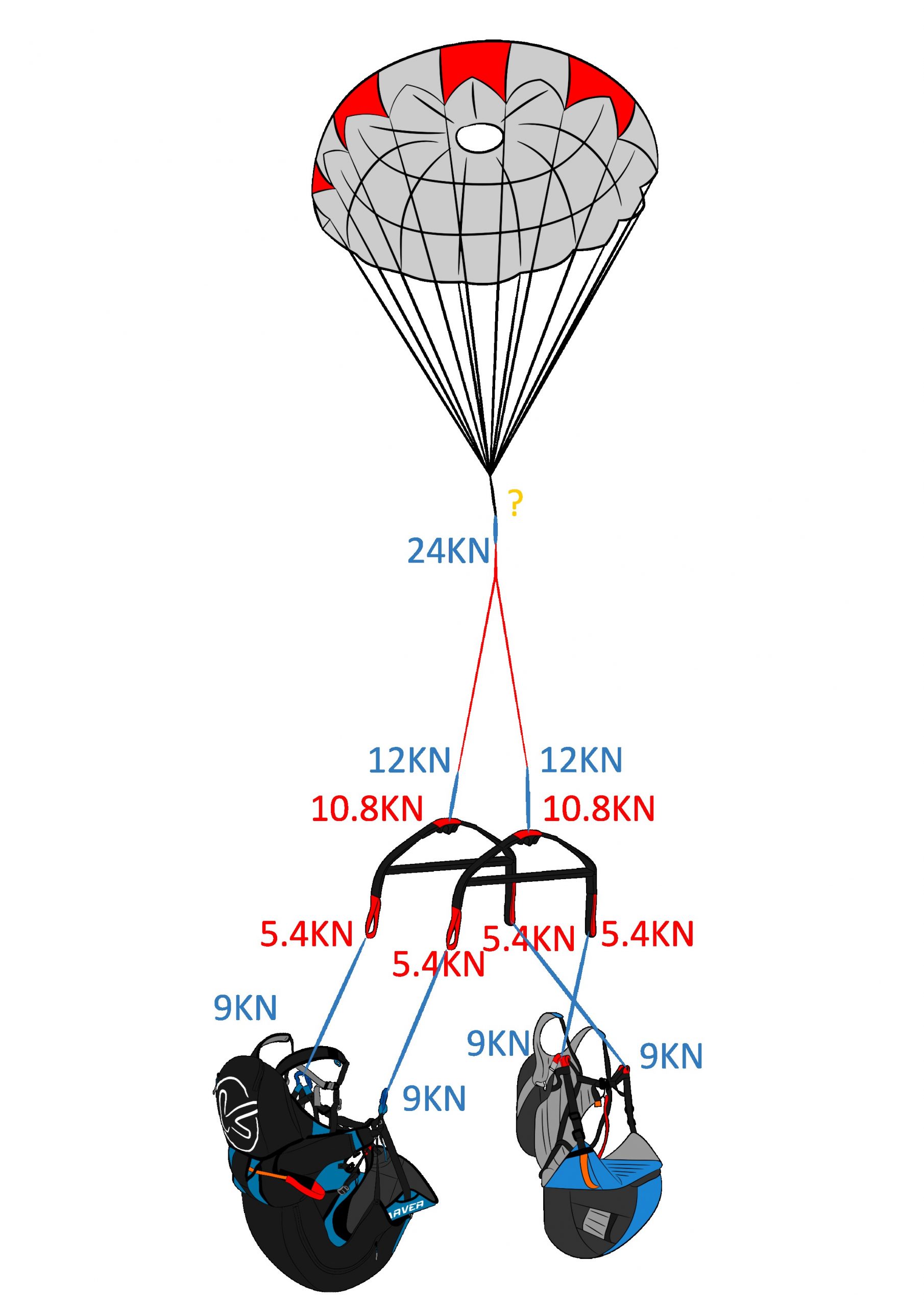
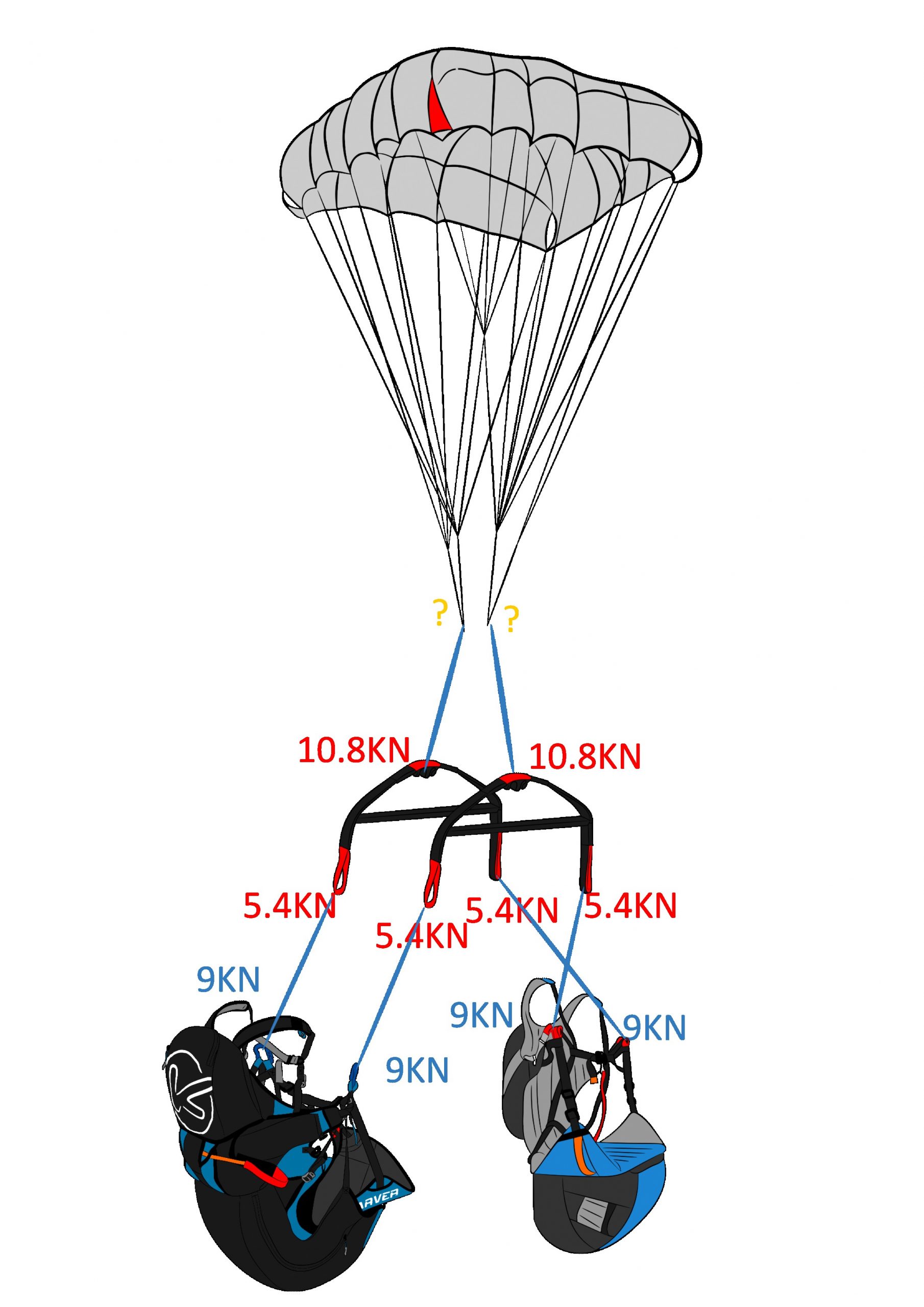
A load corresponding to 9G of the maximum MTOW is applied to the wing connection, taking the pilot connection and the passenger connection (high point and low point successively) as the anchor point. The same tests are carried out with the anchor point of the rescue parachute. For a maximum MTOW of 240kg on the two-seaters, we obtain a load value of 21.6KN (with G rounded to 10m/s²). That is 10.8KN on each spreader.
RESCUE PARACHUTE: EN 12491 Standard
Considering the rescue parachute and its link with the harness, it is unfortunately not possible to refer to a numerical resistance value in KN. Indeed, the structural test is not carried out in the same way as on the wings with a load increase and a calibrated fuse. The rescue parachute and its test system are dropped from a sufficient height to reach a speed of 60m/s (at the most restrictive), then the opening is triggered. The parachute must withstand this test without any deterioration. Unfortunately, it is not possible to extract a value in KN which would help us to define the minimum resistance of the connecting connector with the rescue risers or the harness (if the rescue risers are an integral part of the rescue parachute). We will have to find another way to determine this value…
HARNESS: EN 1651 Standard
The harness is the central element of the paraglider's equipment. The wing and the rescue system (parachute and risers) are attached to it, either directly or via various connectors. The reference standard is therefore essential with regard to the expected structural strength of the connectors.
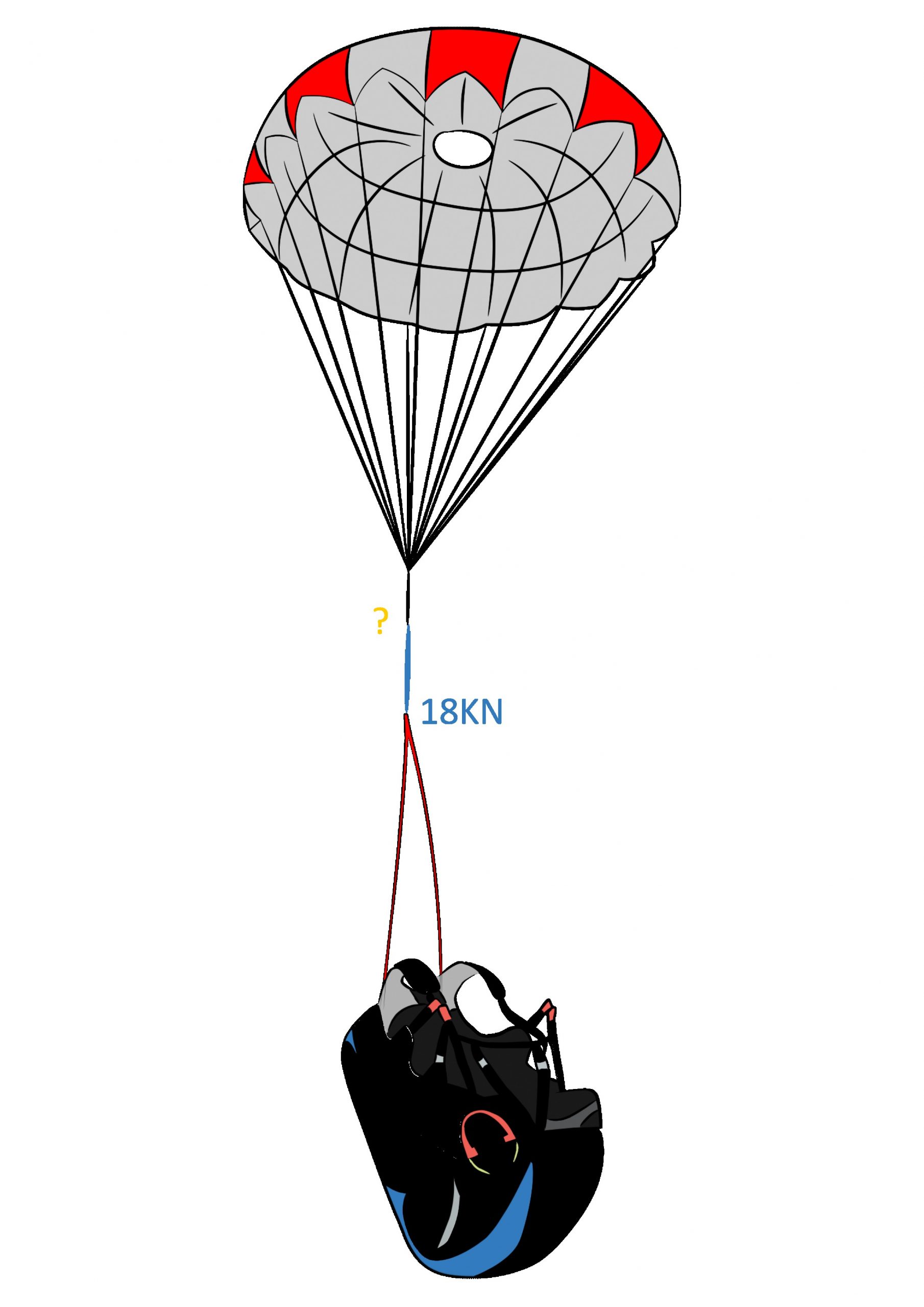
For all structural strength tests, the standard uses a pilot mass of 100kg as a reference. For this reference, the most significant load applied during the tests is 15000N (15KN), which is equivalent to an acceleration of 15G. As a reminder, the acceleration taken into account on the wings is 8G. If manufacturers wish to approve the harness for a mass greater than 100kg, the test will be weighted using a correction factor corresponding to (Mc / Mref), where Mc is the mass tested and Mref is the reference mass of 100kg. For a test at 120kg, we therefore have a factor of (120/100)=1.2 which will update all the load values. For the maximum value of 15KN, we will have 15 x 1.2 = 18KN.
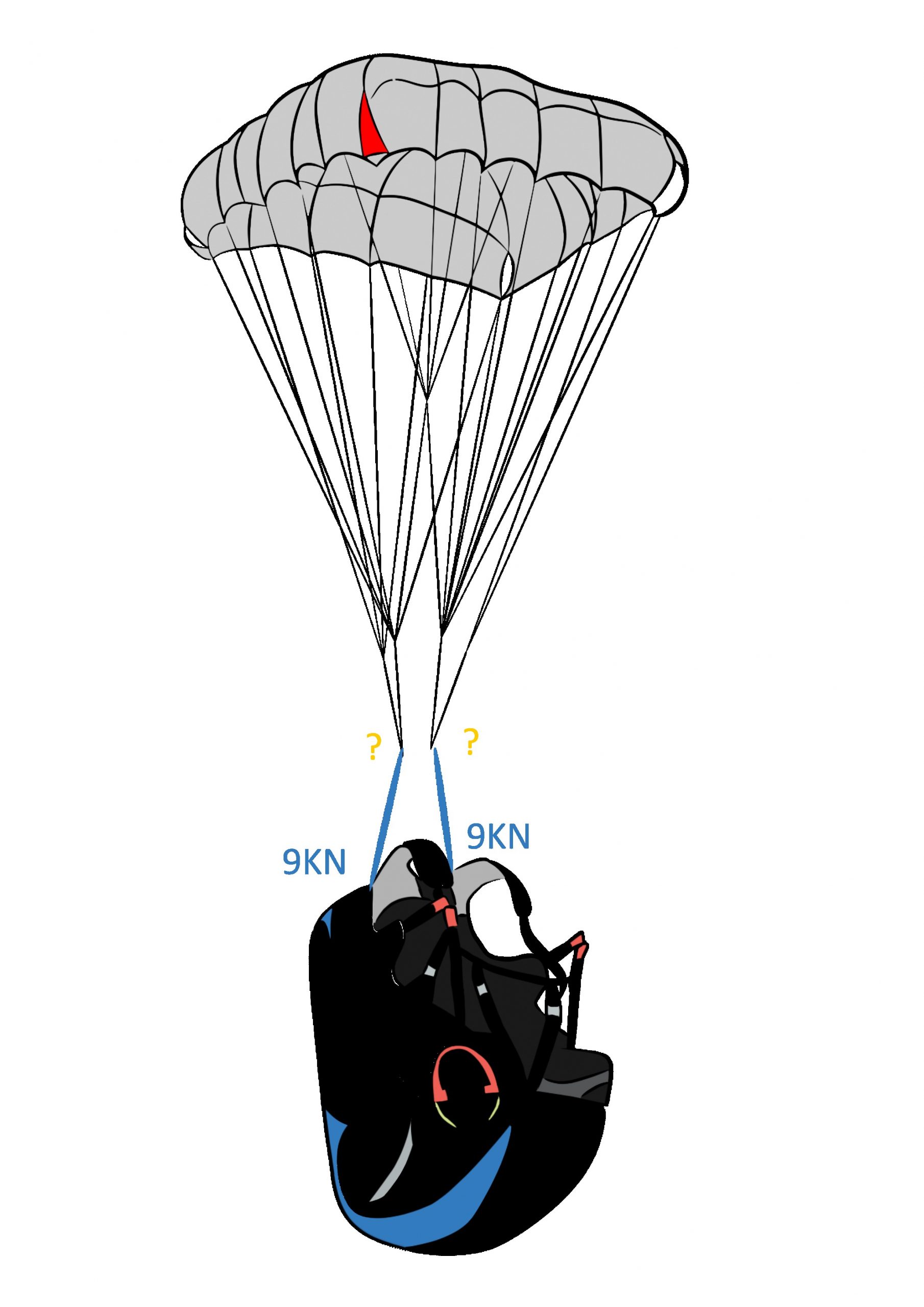
Regarding the connection of the wing, there is a test that applies 15KN symmetrically, and therefore applies 7.5KN to each of the anchor points. The same applies to the anchorages of the rescue risers to the shoulders. In the event of a higher pilot mass (120kg), the minimum value on each anchorage increases to 9KN.
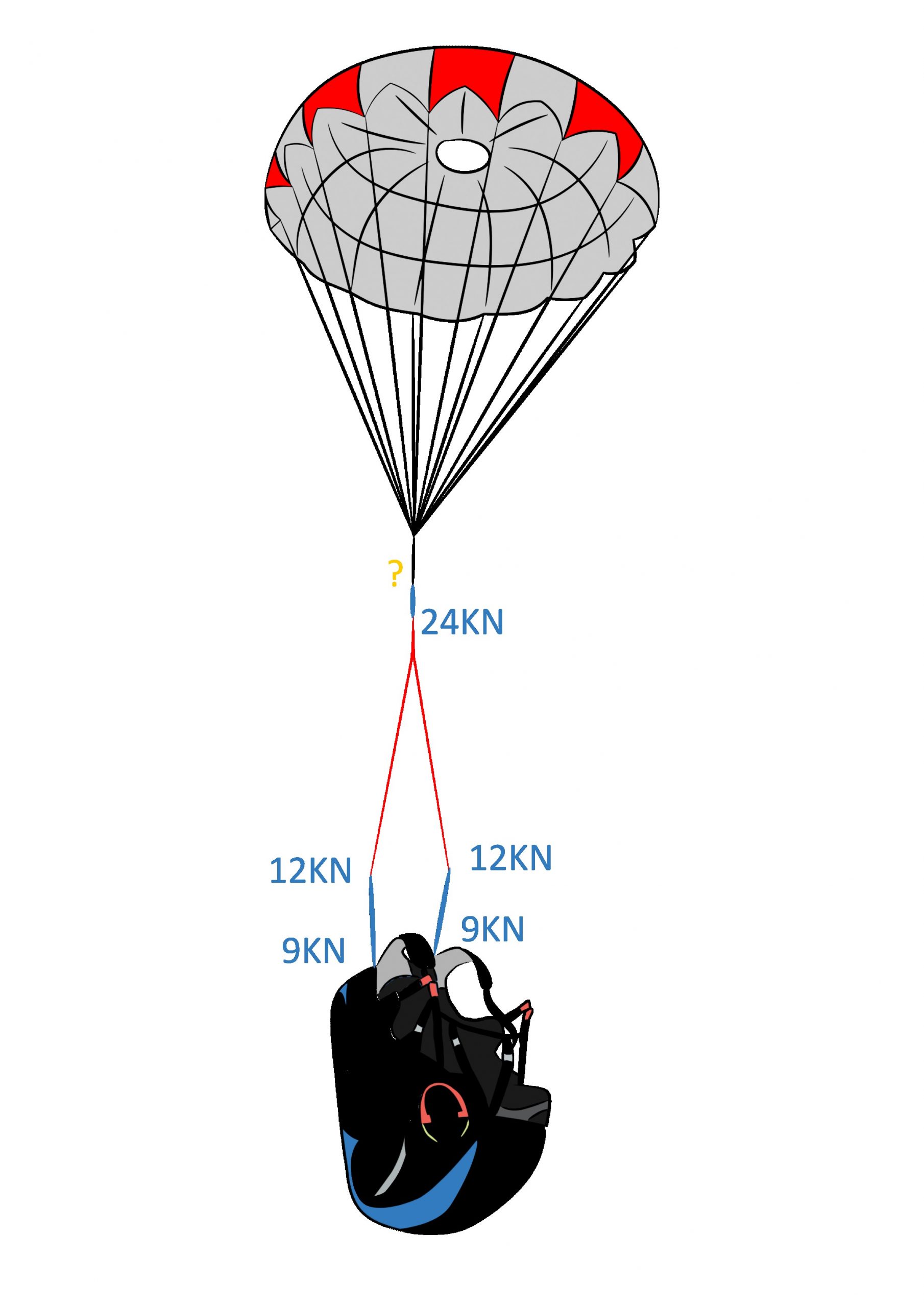
There is a particularity in this standard concerning rescue risers. If these are supplied and permanently attached to the harness, the test value is indeed 15KN. On the other hand, if these are detachable or supplied separately, the load value applied to the rescue risers increases to 24KN! This theoretically gives us a minimum resistance of 12KN on the connectors that will have to connect them to the harness.
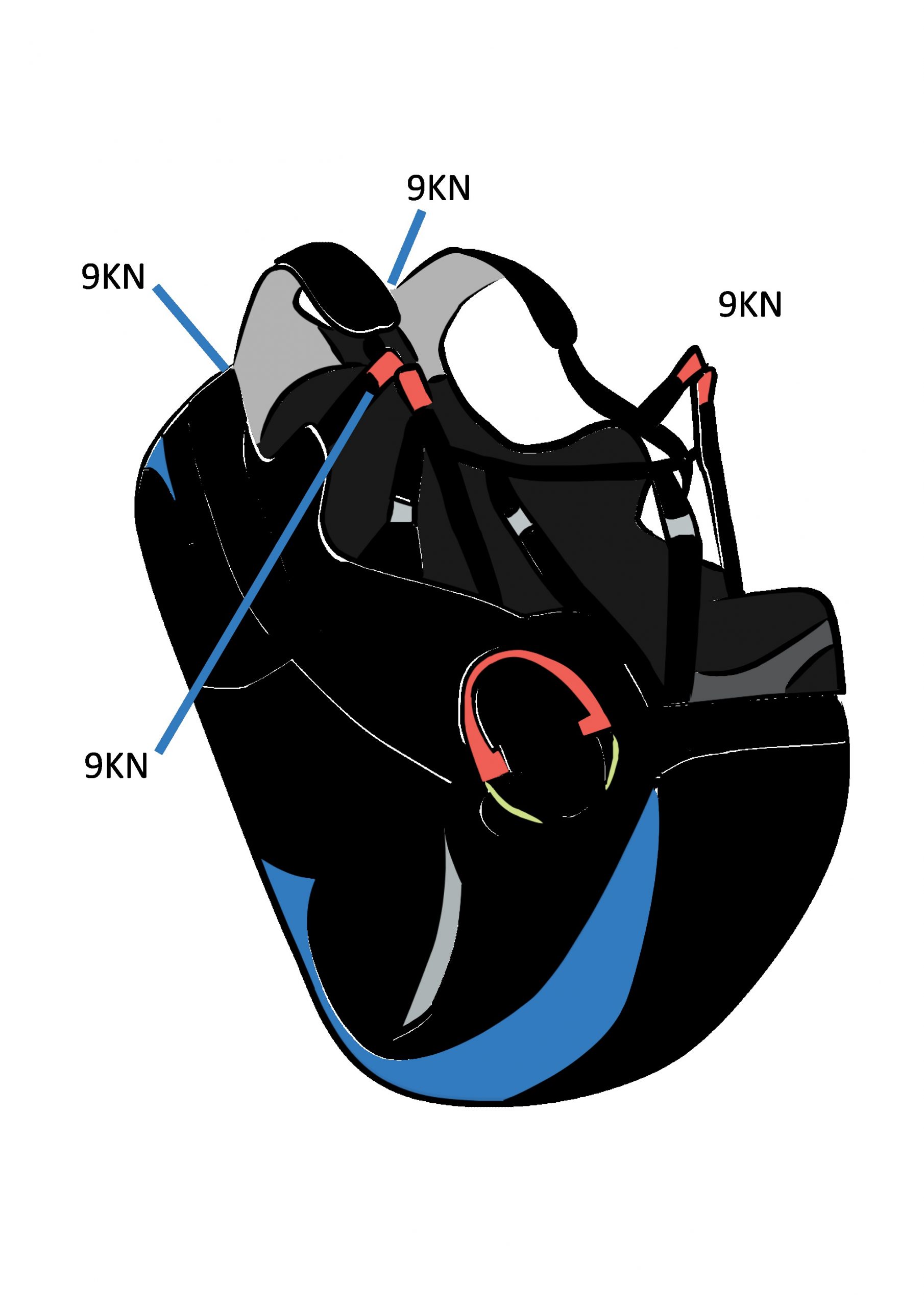
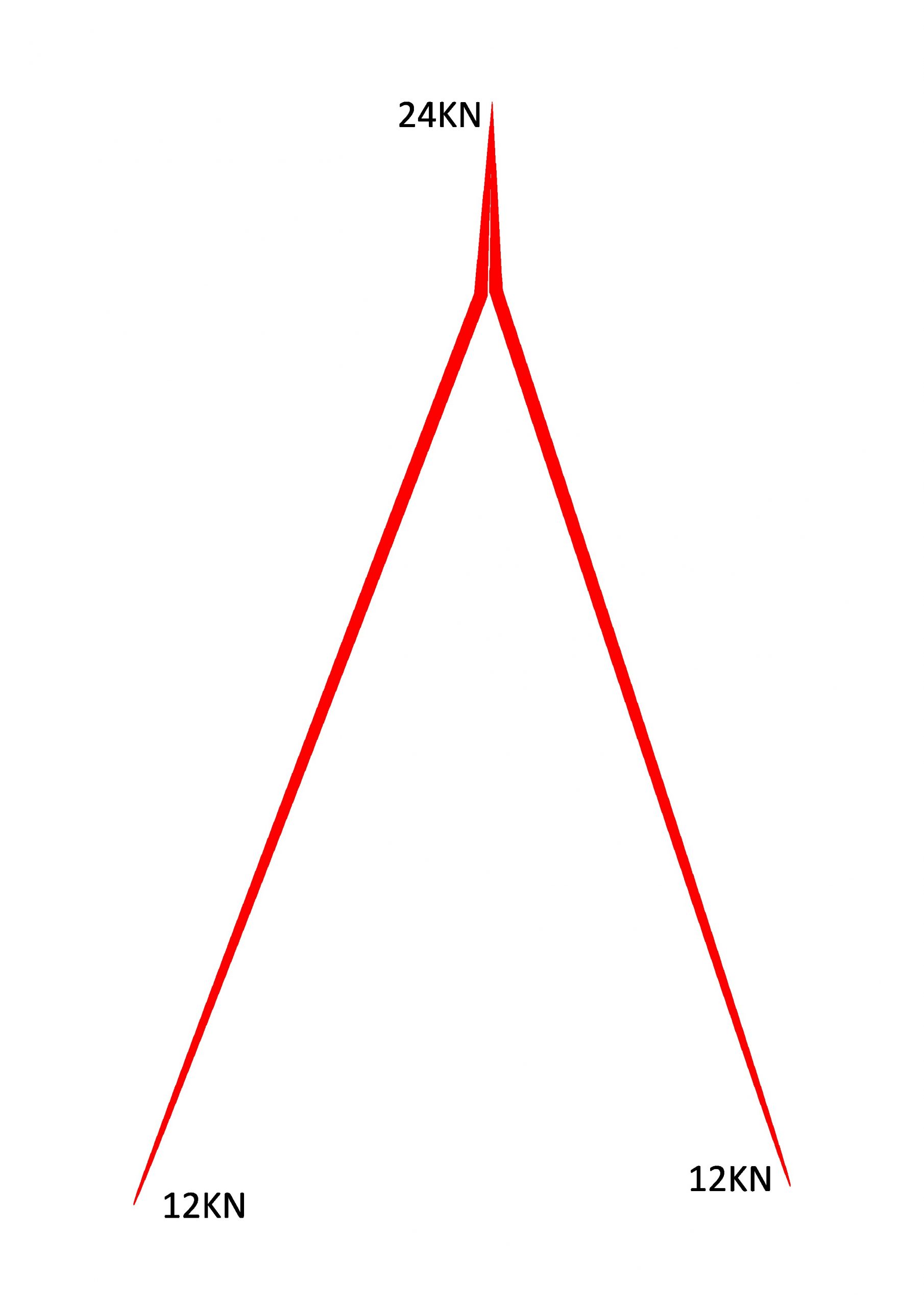
Not easy to find your way around, is it?
The following drawings will allow us to relate these different values, and help us to see things a little more clearly. For each standard, a colour and the associated minimum resistance value.
Paragliding Standard: EN 926
SOLO
Max TOW 145kg x 8G = 11.6KN
TANDEM
Max TOW 240kg x 8G = 19.2KN
Spreader Bar Standard: LTF NFL II 91/09
MTOW Max x 9G (For 240kg = 21.6KN)
Harness Standard: EN 1651
(For a pilot weight of 120kg)
Reserve Standard: EN 12491
CONCLUSION
Our previous analysis has shown us that in order to be in agreement with the various minimum resistances required in the various standards, the values of the connectors must be as follows:
– Harness / solo wing connection: 7.5KN for a harness approved at 100kg, and 9KN for 120kg
– Harness (pilot or passenger) / spreaders connection in tandem: Ditto, 7.5KN or 9 KN
– Spreaders / tandem wing connection: 10.8KN
– Rescue risers / solo rescue connection: 15KN if harness approved to 100kg, and 18KN if 120kg: WARNING: only if the risers are delivered permanently mounted on the harness and non-removable!
– Rescue risers / rescue connection, if the risers are delivered separately and removable: 24KN. Valid in solo or tandem.
– Harness / rescue risers connection (if removable): 7.5KN for a harness approved to 100kg, and 9KN for 120kg
– Spreader bars / tandem rescue connection: 12KN
The current connectors available on the market generally have an advertised resistance ranging from 18KN to 26KN, whether they are made of Zicral or textile. Steel connectors can go up to 28KN of resistance, and some textile connectors up to 30KN!
The resistance values are normally written directly on the connectors, when possible.
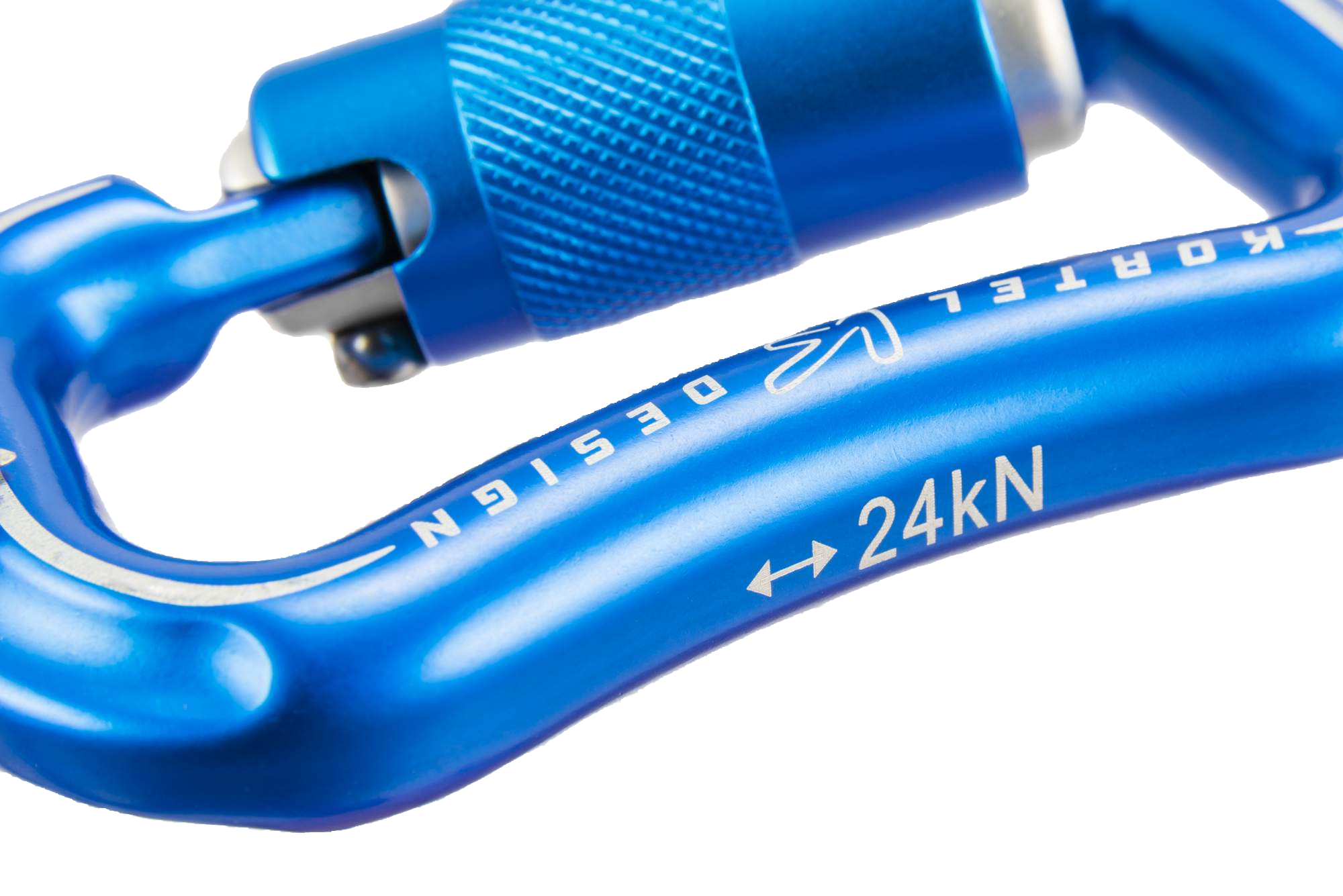
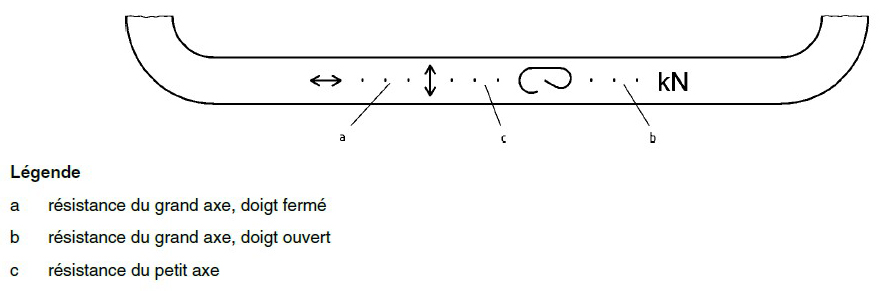
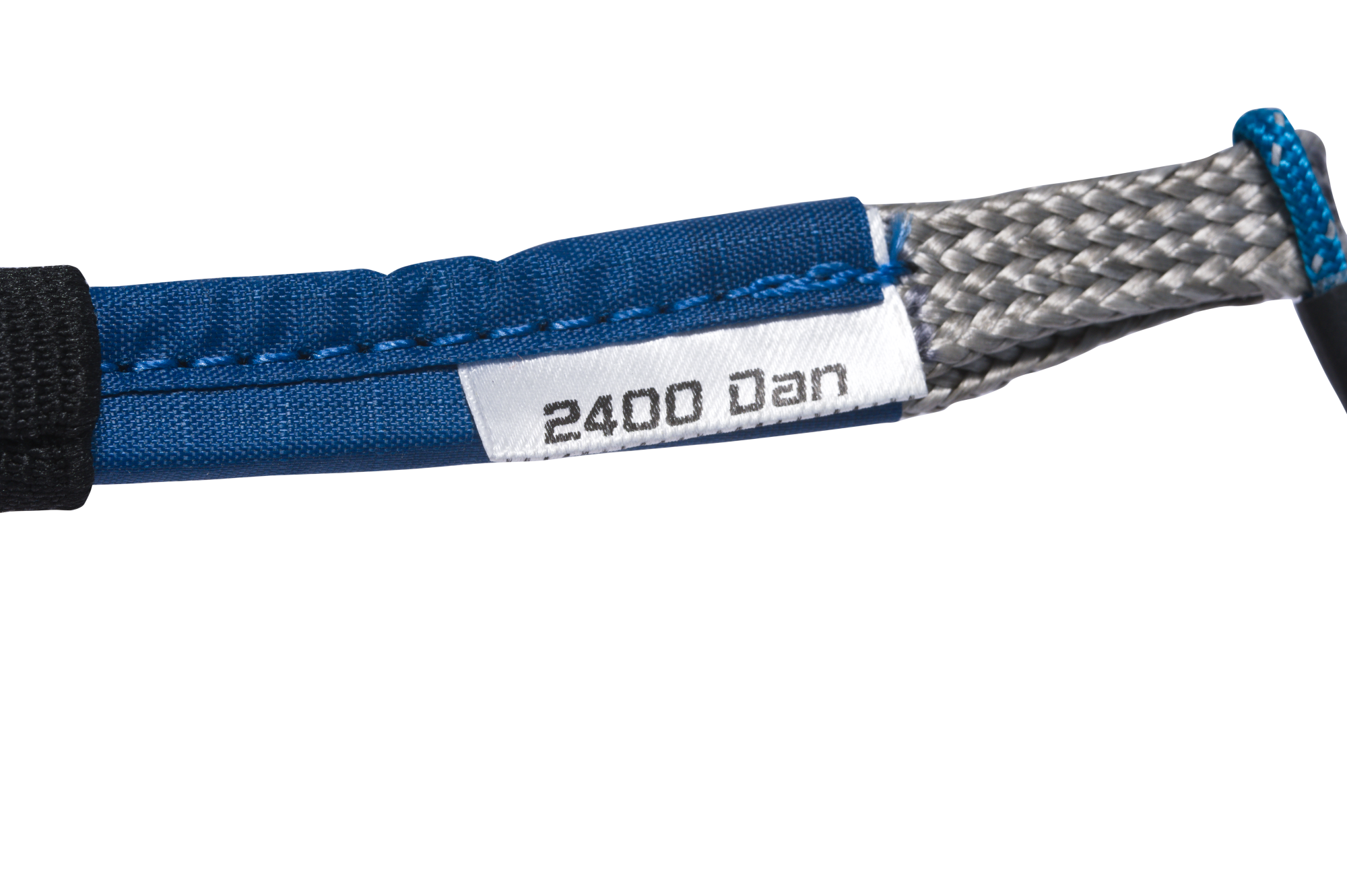
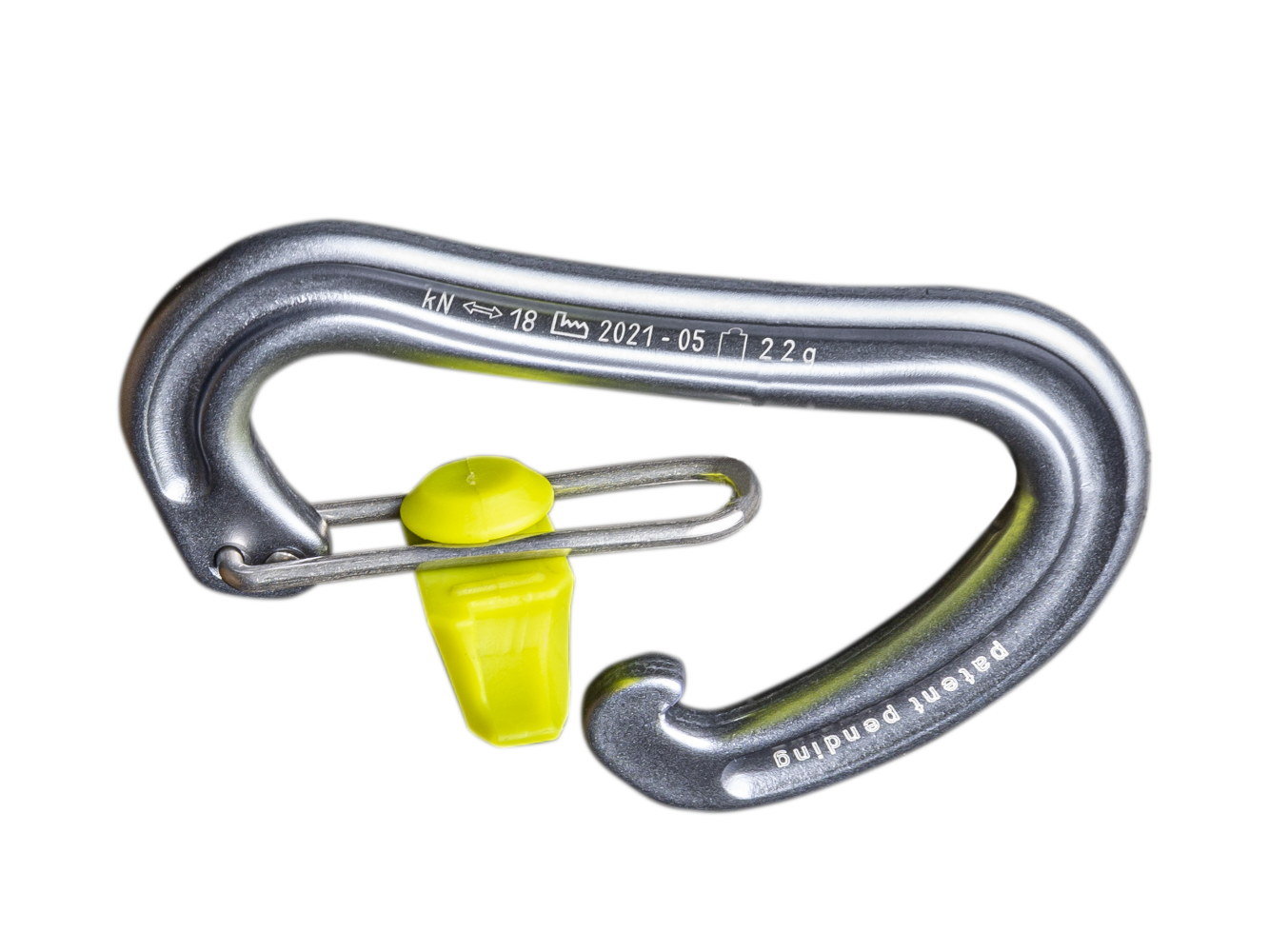
They are therefore strong enough in most cases, provided that they are chosen judiciously and used in an appropriate position. But as you have seen, it is not necessarily simple as the different standards are not in sync! The best way to be serene is therefore to only use connectors that can be suitable for any use, and therefore have a resistance value greater than 24 KN, which is the most important minimum value within all these standards (In EN 1651 regarding independent rescue risers). You can find this value written on each connector. If in doubt, do not hesitate to contact the manufacturer directly so that they can give you more information.
However, be careful to take into account the other characteristics (locking, multi-axis work, fatigue work, dimensions) of each connector before assigning them a role
We invite you to browse the "Reflection on ... Connectors" where you will find more details.