
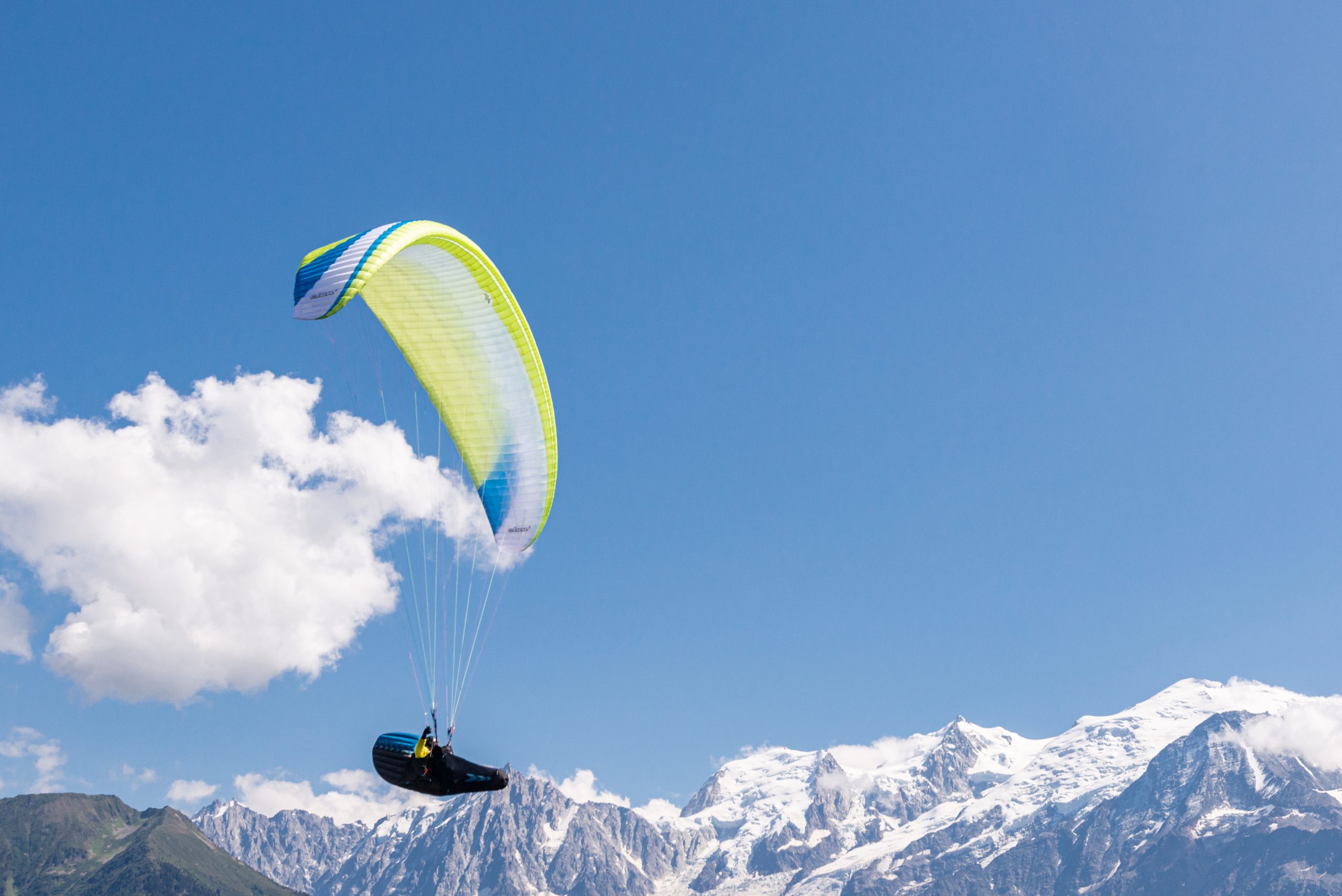
Reflection on … the piloting position
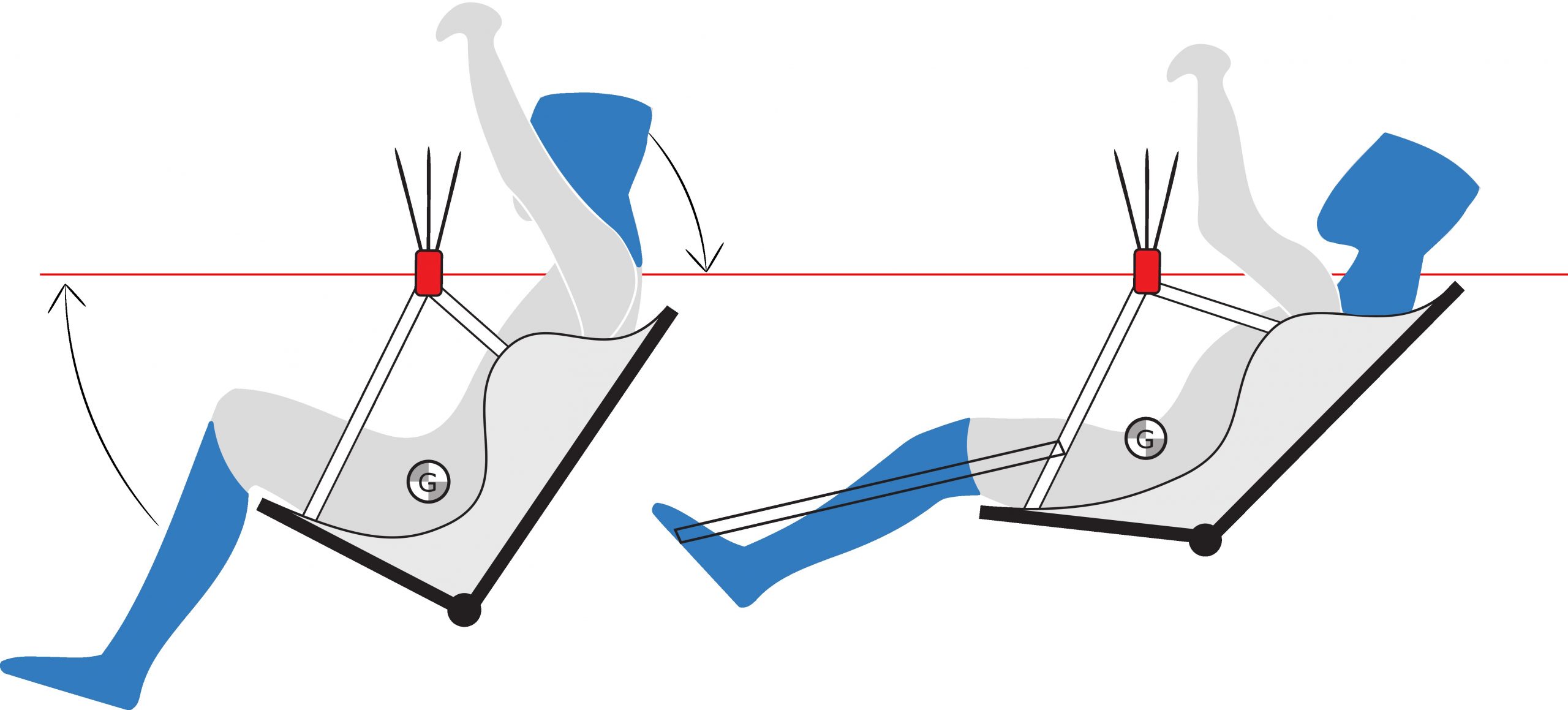
Preferences regarding the position in the harness vary from one person to another depending on their size, morphology, habits and piloting sensations. However, it is important to note that the chosen position also has a direct impact on piloting, especially depending on the experience and level of the pilot. We distinguish two extreme positions:
Sitting position: The pilot is upright in the harness, flying with their back relatively straight, while the legs remain dangling under the seat.
Reclined position: The pilot is lying back, on their back, with their legs stretched out in front of them. The legs can be supported by a pod or a simple foot stirrup.
Between these two extremes, there are many intermediate positions that can be adjusted to some extent using the harness settings.
There are three main reasons that can influence the choice of one flying position over another, and we will analyse them. To simplify, we will examine each case using a beginner pilot (fresh out of a paragliding school) and an experienced pilot (participating in World Cup level competitions, for example) as examples. Depending on your level, you can position yourself and adapt this information accordingly.
ROLL SENSITIVITY
The paraglider moves along three axes: pitch, yaw and, the most influential on the harness, roll. Roll corresponds to the tilting movement felt in flight, from left to right, which comes from the interaction of the wing with the surrounding air. These movements are a source of information for the pilot, allowing them to feel the air mass and adjust their piloting using the brakes, the harness, or both.
In mechanics, the moment of inertia represents the "resistance" that a body opposes to its movement. In the case of a rotation, such as roll, this resistance is all the greater when the masses are far from the axis of rotation. In our case, the roll axis is located approximately at the harness attachment points and passes through the pilot from front to back. Thus, the rolling movement occurs from right to left and vice versa.
When moving from a sitting position to a reclined position, the different masses of the human body get closer to this roll axis: the head, the torso, the legs. This reduces inertia and therefore facilitates movement. In other words, this increases the sensitivity of the harness to roll. Thus, a sitting position will be mechanically more stable than a reclined position.
When starting out in paragliding, it is common to be overwhelmed by the information received in flight, which can destabilise the novice pilot and prevent them from concentrating on essential tasks such as flight planning or landing. In this case, adopting a seated position is recommended in order to stabilise the harness by adopting an appropriate posture. This allows you to filter information from the glider and avoid disturbing the pilot.
On the other hand, for an experienced pilot, the situation is different. It is interesting to collect as much information as possible about the air mass in order to fly efficiently and accurately. The skills acquired by this type of pilot allow them to focus on this information and use it to manoeuvre the glider. If conditions become too turbulent, simply straighten up and adopt a more seated position to regain increased stability at the harness level.
Similarly, if a beginner pilot simply wants to energise their flying a little, there is no need to change harnesses or even glider. They can gradually adopt a more reclined position and, for example, add a foot stirrup to improve their comfort and position.
FIELD OF VISION
A paraglider enjoys spending time in the air, whether for the simple pleasure of flying or with a performance objective, covering long distances. In this quest to optimise flight, they seek all available information.
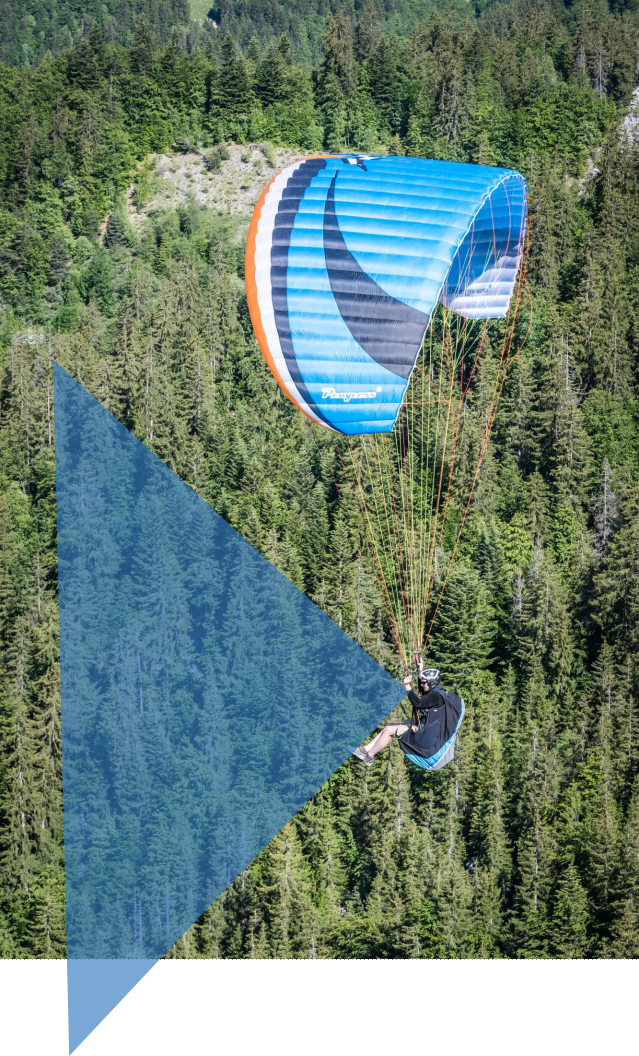
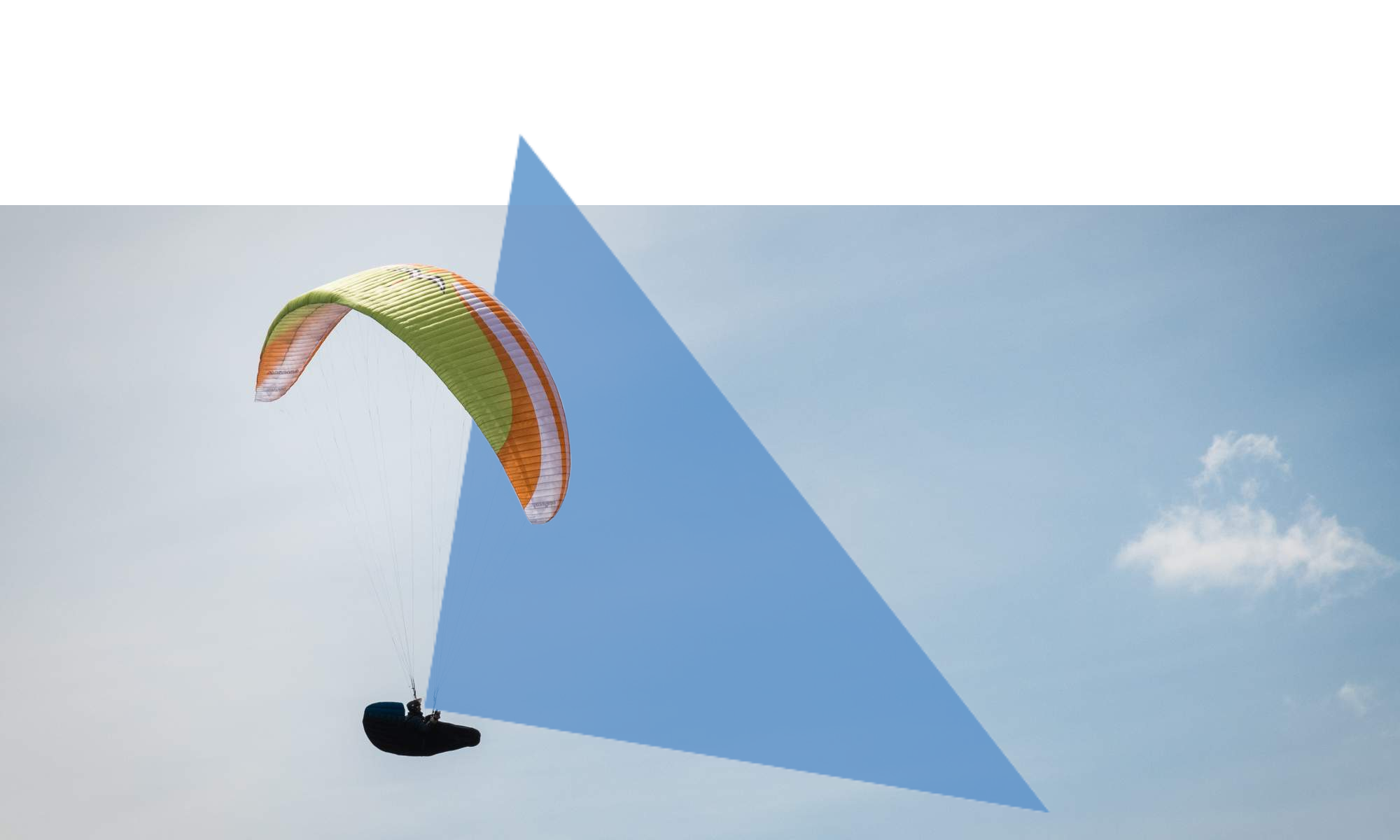
But where can you find this information and what is the impact of the flight position? In general, the information is located in front of the pilot, in the direction of travel, and is divided into three levels:
Below: This is where you find information such as the cone of evolution, the nearby terrain, the height above the ground, landing areas, wind sleeves, any obstacles such as power lines or pylons, as well as other pilots flying downstream (who have priority!).
At the same level: We find information about pilots flying at the same altitude, the more distant terrain and any obstacles.
Above: This is where you can find information about pilots and other aircraft flying above, the presence of birds, the ceiling of the day, the evolution of clouds, but also the characteristics and behaviour of your own glider.
Thus, depending on the flight position, the paraglider can access different sources of information that will allow them to optimise their trajectory and decision-making during the flight.
It is quite obvious that some elements can be found at several levels (birds, relief, obstacles, etc.).
When starting out in paragliding, our concentration is mainly focused on specific objectives such as making a successful take-off, following our flight plan and approaching the landing with complete serenity. At this stage, there are many things to take into account and staying in the air as long as possible is not necessarily the priority. So what information is important during this phase?
– Where is the landing field?
– Am I in my safe operating area?
– How high am I above the ground?
– Where are the obstacles on my flight path?
– Where are the other pilots?
For a beginner, the essential information is therefore that which is located below and in front of him. With this in mind, adopting a seated position in the harness proves to be the most ergonomic, allowing easy access to the necessary information.
As the paraglider pilot progresses, he tends to extend his flights, exploit thermal updrafts and explore new landscapes. As he gains altitude, he will have to look up and observe various elements such as the evolution of clouds during the day, the direction and strength of the wind, distant valleys and potential updrafts. In addition, since the glider can behave more dynamically, it will be essential to carefully monitor its reaction and adapt its piloting accordingly.
It is therefore quite natural for the pilot to want to lean back in order to have a clearer view of the information located mainly above him. Of course, he will also have to take a look below from time to time, but this will no longer represent the majority of the flight time.
COMFORT
The position adopted in the harness has an impact on the level of comfort felt (see the article "Reflection on ... the comfort of a harness"). Indeed, a lying position allows a better distribution of the weight of the body in the structure of the harness. This is why experienced pilots tend to gradually move towards a more reclined position in order to benefit from better comfort, especially during long-duration flights. For beginner pilots, this aspect is not a priority, given that their flights are generally of short duration and that other aspects such as stability, information retrieval and safety are more important. In addition, as mentioned above, the seated position is more conducive to finding useful information.
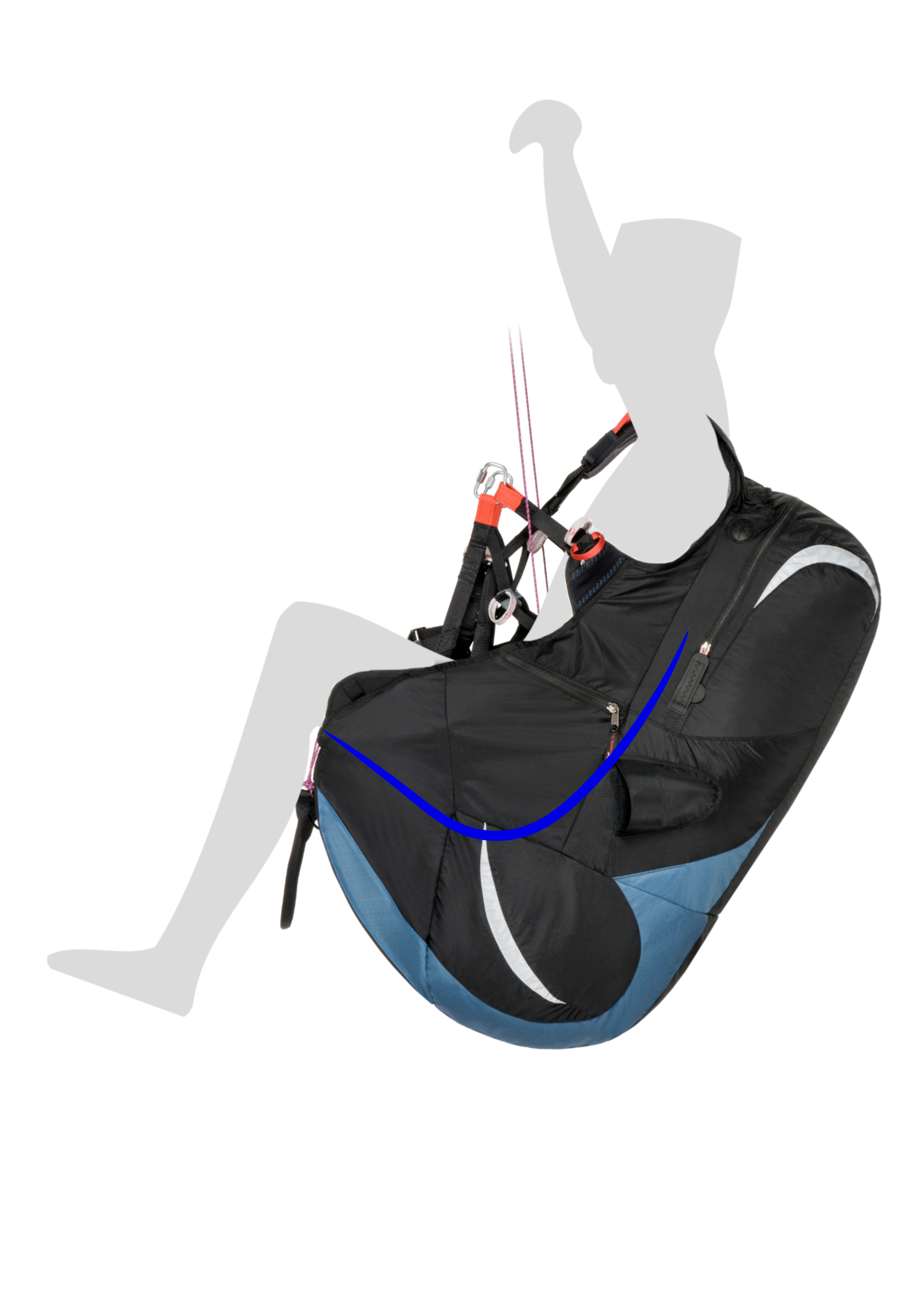
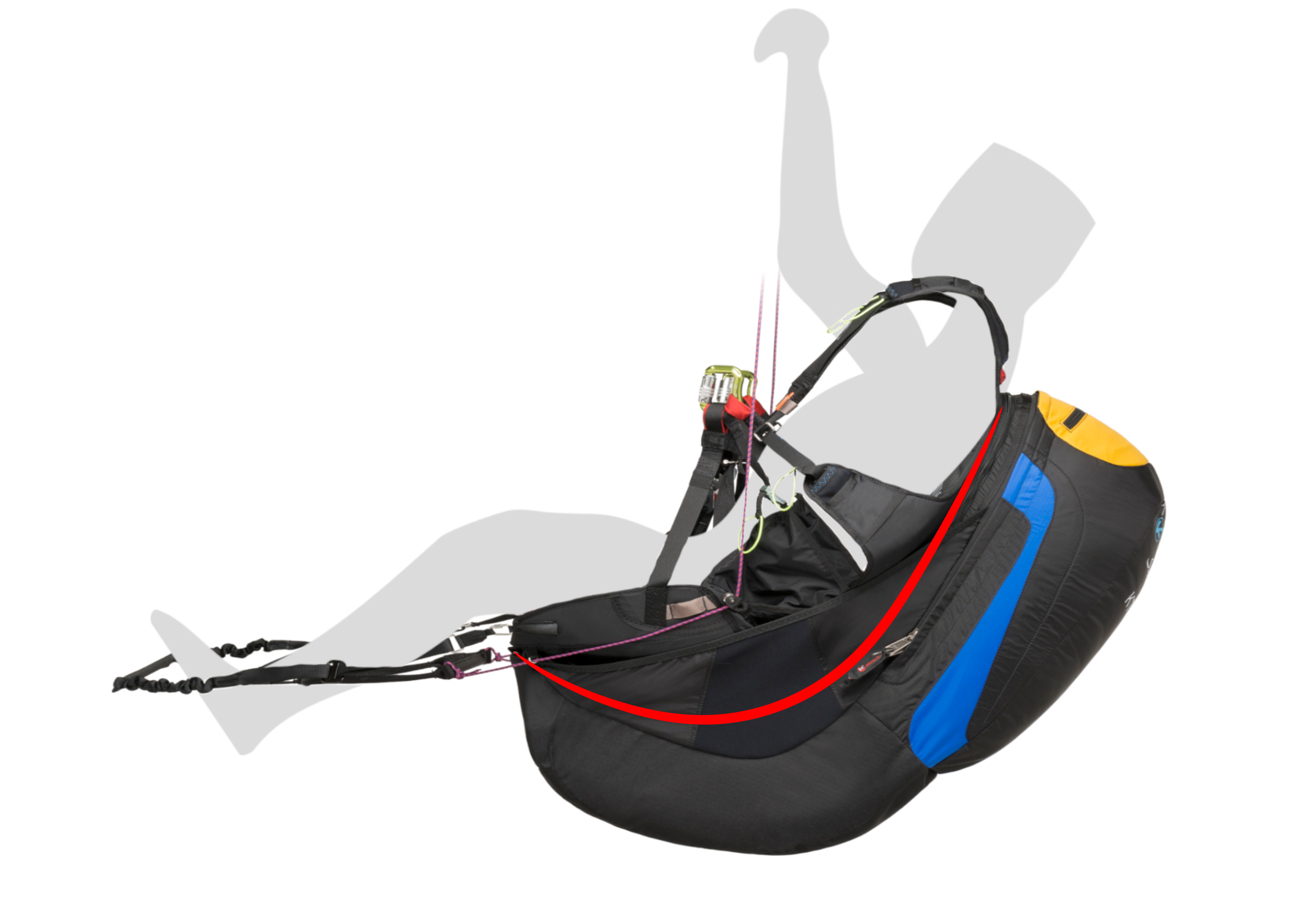
The reclined position has the advantage of maintaining a certain muscle tone necessary to support flights of several hours. The leg support systems integrated into the cocoons, as well as the use of a footrest, significantly reduce the effort required. However, the legs must still maintain a certain tone to remain taut. In addition, the supports in the cocoon also allow you to participate in piloting the harness.
On the other hand, in a sitting position, the legs are dangling and do not require any particular effort. However, in the long run, this position can lead to a feeling of numbness, which can become unpleasant if the flight is prolonged.
CONCLUSION
After examining the different aspects of the flight position, it is essential to take into account the advantages and disadvantages of each position depending on your level of experience and the type of flight planned. It is essential to find a balance between personal comfort and the specific requirements related to your paragliding practice, in order to fully enjoy the flight experience, while ensuring your safety and the best performance.