
Reflection on… The comfort of a harness
Paragliding offers an extraordinary experience, allowing us to escape and navigate through the sky. Whether it's for a peaceful and contemplative flight, descending from mountain peaks or attempting to break distance records, we are comfortably seated in our harnesses for a few minutes to several hours. In all cases, it is essential to have an optimal and comfortable position to fully enjoy these magical moments without suffering.
It is therefore essential to have a comfortable harness to fully enjoy these moments of flight and prevent them from turning into an uncomfortable and painful experience.
But what is the comfort of a harness? How can we define it?
Comfort, in general, refers to situations where the movements and positions of the human body are perceived as pleasant, providing a state of well-being, or eliminating any unpleasant sensation. When we are in our harnesses, it is the support offered to the body that creates this feeling of comfort. This support must be uniform and distributed over a large area. It is important to avoid pressure points that could lead to discomfort or even pain. Indeed, comfort depends on the pressure exerted. For a given weight, the larger the contact surface, the lower the pressure applied will be.
ADJUSTMENTS
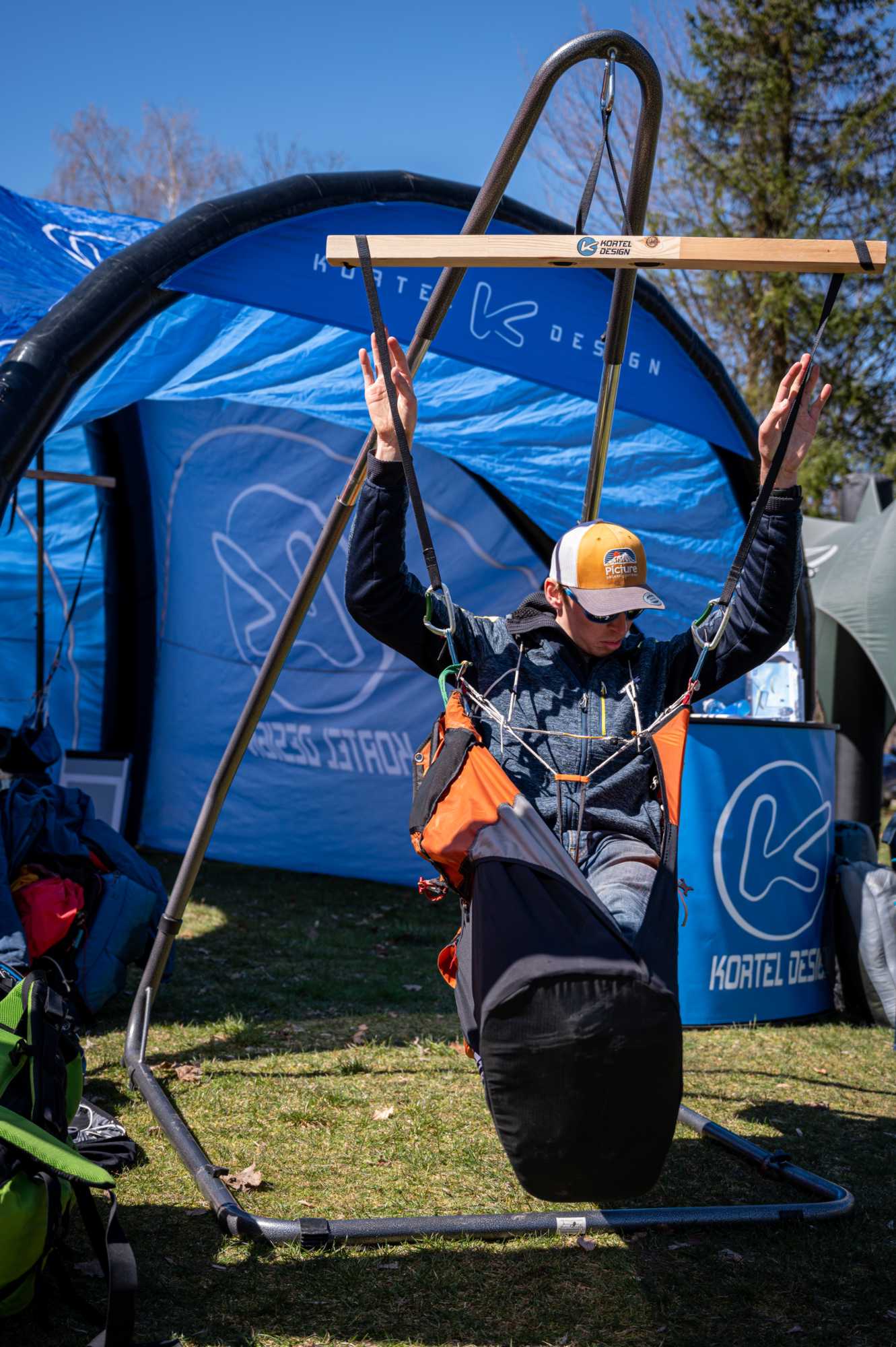
When trying a harness, it is essential to sit correctly and experiment with the different settings available in order to adapt it as best as possible to your unique morphology. Some models may seem complex at first glance, but it is precisely these harnesses that will offer you real comfort for pleasant flights.
The main settings present on the harnesses are as follows:
Dorsal adjustment: it allows you to find a sitting or lying position. Each position will have a different influence on comfort, and we will discuss this in more detail later.
Lumbar adjustment: it is essential to adjust the support of the lumbar area according to your position in the harness. This adjustment is essential because it allows you to adapt the back of the harness as close as possible to your morphology.
Length of the cocoon or footrest (if equipped): adjusting the length of the support optimises leg support during flight. Incorrect adjustment can make the harness uncomfortable, even if the other adjustments are correct.
It is important to take the time to remain seated in the harness for a while in order to detect any discomfort that may manifest over time. Sometimes a strap that is slightly too tight may not be felt for the first 5 minutes, but becomes completely unacceptable thereafter due to the relaxation of the tissues or body. It is therefore essential to be patient and attentive in order to assess comfort over a prolonged period.
We will look at the different parameters that can influence the comfort felt in a harness.
CONSTRUCTION
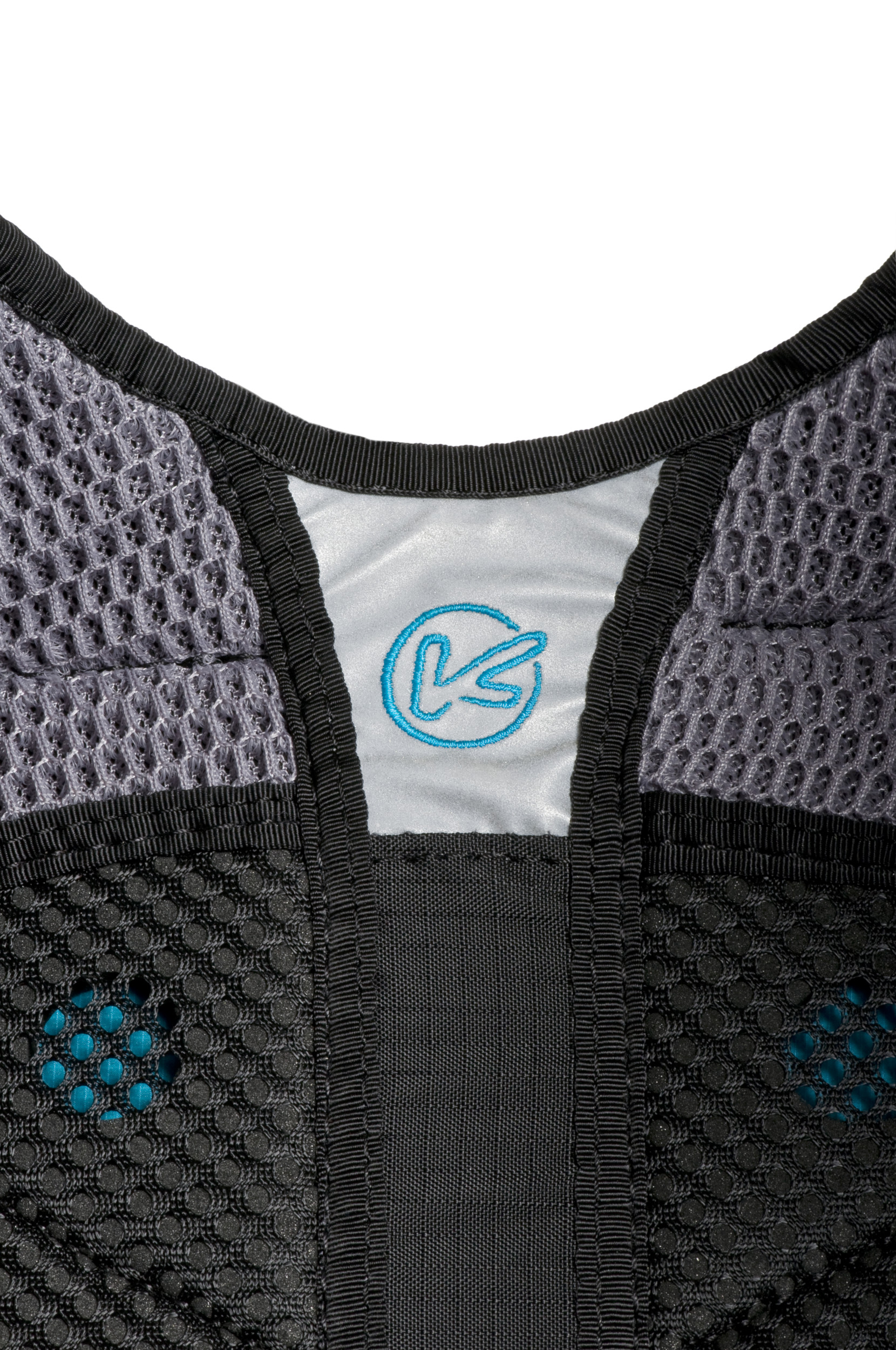
The comfort of a harness depends not only on the settings, but also and above all on the meticulous work carried out by the manufacturer. The choice of materials, the shaping, the use of foams and the placement of seams contribute to making it comfortable. The human body has many curves, which are difficult to model with pieces of 2D fabric. Under the weight of the pilot, these pieces can deform, leading to uneven pressure and marked contact points. Different sewing techniques make it possible to break down the shape and model it in 3D, and the quality of the designer then plays a key role.
The comfort of a harness is not necessarily linked to its weight, but it is certain that a complex combination of well-made materials will offer better support (and therefore better comfort) than a light harness with little fabric.
FLYING POSITION
(Sitting / lying down)
The comfort felt when using a harness is directly related to the pressures exerted on the pilot's body. Thus, comfort is closely linked to the weight of the pilot and the contact surfaces on which this body rests. For a given weight, a larger contact surface will reduce the pressures felt by the body. By increasing these contact surfaces, it is therefore possible to improve the comfort of the harness. For example, moving from a very seated position to a position more inclined backwards increases the contact surface, as illustrated in the diagram where the green contact area in the seated position is smaller than the red area in the lying position. Since the pilot's weight remains the same, the pressure exerted on these contact areas will be reduced, thus improving overall comfort.
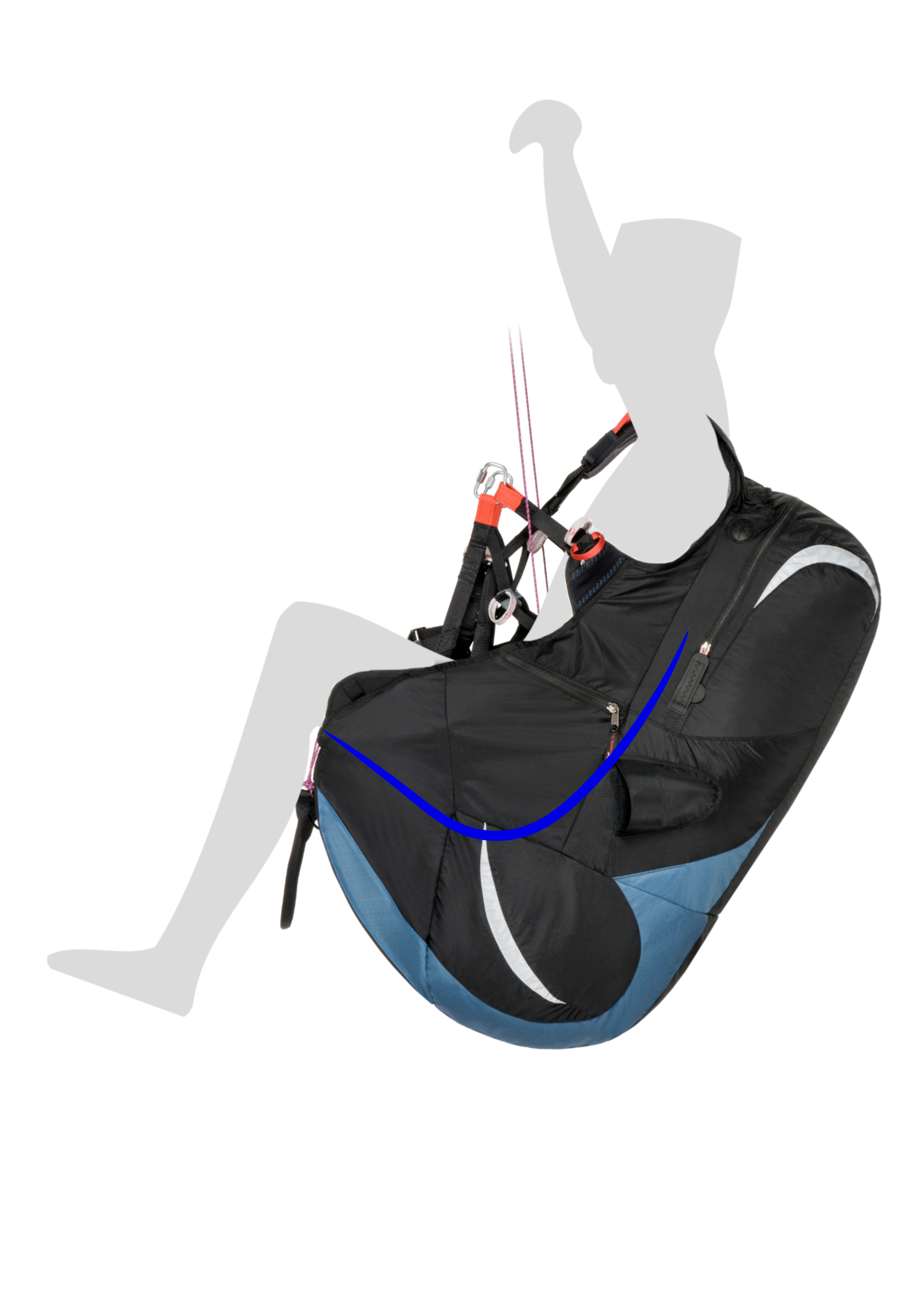
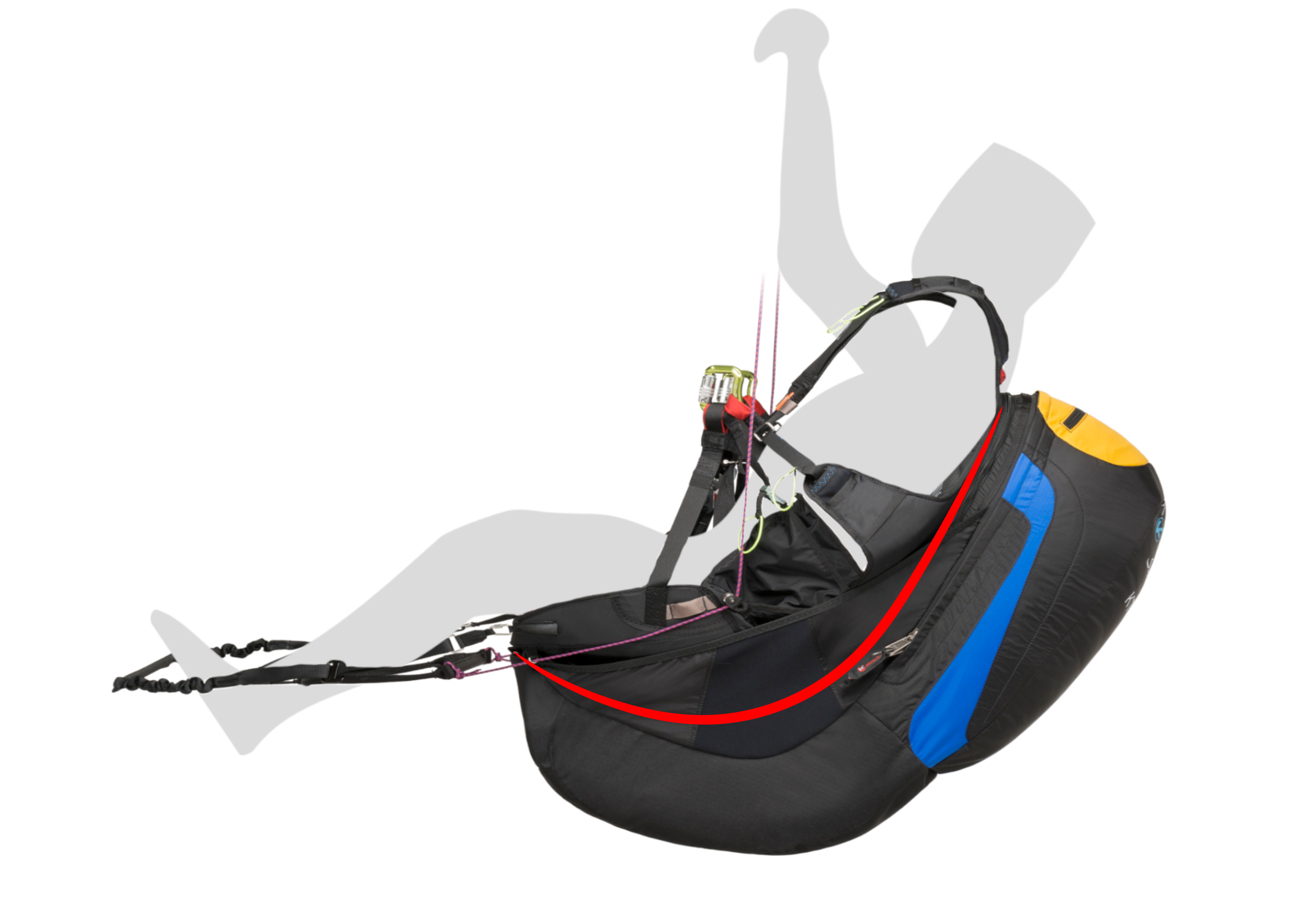
That's why the harnesses used at the beginning are generally of the seated type, as the flight duration is not usually very long (in addition to other parameters related to learning). Of course, they do not prevent you from flying for long periods, but the comfort will be less good after several hours compared to an inclined harness.
If you want to improve the comfort of your seated harness without necessarily buying a new one, it is often possible to install a footrest. This allows you to extend your legs and adopt a semi-reclined position if the back adjustment of your harness allows it.
PILOT EXPERIENCE LEVEL
(Straight Flight / Turn)
With experience, the position in the harness tends to evolve. Pilots in the learning phase, seeking to find updrafts and stay in the air as long as possible to enjoy the sky, spend about 70% of their flight in turns and 30% in a straight line to move around. On the other hand, more experienced pilots, more efficient in thermals, not trying to stay there longer than necessary and accelerating in a straight line as soon as possible to cover the most kilometres, spend 70% of their flight in a straight line and 30% in turns (unlike beginners).
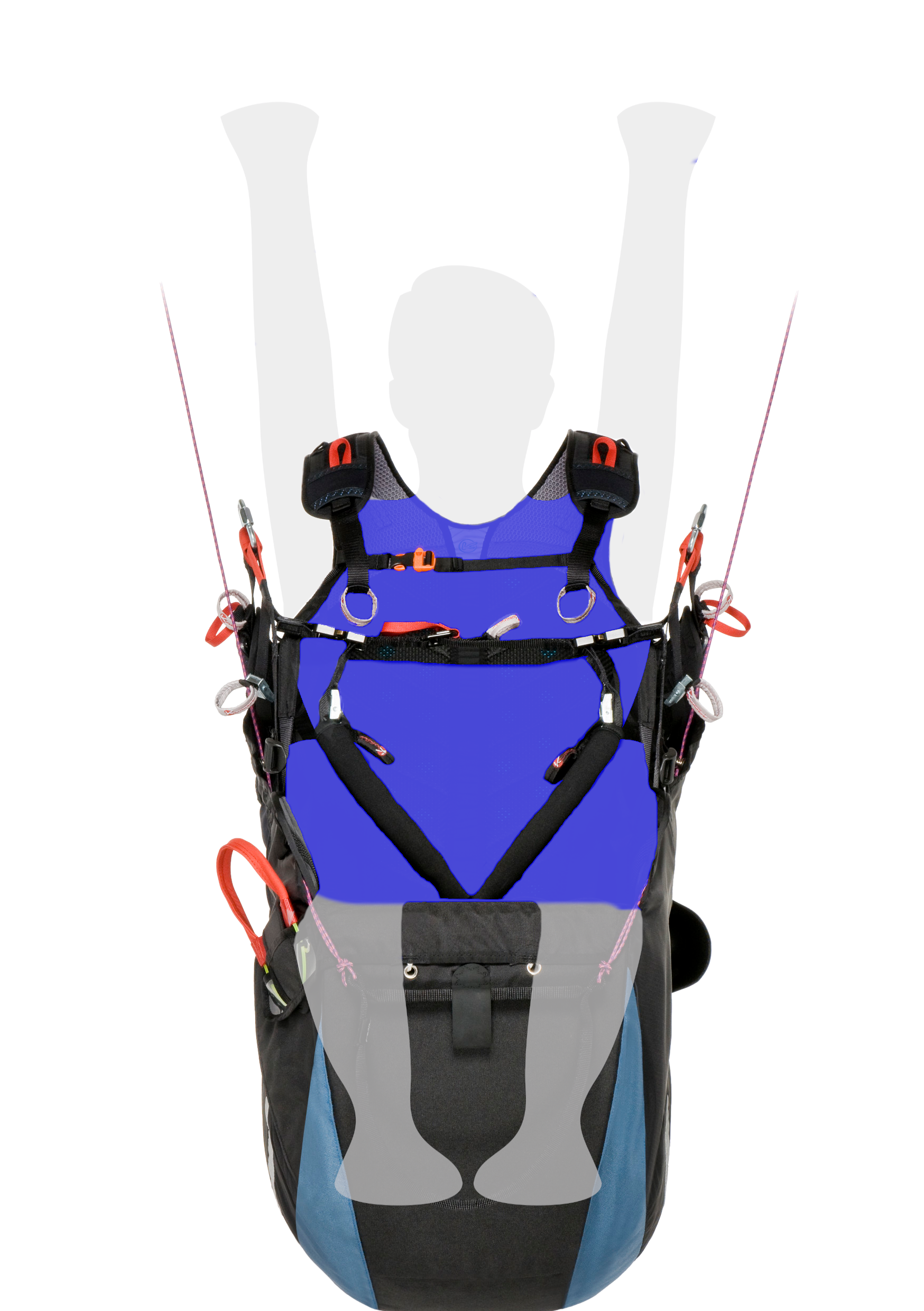
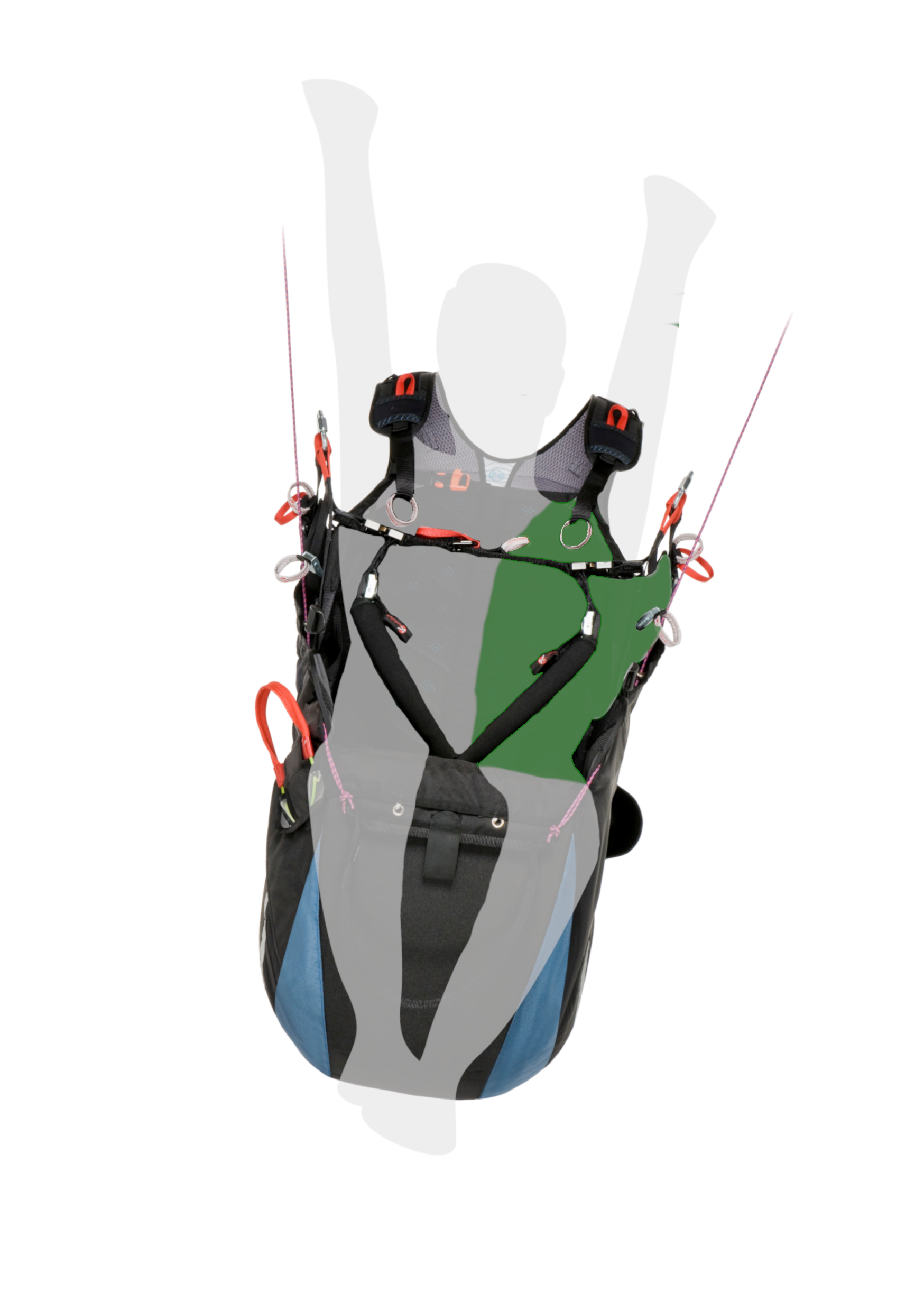
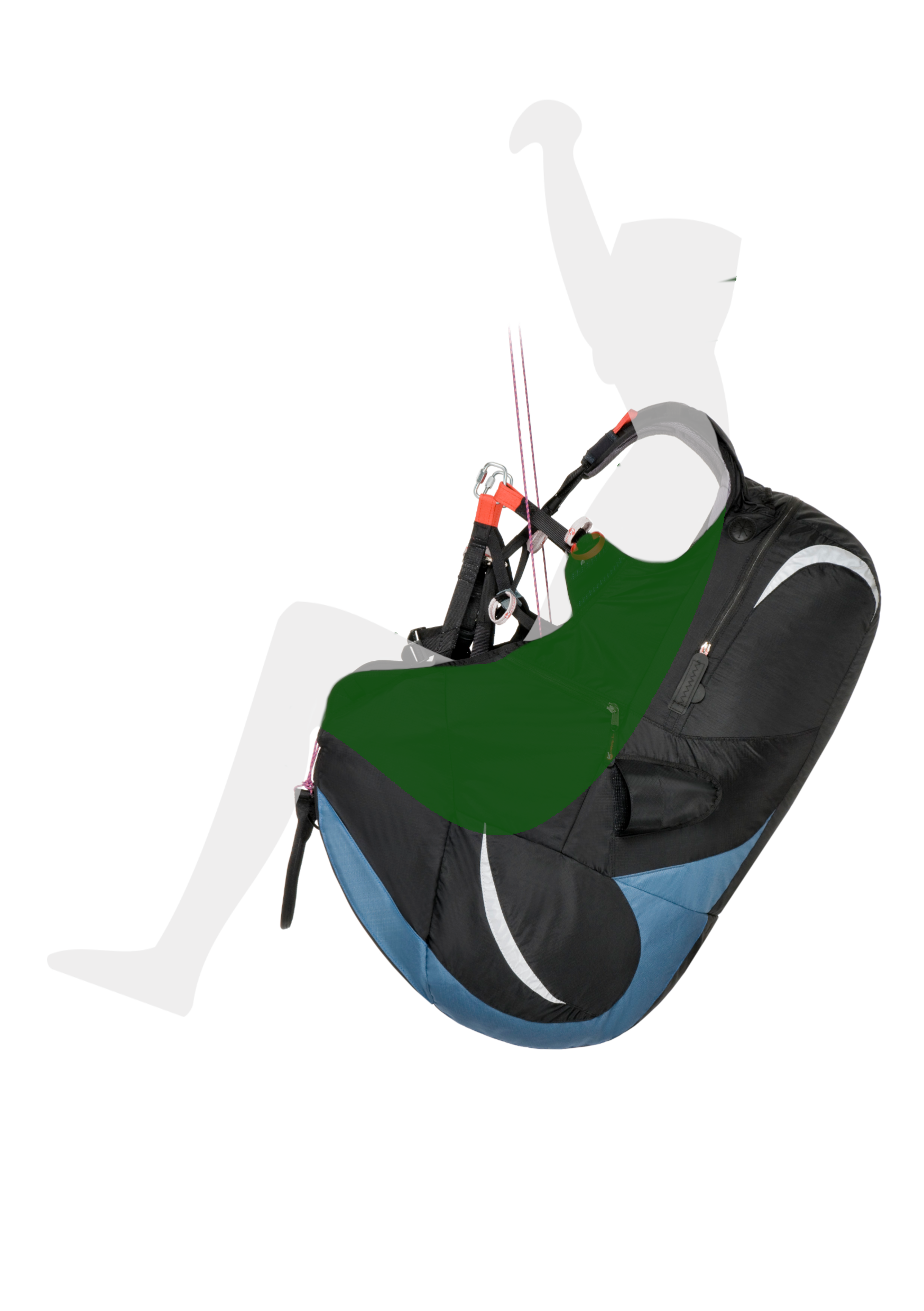
The diagram highlights the difference in mass distribution between an upright flying position (shown in blue) and a tilted position when turning (shown in green). Therefore, it is essential to seek comfort in the position where you are likely to spend the most time during your flights. During equipment testing, especially on a gantry, it is important to be able to simulate roll to check lateral support and comfort in this position. You should not be satisfied with a straight and balanced position that will ultimately not necessarily correspond to the position in which you will spend the most time in flight.
The comfort sought in a harness will therefore also depend on the type of flights planned and the level of each pilot.
CONCLUSION
The comfort of a harness depends on several important criteria to consider when choosing a model that will accompany you for many years:
Adjustments: A harness with many adjustments will allow you to adjust its geometry precisely and feel well supported. Even if it may seem complex at first, a harness with adjustment options offers greater flexibility to resolve any potential discomfort issues.
Construction: The experience accumulated by a manufacturer over the years can guarantee undeniable know-how and expertise in the construction of a harness. The design techniques developed through this experience generally make it possible to offer high-performance solutions in terms of comfort.
Flying position: Your flying position will influence your comfort, especially over a prolonged period. A reclined position will naturally be more comfortable than a seated position when flights are extended.
Experience level: There is no point in choosing a harness designed for 10-hour flights if you are still a beginner or if you are simply planning hiking flights. When you opt for an ultra-light harness for mountain flights, it is obvious that it will not be able to offer the same level of comfort as a cross-country harness after several hours of flight. However, it is not designed for this purpose either.
By taking these criteria into account, you can choose a harness that meets your specific comfort needs, depending on your level of experience and the types of flights you plan to make.