
Thoughts on … reserve parachute packing
When you have to use your reserve parachute, you need it to be as effective as possible as quickly as possible!
But the parachute itself is only one link in a chain that must be implemented to achieve the final result: it is called the deployment chain. We will try here to describe all the elements of this chain, their function and their reciprocal interactions, to understand a little better the overall functioning. Each of the elements we are going to talk about can exist in different models. And although perfectly functional individually, it may prove to be the "weak link" in the deployment chain and cause a malfunction of the system. It is therefore essential to check the compatibility of each element with the other links in the chain.
Let's speak the same language:
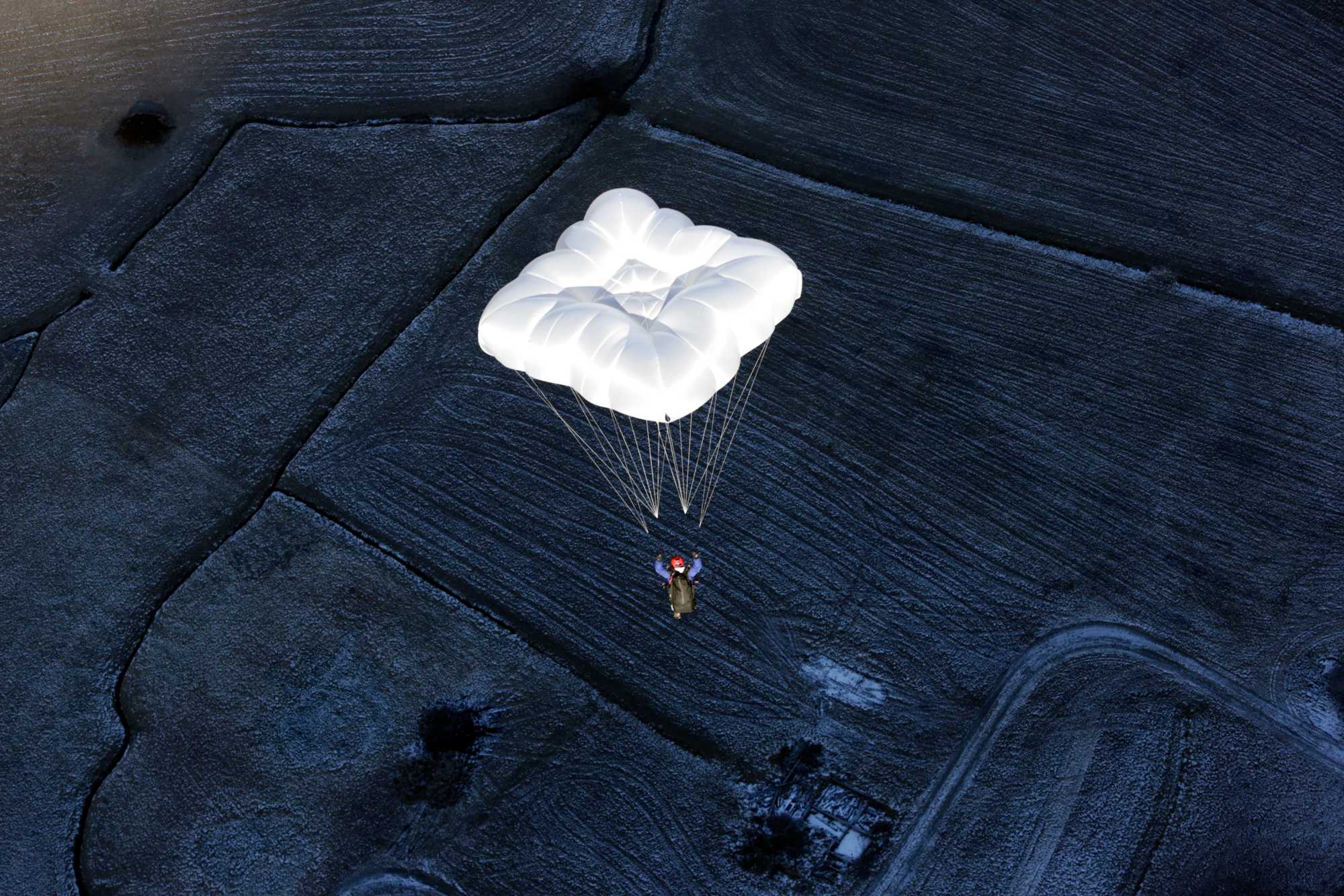
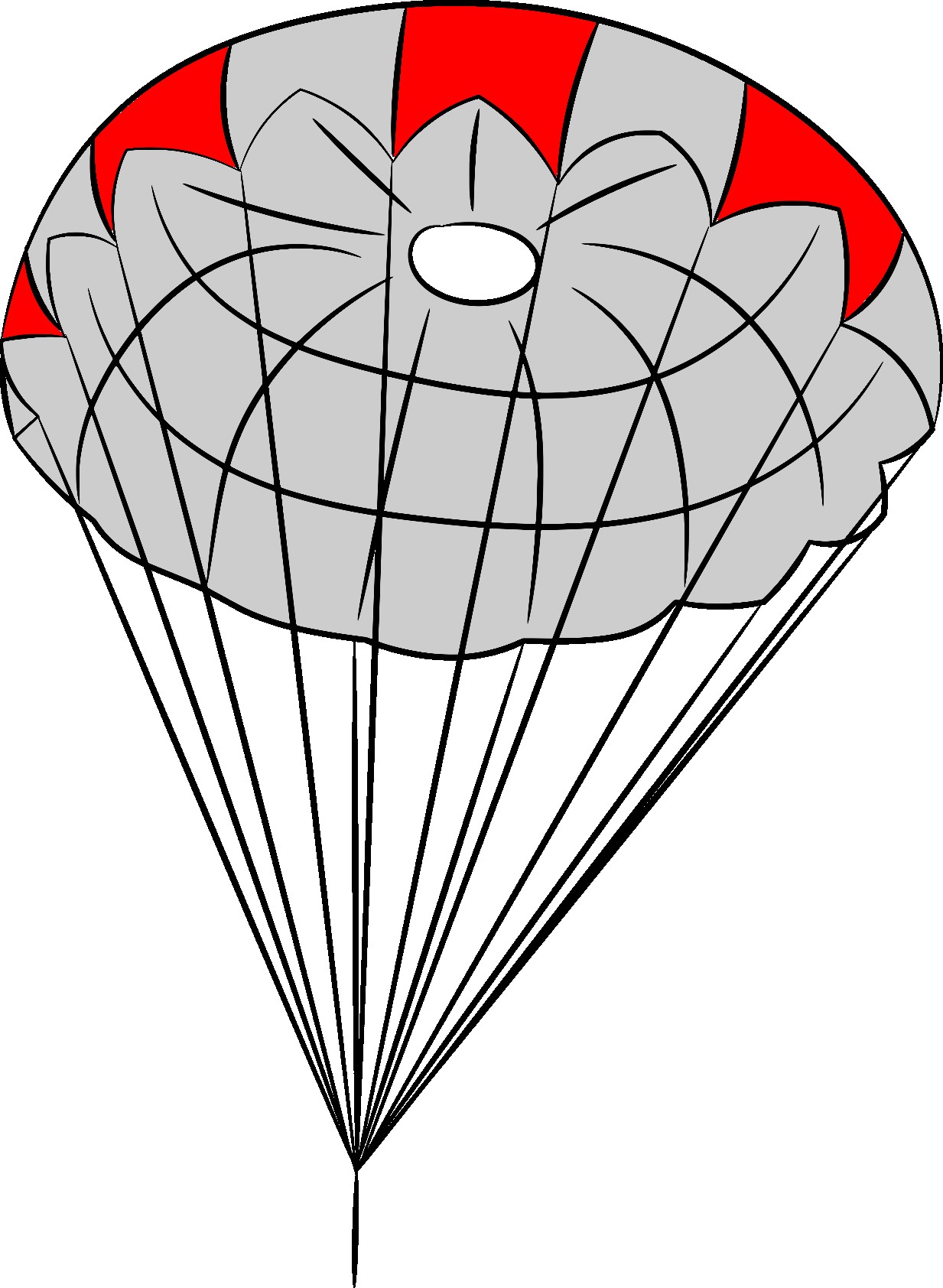
– Reserve parachute: Device consisting of a canopy and lines, and intended to slow the pilot's fall so that he arrives with a sufficiently low speed on the ground. The physical principle used by this type of parachute is the aerodynamic drag that is created by the movement of the parachute in the air.
– Lines: System of lines allowing the shaping of the reserve parachute and giving it its characteristics. The lines are an integral part of the parachute.
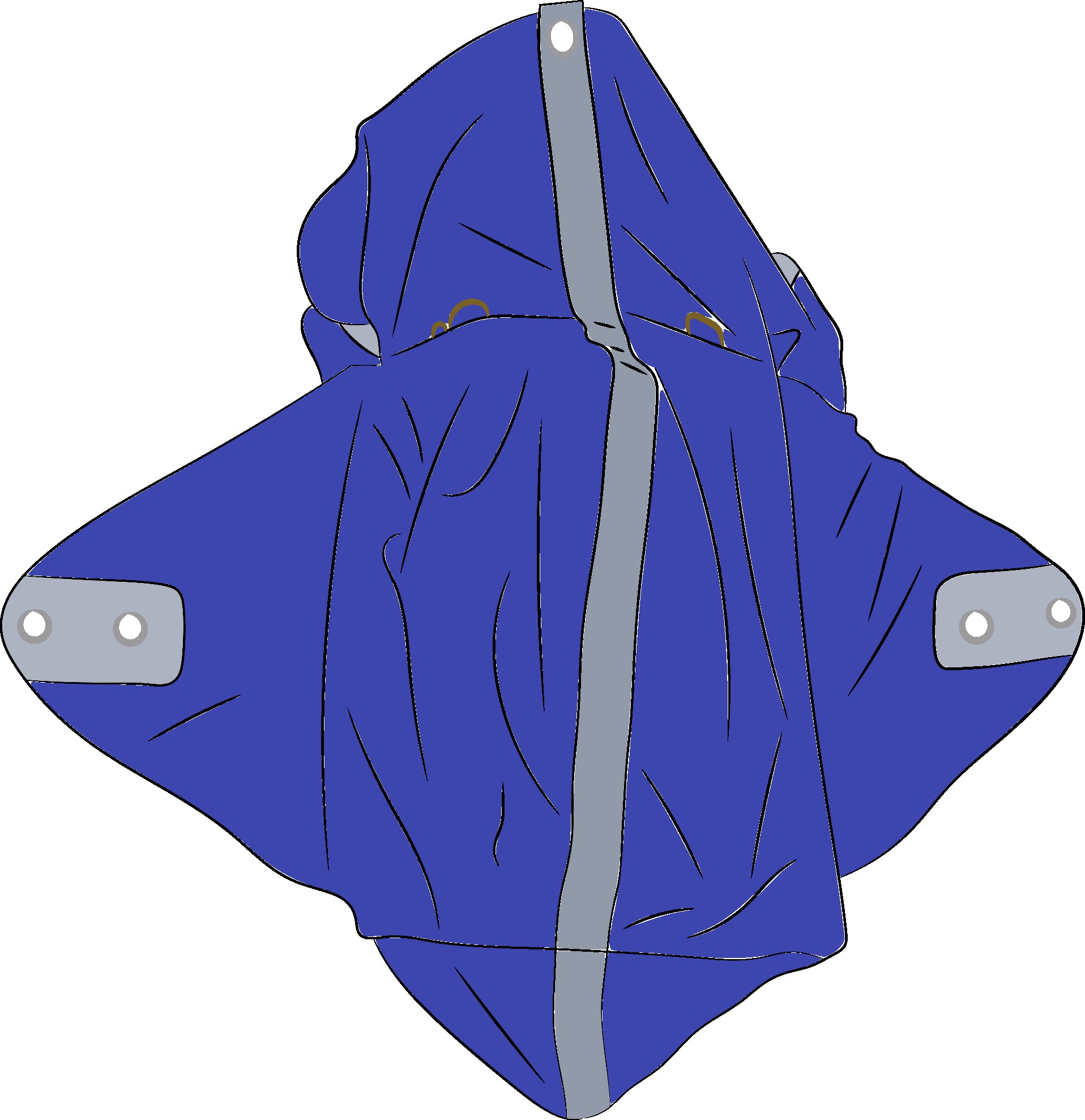
– Pod: Fabric envelope keeping the parachute folded, and allowing its exit in case of activation of the deployment chain.
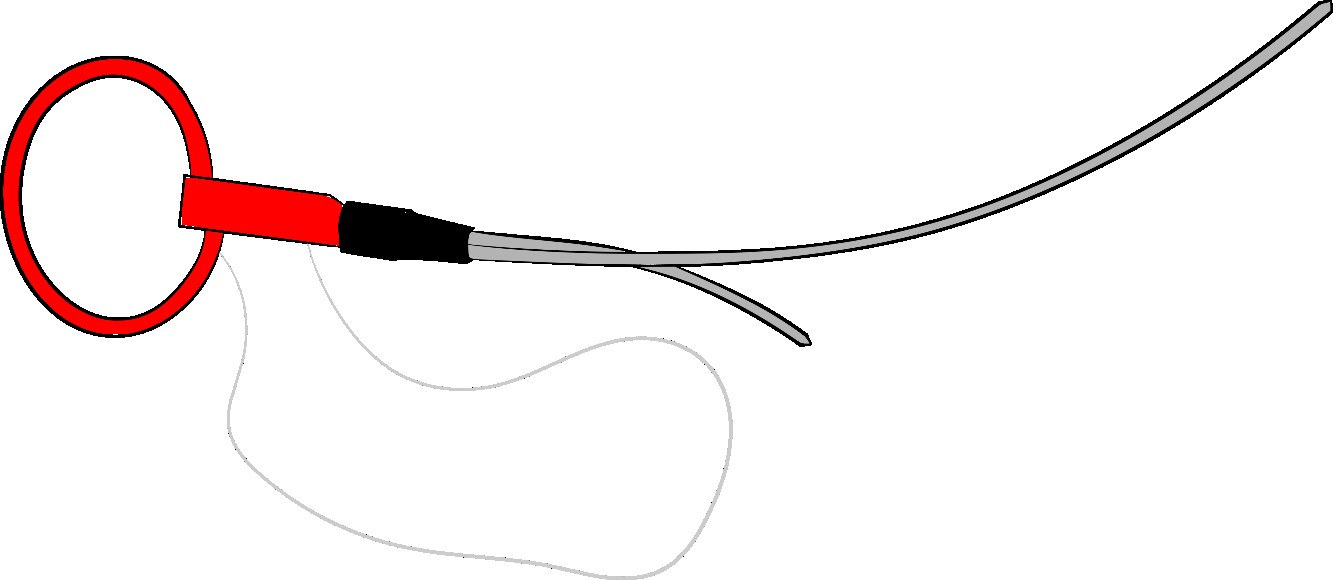
– Reserve handle: Ergonomic handle, ensuring the closure of the container and allowing the launch of the pod.
– Connectors: Textile or metallic, they ensure the connection between two elements composing the rescue device.
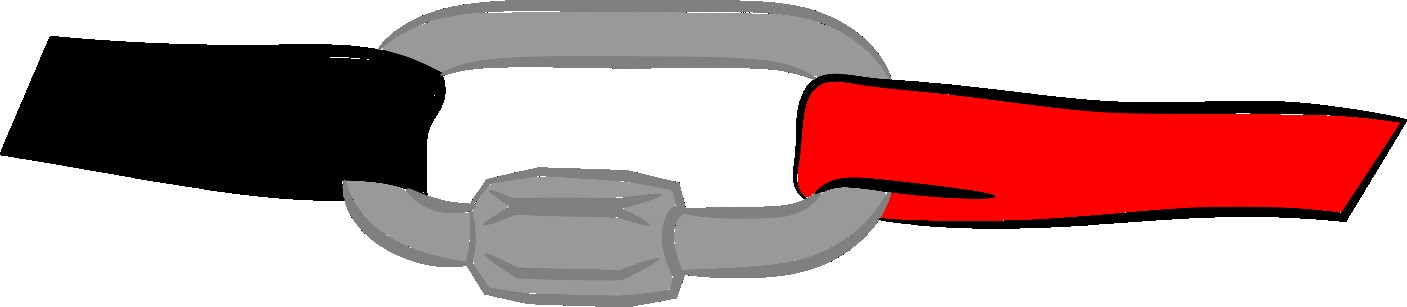
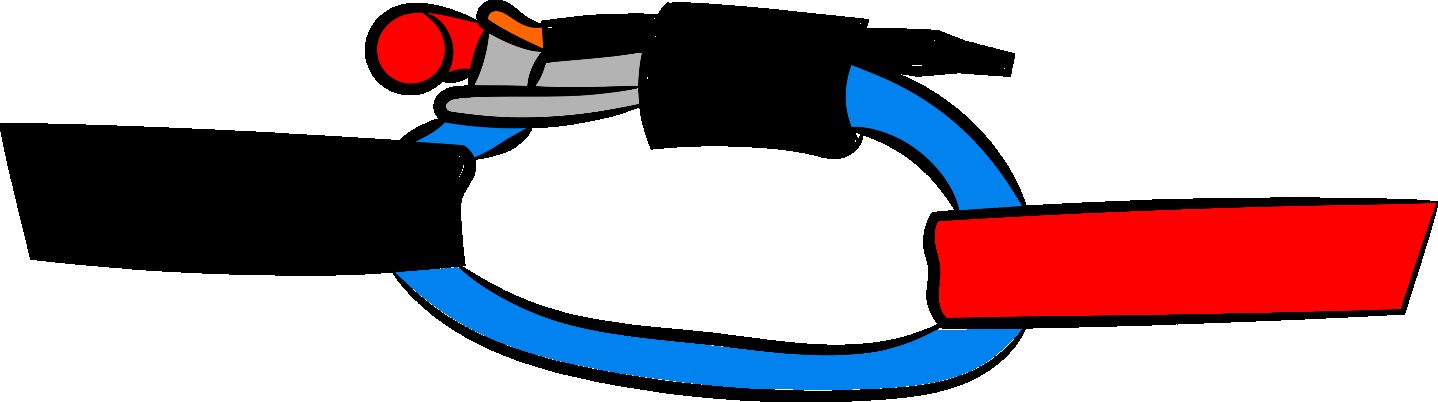
– Container: Compartment integrated or not into the harness, and allowing to receive the reserve parachute conditioned in its pod. It is kept closed thanks to the reserve handle.
– Reserve risers: Textile straps, allowing to connect the reserve parachute to the harness. The risers can be an integral part of the reserve parachute, or be removable.
– Flaps: Panels composing the container, and allowing its opening and closing.
– Reserve system: Set of elements relating to the reserve parachute which are in mutual interactions and which must ensure correct operation of the whole.
– Deployment chain: Set of successive steps that participate in the deployment of the reserve parachute, from grasping the handle to launching the pod.
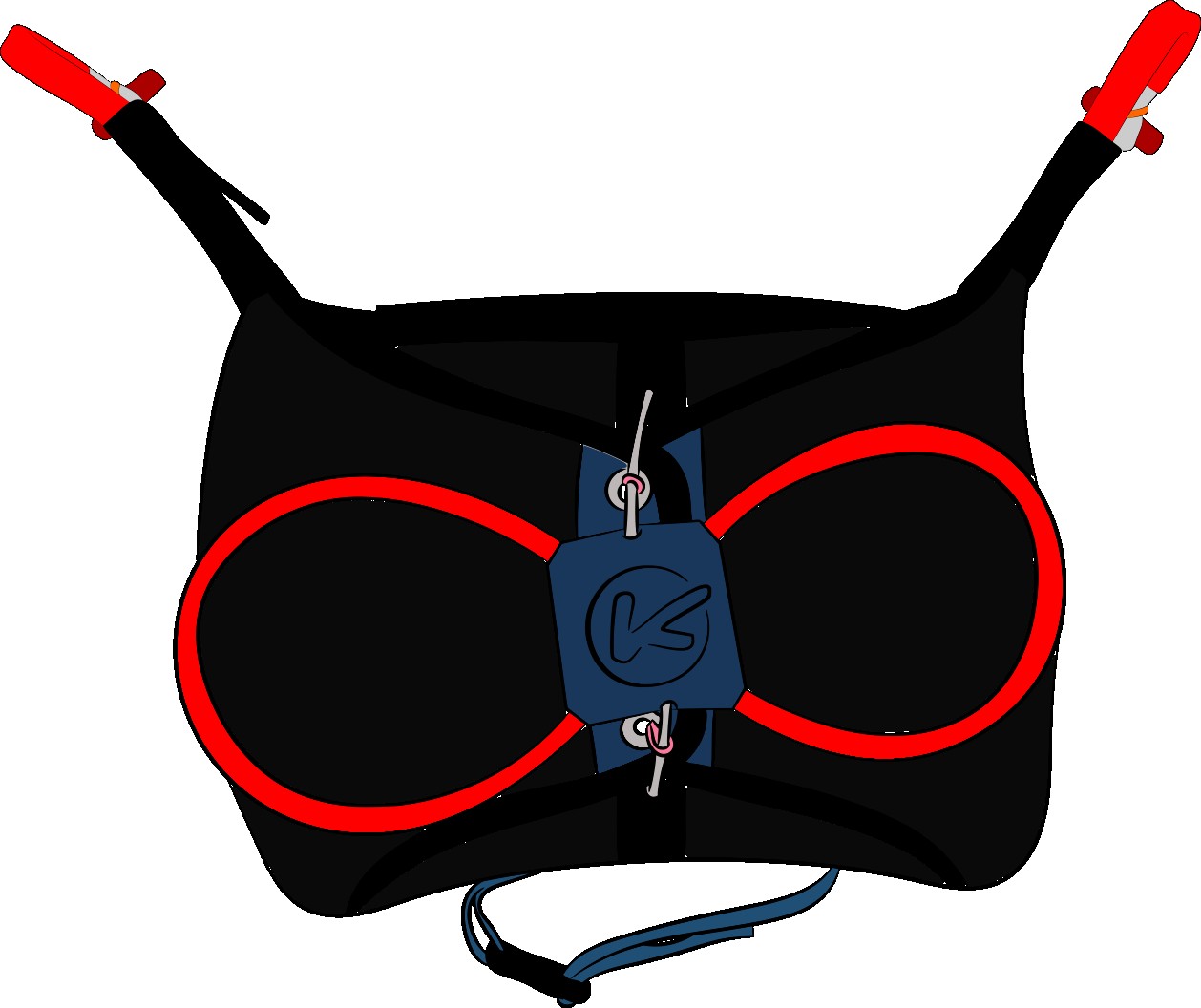
There are 2 main phases: FOLDING / ASSEMBLY
We will try to decipher the different phases of the conditioning, and we will see each time the points to watch and on which to pay attention.
FOLDING
Folding method
At first glance, folding may seem like the most complex element to assimilate, but in the end it will probably be the simplest! All you have to do is scrupulously follow the manufacturer's instructions and follow the folding steps described in the manual provided. If you don't feel like doing it yourself, don't hesitate to entrust this task to a professional workshop that can do it for you for a fee. Sometimes you have to put your mind at ease!
Why is it so important to scrupulously follow the folding instructions recommended by the manufacturer?
In fact, it is linked to the approval and the structural resistance test that results from it: the parachute (weighted to the corresponding maximum weight) is dropped in the air. When it reaches 40m/s, a system will trigger the opening and allow the canopy to be deployed in a given time (x seconds) without exceeding 11G. To pass the test, the parachute must not show any structural damage, or any tears / ruptures / ... whether on the fabric, the lines, or the seams. It is therefore necessary that the design of the parachutes allows them to open quickly enough, but also to resist the forces related to the opening. With the constant search for weight reduction of the equipment, and the use of light materials as well, the designers are forced to rack their brains and find tricks to mitigate the forces generated on the structure during opening. The folding methods with retarders, recommended by the manufacturers, allow to obtain a more progressive opening and thus to better absorb the forces. The "retarders" allow the rescue to open more gradually by better absorbing the forces during opening. These retarders, in some cases, are also recommended to ensure better stability during opening and once the parachute is deployed. Even if we have in mind that the tests are quite severe with the equipment and that they offer us a significant safety margin, it is better not to play apprentice wizards with the folding of our rescue parachutes.
Critical points to watch out for:
– Check the general condition of the canopy and lines: tears, signs of wear, humidity / mould, ...
– Strict compliance with the manufacturer's recommendations available in the folding manual.
– Be careful not to forget any folding accessories: cord, clamp, weight, link, ...
– Only fold a rescue parachute if it is perfectly dry and free of any traces of moisture.
Pod
The pod is a simple fabric envelope, which keeps the parachute in its folded format and ready to be deployed. It also allows the rescue handle adapted to the container to be received, which will be used for extraction and launching. Despite its apparent simplicity of design, it is adapted in shape and size to the parachute it receives, and fully participates in the deployment characteristics that have been tested for opening. The approval is therefore valid for an inseparable "parachute - pod" pair. Strictly speaking, a parachute that is not used with its original pod (except in special cases approved by the manufacturer) loses its strict approval. It is up to the parachute manufacturer to specify for a third-party pod, the technical characteristics (type, volume) allowing the rescue parachute to be used safely and to maintain the approval of said parachute.
We will see later that in some cases, the handle and the pod are part of the same set and are inseparable.
The closing of the pod is described in the corresponding manual, and is generally done using an elastic band (attached to the pod) which surrounds a loop of the suspension lines. In the event of traction, the elastic is released and allows the pod to open and the parachute to exit. It must not be too "strong" to allow opening even if the traction is not significant (under the simple effect of the weight of the parachute), but not too "loose" either to prevent simple rocking in the harness from opening the pod in the container. In the event of extraction, you would end up with the empty pod at the end of the handle!
Critical points to watch out for:
– Ensure the compatibility of the pod with the rescue parachute.
– Check the condition of the pod: absence of pronounced wear marks, tears.
– Make sure the pod is perfectly dry before inserting a rescue parachute.
– Check the condition of the closing elastic(s).
– Check the condition of the connection loops for the rescue handle.
NOTE:
It is recommended to regularly check that the pod is properly closed, and to ventilate and fold the parachute at least once a year, and even better every 6 months. But the latest observations have revealed that after 3 months of folding, the opening speed of the parachutes degrades significantly. The ideal recommendation is therefore to ventilate and refold your rescue parachute every 3 months, to maintain the best opening speed characteristics.
Now that your rescue is perfectly folded in its pod, let's see what's next!
ASSEMBLY
Rescue risers
Rescue risers are used to connect the parachute to the anchor points provided on the harness. They can be of 2 different types, depending on the rescue used:
– Those known as "V-shaped", which connect the 2 anchor points to the single connection point of the rescue. This is the case for hemispherical parachutes and some square ones (or various shapes) as long as they do not have the possibility of being steered. Variant: it is possible to use single-strand rescue risers, which can be grouped at the connection point of the rescue.
– Those known as "H-shaped", which equip steerable (or orientable) rescues and are generally integrated into the parachute structure. Care must be taken to the left and right sides during assembly.
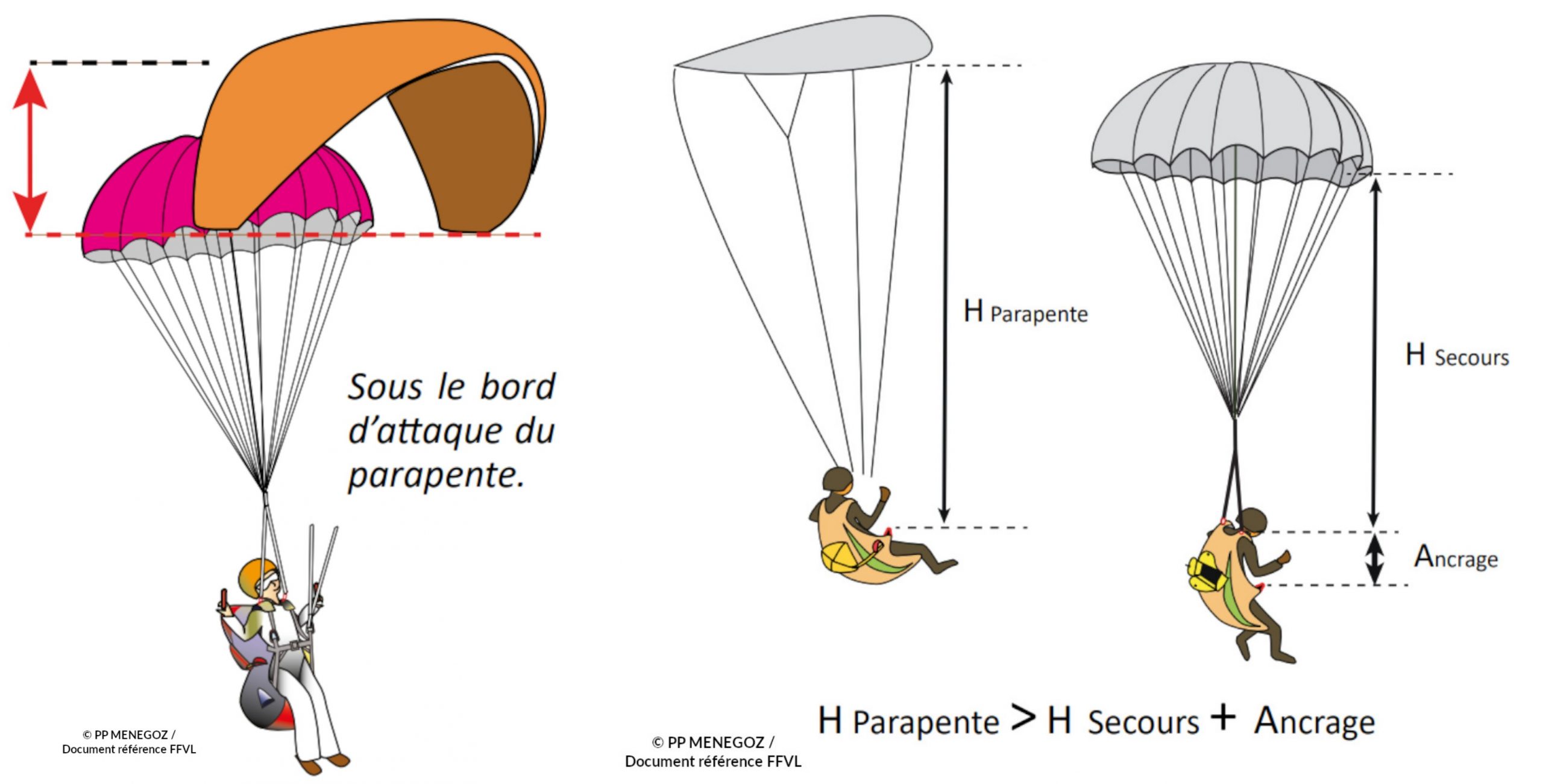
An important thing to check when assembling the risers is their length. It must be verified that the combined length of the risers and the rescue (with its lines) is less than the length of the line cone. As explained in the "Reflection on ... rescue parachutes", it is important that the leading edge of the rescue is not at the same level as the central part of the wing, to prevent it from being hit when opening or from being in its depression with a risk of having difficulties inflating correctly. This obviously depends on the type of wing and rescue (lengths of the respective line cones), but to simplify it is recommended to use rescue risers of approximately 120-130 cm.
Critical points to watch out for:
– Check the general condition of the risers: cleanliness, wear, abrasion, condition of seams, connection loops.
– Check that the length of the risers is in line with the parachute and paraglider (see drawing). A length of 120-130 cm is generally relevant.
Connectors
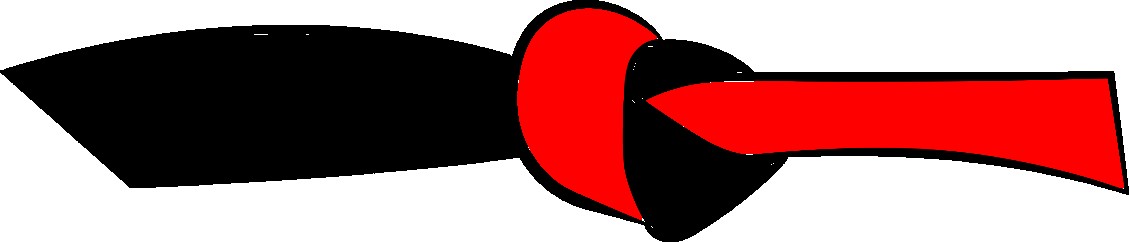
If the elements (harness / risers / parachute) of the rescue system are independent, you will have 2 connections to make: "harness - risers" and "risers - parachute". The more links there are in a chain, the greater the risk that one of the links will fail. It is therefore necessary to limit the number of connectors as much as possible to ensure these connections. Very often, it is possible to make a lark's head connection. Many prejudices remain about this connection, but if it is done correctly there is no safety problem. This is also how the lines of your paraglider are connected to each other, and sometimes even the lines to the risers (light mountain wing).
It is important to limit the twisting of the straps so that they remain as flat as possible, and to tighten the knot very tightly to prevent loosening. However, it is essential to carry out a regular visual inspection to detect any potential problems.
If you still need to use a third-party connector, you will have to choose it respecting the following points:
– Working load:
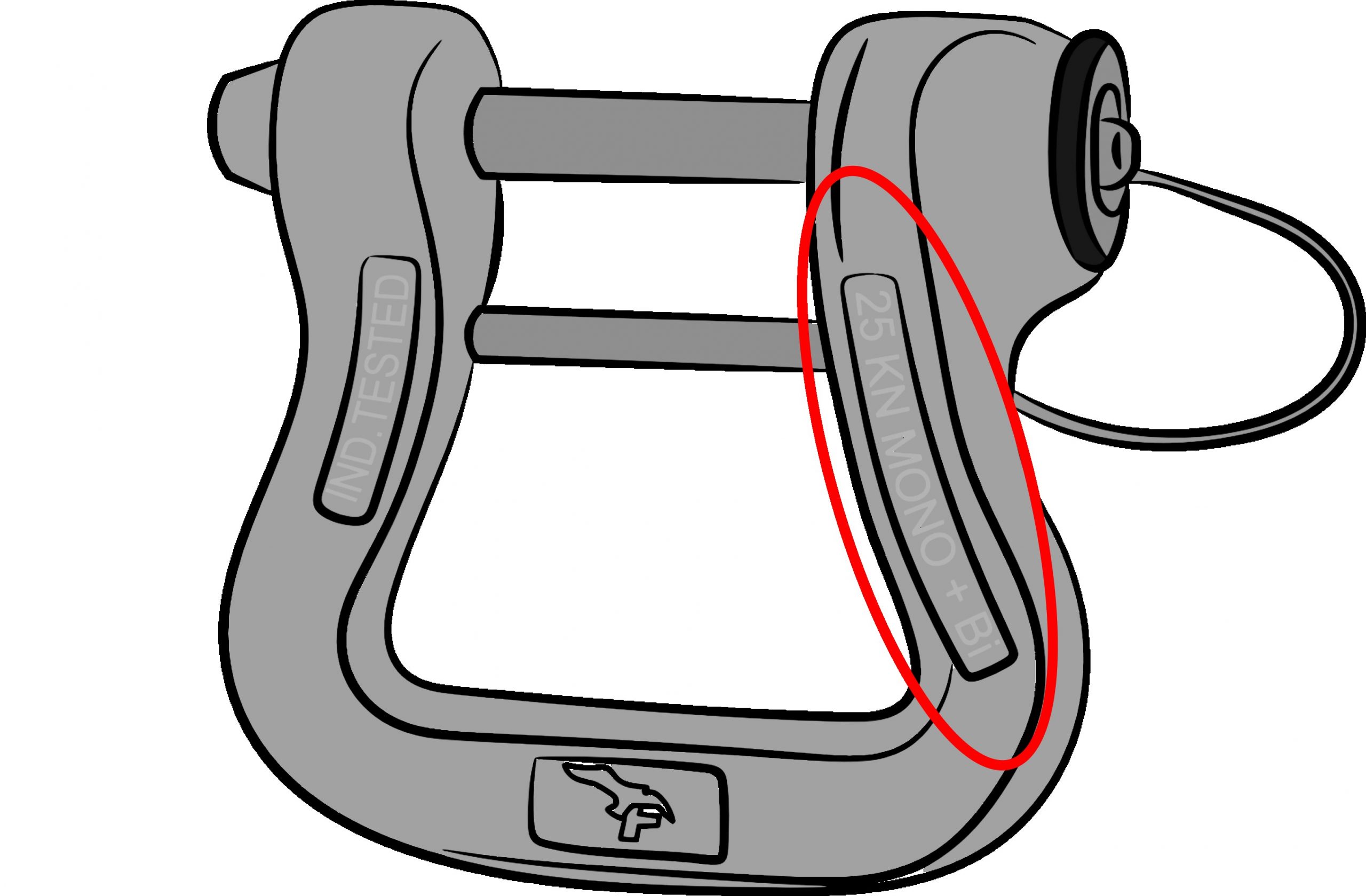
Connectors are the only elements that are not subject to any standard. There is therefore no minimum resistance imposed on these devices. Furthermore, the various existing standards (harness / paraglider / parachute) are not necessarily homogeneous between them in these "common" areas which therefore remain a bit vague... To put it simply, and to avoid any unnecessary risk, it is recommended to use a connector whose maximum working load is greater than or equal to 24KN. Why? Simply because it is the highest value in the 3 existing standards, and it is even valid for tandem. With a connector with this resistance, no question to ask about where it is possible to use it! The maximum working load is marked directly on the connector when possible, or on a label sewn on flexible connectors.
– Shape:
For the connector to have its maximum resistance, it is essential that it can work in its main axis. It must therefore not be able to get crooked during the various manipulations, and especially during loading. The easiest way to do this is to have a connector adapted to the different elements it will have to connect. The widths of the straps and the bases of the connector must be as close as possible.
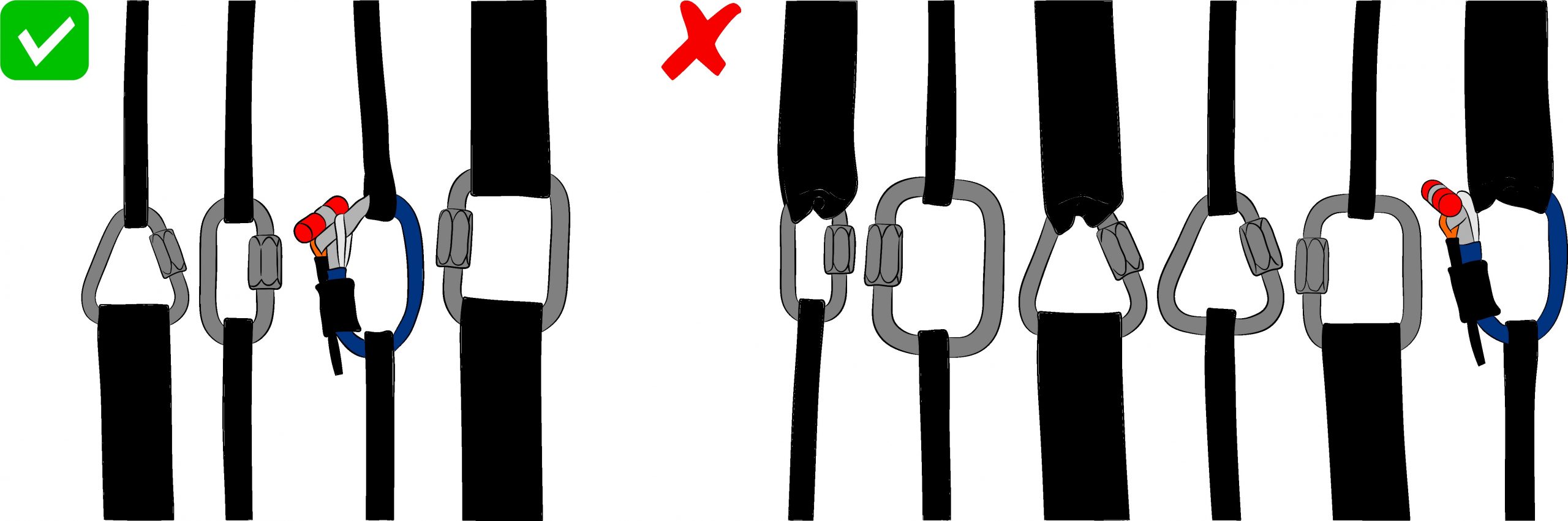
It may also be useful to lock the position of the straps using an O-ring for example (Video).
– Stability / Reliability:
Each connector has its optimal characteristics when it is properly locked. Remember that these connectors are often hidden, and that it is not necessarily easy to check that they are still locked correctly. It is therefore necessary to favour connectors whose closure can be guaranteed over time, or to find a trick to guarantee it. Avoid adhesives that can leave traces of glue and solvents, which are not recommended for the lifespan of textile elements (straps, lines, etc...). We will prefer "tightening" tricks such as a piece of inner tube for example. It is nevertheless essential to carry out a regular visual inspection to detect any potential problems.
As always, there is no miracle solution and you will have to find the solution that best suits your equipment.
Critical points to watch out for:
– Check the declared breaking load.
– Check the general condition of the connector:
– If metallic: wear, traces of corrosion, fluid closure.
– If textile: damaged protective sheath, traces of cuts, traces of burns.
– If lark's head connection, check that it is correctly made (flat strap, tight knot).
– If originally sewn, check the condition of the straps and seams.
– Make sure that the shape of the connector is adapted to the width of the straps concerned.
Guidance
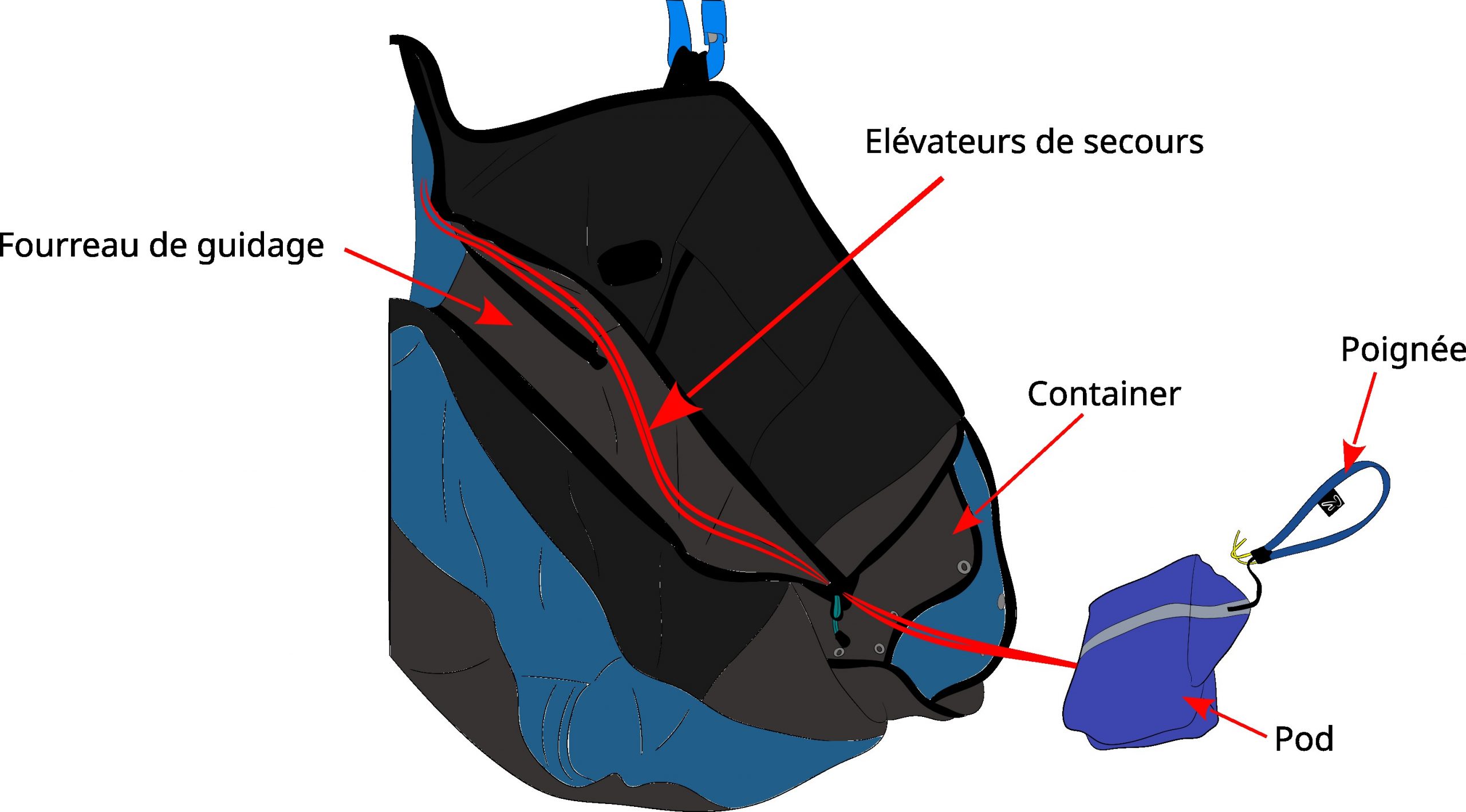
The risers are generally guided from the container to the connection points via a guidance sleeve. This sleeve isolates the reserve risers from external damage and prevents any risk of tangling with other elements external to the reserve system. The closure is generally made using Velcro or an "explosive" zip, which allows for quick opening and clean release of the reserve risers. It is important to regularly check that nothing could impede the proper functioning of the sleeve, especially its complete opening, so that the risers can perfectly play their role. In the case of a front container equipped with a sleeve connected to the harness, it is important to ensure that it is positioned outside the accelerator during assembly, so that the latter does not impede the exit of the reserve risers.
Critical points to watch out for:
– Check the condition of the Velcro, zip, or closing system in general.
– Ensure the smooth operation of the sleeve opening, fluid and without any blocking points.
– Check that the sleeve opens completely, in order to release the risers correctly.
Container
The container is the part that will accommodate the pod and part of the lines (see folding manual). It can be integrated into the harness, or completely independent and then connect to the harness (front container). The reserve risers are guided inside from their attachment points thanks to the planned guidance. Its role is therefore to keep the pod and the lines in the best position in case of extraction. It must be adapted in shape and volume to the parachute on board, or be adjustable to best adapt to it. A parachute that is too small compared to the container may slosh around and tangle the lines, or even open the pod! A parachute that is too big for the container can generate difficulties during extraction. It is generally composed of one or more flaps locked by the reserve handle, which will create a sufficiently wide opening for the passage of the parachute and the pod during extraction. No design element of the container should risk hindering or slowing down the exit of the pod.
To overcome these compatibility problems, harness manufacturers now offer "pod-handle" sets perfectly adapted to the internal container of the harness.
In this case, you have to accept to take the parachute out of its original pod (tested and validated for certification) to condition it in the specific pod for the harness. This operation is not so simple, because it requires partially unfolding the parachute and giving it the appropriate shape for the new pod. Care must be taken to respect the original folding recommendations as much as possible, since these are the ones that have been tested and validated and which best guarantee the optimal deployment of the reserve parachute.
Critical points to watch out for:
– Check the general condition of the container structure: fabric integrity, cleanliness, absence of humidity.
– Ensure the volume matches between the container and the reserve parachute. Adjust if necessary (adjustment system).
– Verify that no element allowing the container to be closed is damaged: metal or textile eyelets, locking system, rods, metal needles, magnets, velcro, …
– Check that a tool to help close the container (line, rod) does not remain in place and disrupt proper functioning.
Handle
The handle is the element that finalises the packing of the reserve parachute, and will be the first link in the deployment chain. It is inseparable from the container, whether it is integrated into the harness or not, and whether or not it has a specific pod connected to this handle. It is what will allow the opening (and closing) of the container, the extraction of the pod, and the throwing of the assembly which will lead to the deployment of the reserve parachute. It is composed of a gripping ring (variable size and shape), various elements allowing the container to be locked (needles, rods), and a strap allowing the gripping ring to be connected to the pod. This strap is very important, because it is what will allow the container to be opened, and an effective throw. If it is too short, the pod and its reserve are pressed against the flaps before the handle has been able to fully open them. If it is too long, the opening of the container is facilitated but the throw may become less effective due to the large leverage exerted. Furthermore, once the throw has been made, the handle at the end of its strap can more easily wrap around the lines and slow down (or even prevent) the opening of the pod and the release of the parachute. It is imperative to have the shortest possible pod-handle connection allowing the container to be opened! Depending on the positioning of the pod in the container, the attachment point of the strap on the pod can play a significant role in this problem. Specific pods provide an optimal solution since the entire "pod - strap - handle" assembly is designed in an optimised way for the container used. Once the handle is in place, the standard relating to harnesses requires that the force to be exerted on it to release the container must be between 2kg and 7kg. This test has been validated on a harness that has passed the EN 1651 standard, but it is always interesting to check whether we are still within these values after a certain time, and in particular on external (ventral) containers which rarely pass these tests. Time can influence certain elements of the container locking system, such as the elastics which can lose their stiffness with use and no longer hold the handle firmly enough at rest.
Critical points to watch out for:
– Check the match between the handle and the container used.
– Check the handle: ring integrity, signs of wear, closing system (metal needles, rods, velcro).
– Inspect the connection strap: seam integrity, strap condition, cleanliness, signs of wear.
– Ensure that the length of the strap is adequate for its positioning on the pod and the container.
CONCLUSION
If you need to use your reserve parachute in a situation, the last thing you need is to ask yourself a thousand questions...
– Are my risers properly attached?
– How long has my reserve been packed?
– Will the container open properly?
– …
That's why it's important to have sufficient knowledge of your reserve system in order to understand it and be able to carry out most of the operations yourself. This knowledge will also give you the confidence you need in the event of actual use.
– Observe your equipment, get to know it.
– Ask yourself questions.
– Imagine what could be a problem and try to find a suitable answer.
Attach your harness to a gantry, sit in it as if you were in flight and simulate an extraction of the pod. It is not necessarily necessary to go as far as throwing and opening the pod, as this will require repacking the parachute. For example, you can ask someone to retrieve the pod and pull to release the risers until they are tensioned on the connection points. Check that everything is ok, and if not, try to identify the problem and find a way to fix it. Repeat the operation several times, testing different configurations:
– Grab the handle in different ways.
– Pull the handle in different directions (front, back, up, down, sideways, ...).
– Pull the handle slowly or quickly.
– Simulate throwing the pod (with your assistant) in different directions to see if the risers come out of the guide easily.
Be a little paranoid, and consider all the situations to test, even the most improbable. Don't forget that you are comfortably installed under a gantry and that you are missing a whole host of parameters that are difficult to simulate: emotions, centrifugal force, turbulence, fatigue, ...
The deployment chain of the reserve parachute involves many links, which must be efficient individually, but also collectively with each other. If you find that certain elements are incompatible with each other, do not hesitate to invest quickly in suitable equipment. Nothing should be left to chance.
If in doubt, it is of course recommended to contact professionals for advice and guidance.
Choose the size of the parachute, keeping at least 15% margin with the maximum weight indicated by the manufacturer. There are indeed large differences in air density depending on altitude and temperature. The measurements taken during the approval process are brought back to sea level and calculated in standard air. The most difficult thing during a loss of control is deciding to pull your parachute. If you have to pull, think of one thing: throw as hard as possible and outwards. Regularly doing dummy handle pulls, packing your parachute every 3 months is the best way to save precious seconds.